Paolozzi at Large in Edinburgh


To coincide with the launch of a new book about the artist in his home city, I’m leading two walks featuring poems by Christine De Luca about works by Sir Eduardo Paolozzi (1924–2005). Paolozzi was born in Leith, and while as an adult he lived away from Edinburgh, he was commissioned to make a number of works here during the last twenty years of his life. He also bequested work to the Scottish National Gallery of Modern Art, which houses a reconstruction of his London studio.

The walks are South and East (Friday 2 November, 14.00–16.30) and West and North (Saturday 3 November, 10.00–12.30).

‘South and East’ takes in three groups of sculptures: ‘Egeria and Parthenope’ at King’s Buildings, ‘Early Peoples’ at the Museum of Scotland, and ‘The Manuscript of Monte Cassino’, originally sited at Picardy Place and now temporarily re-located at London Road.

‘West and North’ takes in ‘Wealth of Nations’ at the Gyle Business Park, stained glass windows in St Mary’s Episcopal Cathedral, and works at the Scottish Gallery of Modern Art.

Tickets (£6 / £4) and details of the routes are available via Eventbrite.
‘South and East’ (Friday 2 November, 14.00–16.30)
‘West and North’ (Saturday 3 November, 10.00–12.30).

Paolozzi at Large in Edinburgh (Luath, 2018), edited by Christine De Luca and Carlo Pirozzi, is the first book to look at the artist in his home city. It includes poems written by De Luca, the former Edinburgh Makar, in response to some of Paolozzi’s iconic works which can be seen around Edinburgh, as well as work by many involved in the art world: researchers, archivists and practising (RSA) artists. The book is part of the Eduardo Paolozzi Project created and developed by Carlo Pirozzi (University of Edinburgh). Paolozzi at Large in Edinburgh is to be launched at Blackwell’s Bookshop, South Bridge, Edinburgh on 31 October.

These walks have been developed with the help of funding from this Eduardo Paolozzi Project with the support of Edinburgh World Heritage.

Images, from top: Egeria (detail), Wealth of Nations (detail); MS of Monte Cassino; Paolozzi’s studio (details); Wealth of Nations, Master of the Universe, Egeria.

Poets in Rome

I visited Rome for a few days earlier this year. These are some of the many poets, ancient and modern, I encountered there.
Homer Musei Vaticani

A herm of Homer in the Vatican Museums

Two versions of Sappho –
a herm in the Capitoline Museum, and a statue in the Vatican Museums

Goethe, with his feet up at home in the Via del Corso, c.1787; and his expenses book for his Roman stay, with regular entries for ‘ciocolatta’

Keats’ grave and memorial in the Cimitero Acattolico. The inscription on his grave reads,

This Grave
contains all that was Mortal,
of a
YOUNG ENGLISH POET,
Who,
on his Death Bed,
in the Bitterness of his Heart,
at the Malicious Power of his Enemies,
Desired
these Words to be Engraven on his Tomb Stone

Here lies One
Whose Name was Writ in Water.
Feb 24th 1821

Shelley’s grave in the Cimitero Acattolico, with lines from The Tempest

Marinetti

Marinetti’s house on the Piazza Adriana

Corso Cimitero Acattolico 02

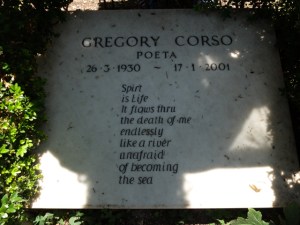
Gregory Corso’s grave in the Cimitero Acattolico

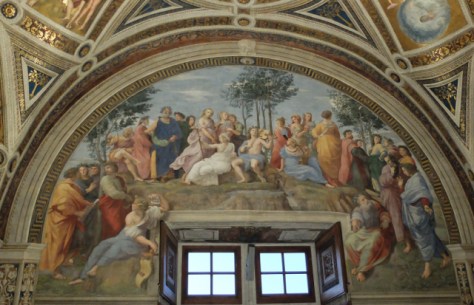
Finally, Raphael’s ‘Parnassus’, in the Room of the Segnatura in the Vatican museums,  painted between 1508 and 1511. Its central figure is the Apollo (playing the violin rather than the more traditional lyre), surrounded by the nine Muses. To the left, Homer is flanked by Dante and Virgil, while Sappho sits beneath them; to the right stand Ariosto and Boccaccio.

Sale di Raffaele Poets


Dunbar’s Close gardens

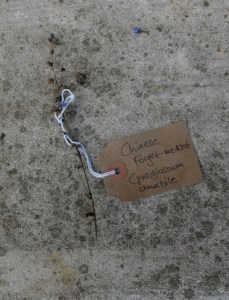
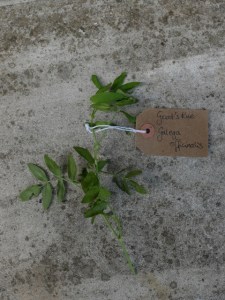
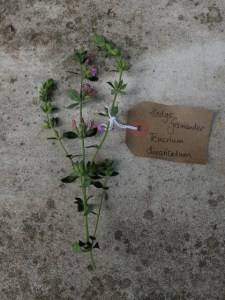
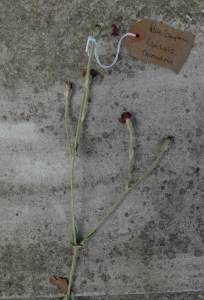
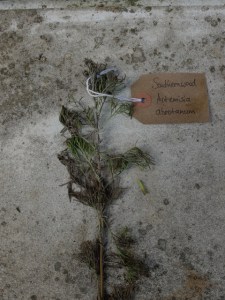
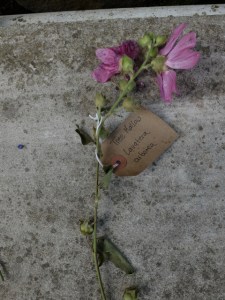
This year’s Fringe walks take in Dunbar’s Close gardens. Earlier this week I found, on one of the stone benches, cuttings of various plants with name-labels attached to them. Here is a selection, with thanks to whoever made them.

Canongate Dunbar's Close 180820 Cotton Lavender  Canongate Dunbar's Close 180820 Jerusalem Sage  Canongate Dunbar's Close 180820 Samask Rose

Canongate Dunbar's Close 180820 Sea Lavender  Canongate Dunbar's Close 180820 Wormwood  Canongate Dunbar's Close 180820 St John's Wort

Canongate Dunbar's Close 180820 Chinese Forget-Me-Not  Canongate Dunbar's Close 180820 Common Rue

Canongate Dunbar's Close 180820 Goat's Rue  Canongate Dunbar's Close 180820 Great Burnet

Canongate Dunbar's Close 180820 Hedge Germander  Canongate Dunbar's Close 180820 Honeysuckle

Canongate Dunbar's Close 180820 Lesser Calamint  Canongate Dunbar's Close 180820 Rose Campion

Canongate Dunbar's Close 180820 Rose gallica  Canongate Dunbar's Close 180820 Southernwood

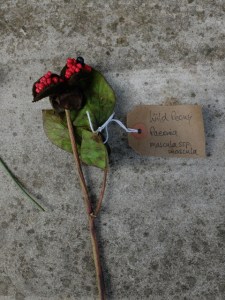
Canongate Dunbar's Close 180820 Tree Mallow  Canongate Dunbar's Close 180820 Wild Peony


Cotton Lavender    Jerusalem Sage    Damask Rose

Sea Lavender    St John’s Wort    Wormwood

Chinese Forget-Me-Not    Common Rue

Goat’s Rue    Great Burnet

Hedge Germander    Honeysuckle

Lesser Calamint    Rose Campion

Rose Gallica    Southernwood

Tree Mallow    Wild Peony

Gleann Badraig

Earlier this year I wrote a sequence of poems about the Isle of Jura, for a book by the photographer Charles March. Charles contacted me out of the blue, thanks in part, I think, to a poem I’d written many years before about the island.

I visited Jura at the start of February, and was taken by boat to Glenbatrick on the west coast, where Charles had taken his photographs over the previous four or five years. Above the beach, and the rugged coastline either side of it, are a number of raised beaches, created by the land gradually rising after the glaciers melted. Looking inland, the Paps of Jura dominate the skyline – Beinn na Oir, Beinn Siantidh and Beinn Chaolias.

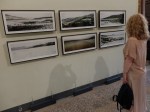
In May and June, Charles’ photographs were featured in an exhibition at the Palazzo Borghese in Rome, where a sample copy of the book was on display.

I received copies of the book just this week – I’d forgotten how large it was. The images are beautifully reproduced, catching the shifting and subtle colours of the Hebrides.

Gleann Badraig is published by Distanz Verlag, Berlin.
390 × 275 mm
96 pages, 60 color images, hardcover with linen
ISBN 978-3-95476-248-4
June 2018
€58.00

I have a few copies for sale – contact me if you’re interested in buying a copy.

Does Poetry Pay?

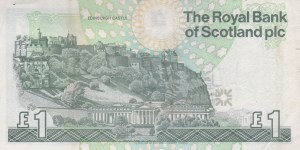
RBS £1 note

“We are planning to put together a number of case studies on where authors and other creators get their income from and we’re inviting authors to be featured in blogs on the subject. Don’t be shy! These figures really help us in campaigning and negotiating.”

I’m a long-term member of the Society of Authors, which I’ve always found to be a supportive and smart organisation. When I saw this recent call for a blog post I decided to respond, partly to help with the SoA’s campaigning for a better deal for writers, and partly as a way of reflecting on my own situation now and over the past 14 years when I’ve worked freelance.

If you’re interested in how I’ve been making a living as a poet you can read my contribution here. The page gathering all the various authors’ case studies, which will be expanded in the coming weeks and months, is here.

Reading the Streets: Edinburgh Festival Fringe 2018

Canongate SPL 4
Scottish Poetry Library, Edinburgh

I’m presenting poetry walks on the Edinburgh Festival Fringe again this year, after doing so in 2016 and 2017.

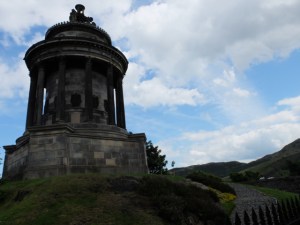
Burns Monument
Burns Monument, Regent Road

As in previous years the walks start and end at the Scottish Poetry Library, off the Canongate near the foot of the Royal Mile. This year’s itinerary includes some sites visited in previous years, including the two nearby graveyards (havens of peace amid the roar of the festival!), while adding new locations, including the Burns Monument on Regent Road. I’ll read some poems I’ve read in previous years, while adding new pieces, including Coleridge’s ecstatic letter to Southey describing his visit in 1803.

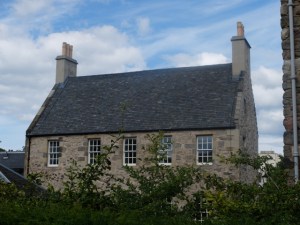
Canongate Panmure House from Dunbar's Close garden 2
Panmure House seen from Dunbar’s Close garden

I’m grateful to Valerie Gillies and James Robertson for their permission to include poems they have written about the city. (You can read Valerie’s ‘To Edinburgh’ here.) As well as the linking script, I’ve written a new poem about the philosopher and economist Adam Smith, who lived in the area for the last 12 years of his life, and is buried in the Canongate Kirkyard. (Panmure House, where he lived, has just been renovated by Heriot-Watt University.)

rls-two
Stevenson, from The Strange Case of Dr Jekyll and Mr Hyde (1886)

This year’s walk has the title Reading the Streets, and has as its focus some of the contrasts Edinburgh keeps throwing up. The Old Town / New Town divide is the most obvious and present one, and we’ll cross from one to the other. But there are many others, including at this time of year City / Festival, Residents / Visitors and Local / International. The poems are written in two languages, English / Scots, and since I  include some extracts from diaries and letters there’s a Poetry / Prose contrast too.

Palace Park Parliament
Palace and Paliament against Arthur’s Seat

The new cheek-by-jowl neighbours Palace / Parliament form a contemporary divide, though they’re on the same side in the Historic Time / Geological Time contrast as they look out onto Arthur’s Seat and Salisbury Crags.

NCBG Stevenson vault 2
Stevenson family vault in the New Calton Burial Ground, Edinburgh

I’m also grateful to the Scottish Poetry Library for including the walks in its Fringe programme. They run from Saturday 4 – Monday 27 August, daily (not Thursdays, Fridays) starting at 11.00, and lasting 90 minutes.

Tickets are available from the Fringe box office, and from the SPL via Eventbrite.

Heroines from Abroad

HfA front hires   HfA back

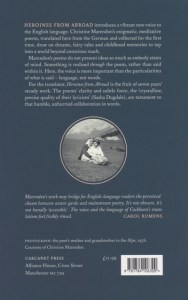
Heroines from Abroad, newly published by Carcanet, is a bilingual (German / English) edition of poems by Christine Marendon, alongside my translations.

Heroines-from-abroad

Christine will be in Scotland this summer, and we are launching the book on 13 July at 8pm at Lighthouse in Edinburgh.

I discovered Christine’s poems via a mutual friend, the poet Arne Rautenberg. Christine had been invited to a festival in Slovenia, and needed English versions of six poems – could I make the translations? I enjoyed their enigmatic imagery and shifts in tone, and made the translations, helped by a correspondence with her.

Several years elapsed, when I always had in the back of my mind that I’d like to return to her work. I came across poems online, and have been translating her slowly but steadily since 2011; translations have appeared in Shearsman, Modern Poetry in Translation, New Books in German, and online at www.no-mans-land.org.

We met for the first time in March 2014, in Hamburg where she lives; shortly afterwards we were invited to read together in London by Sasha Dugdale, then the editor of Modern Poetry in Translation, and it was a pleasure to hear her measured reading voice.

From Bavaria, she grew up speaking both German and Italian, and only began writing in her poetry in her thirties, after attending a reading by the poet Hilde Domin (1909–2006). In Germany her work is published online, and in magazines and anthologies, but she still awaits a first collection. As a translator, she has made German versions of poems by James Wright.

Marendon’s work may bridge for English-language readers the perceived chasm between avant-garde and mainstream poetry. It’s not obscure, it’s not banally ‘accessible’. The voice and the language of Cockburn’s translations feel freshly rinsed.’ Carol Rumens

Primary Four’s Doors


Over the past few years I’ve been involved with a performance project with Leith Primary School.

Organised by the church of St James the Less, Leith, this year Suzanne Butler, Lorna Irvine and I worked on the theme of ‘building’ with three classes.

Suzanne (of Fischy Music) wrote a song with P4/3, Lorna and P4B made a drama piece, ‘The Three Wee Leithers’ (based on the fable of ‘The Three Little Pigs’), while I helped P4A to write about life in Leith, and also in a realm of the imagination which they named ‘Minecraft Pugs’.

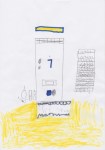
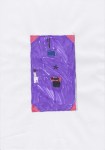
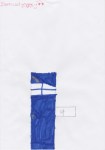
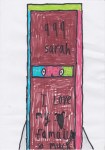
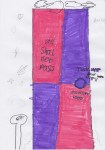
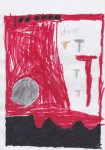
One of the poems I’d read to kick the project off was Holub’s ‘The Door’. During one of our sessions, I asked the pupils to imagine and draw their own door.

The plan was to show these during today’s performance, but we were in the brand new school hall, and no-one knew how to get the brand new projector to talk to a laptop.

I thought the doors deserved some sort of public display, so here they are, in ascending numerical order, from 3 to 1,000,000.

Thanks again to all the pupils for their imagination and enthusiasm!

The Stuarts’ Memorial in Rome


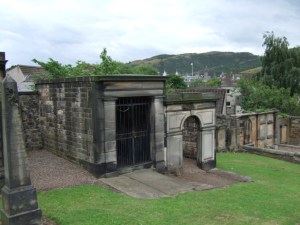
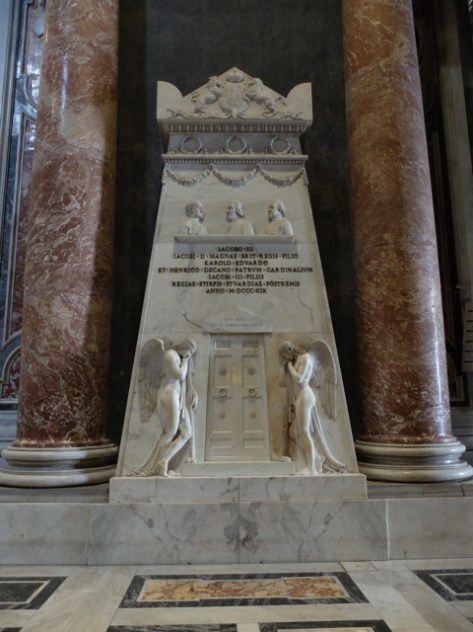
As a follow-up to two earlier posts about the Jacobites in Edinburgh (here and here), these photos from St Peter’s Basilica in Rome show the memorial created in 1819 to three Stuarts: James, and his sons Charles (aka Bonnie Prince Charlie, the only one of the three who set foot in Edinburgh) and Henry.

St Peter's Stuarts 06

On it James is styled James III (of Great Britain), and while he was recognised as such by many European states he never actually sat on the throne. After his death in 1766 some contemporary Jacobite diehards liked to refer his sons as Charles III and, following Charles’ death, Henry IX, but diplomatically and realistically the Roman memorial foregoes such  numerical aspirations.

St Peter's Stuarts 01

The text above the door between the angels attempts to offer some consolation for their exile and failure to ascend a throne they believed was rightly theirs: it translates roughly as ‘blessed are the dead who die in the Lord’.St Peter's Stuarts 04

Immediately opposite it, above a doorway, sits an elaborate memorial to Maria Clementina Sobieska, daughter of the Polish king Jan III, who was unhappily married to James, was the mother of Charles and Henry. She died aged 32 in 1735.

St Peter's Maria Clementina


New from The Caseroom Press

The Caseroom Press recently published two books which I had a hand in.

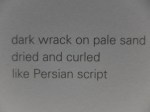
O | O 3: Word Disco is the third in an unintended trilogy of found poems, and follows Overheard Overlooked (2011) and Overlooked Overheard (2015). Visually it departs from the previous books, with the texts being typeset, distorted on photocopiers and then edited and composed in Photoshop. Barrie Tullett again designed it, and as with Overlooked Overheard his students at the University of Lincoln found the poems it contains. It’s available via The Caseroom Press website.

Woodland Orienteering presents six six-letter word-pairs composed in 2011 for an orienteering circuit in Dufftown, Moray, but never used (a seventh word-pair was, and remains in situ). If you’d like to buy a copy please contact me directly.

DSCF3484DSCF3487


DSCF3496DSCF3500


Ken Cockburn's website & blog