Category Archives: Publications

Presence haiku journal

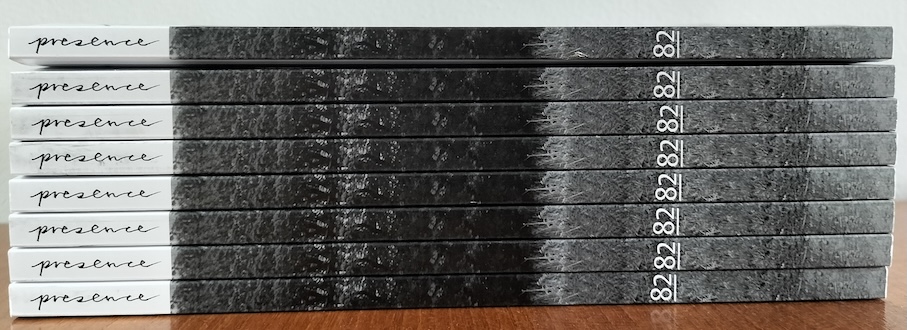
I took over as co-editor of Presence Haiku Journal recently, along with James Roderick Burns and Becky Dwyer who are, like me, members of Edinburgh Haiku Circle.

Our first issue (#82) appeared at the end of July, and we’re currently open for submissions for #83 – until the end of September, with the magazine due out towards the end of November.

We’ve changed a few things, but kept a lot the same, including the sequence of the contents – starting with tanka, having the haiku in seasonal sections (concluding with a no-season section) and interspersing these with haibun. The magazine closes with an essay and a substantial Reviews section, and we’re grateful for the continuing work of Judy Kendall and Julie Mellor in commissioning and compiling these.

Matthew Paul continues to manage the website.

As for the changes, we’re delighted that Barrie Tullett has brought his designer’s eye to bear on the parts and the whole. We’ve reduced the number of poems we publish too, so that those we do select are given more room on the page.

And Sean O’Connor will join us from #83 as Haibun Editor.

You can buy individual copies or take out an annual subscription (which buys you three copies) here.

New prints & books from The Caseroom Press

Some new publications from The Caseroom Press, designed and printed by Barrie Tullett.

There are two prints of individual poems, both published but uncollected.

I wrote ‘Hands’ in 2014, when I was working for the first time in care homes; it’s based partly on what residents told me they’d used their hands for, and partly on my own experiences and memories.

‘Close’ dates from 1996; it’s a poem I put aside, but I rediscovered it when I used it for a poetry walk a few years ago, and now I’m very fond of it. It’s a moment that’s long passed – my daughter has grown up, the ‘newspapermen’ have gone and buses no longer run along that stretch of the Mile – so in it’s way it’s become a historical document.

There are also two books – a single-poem artist’s book, and a little Edinburgh anthology.

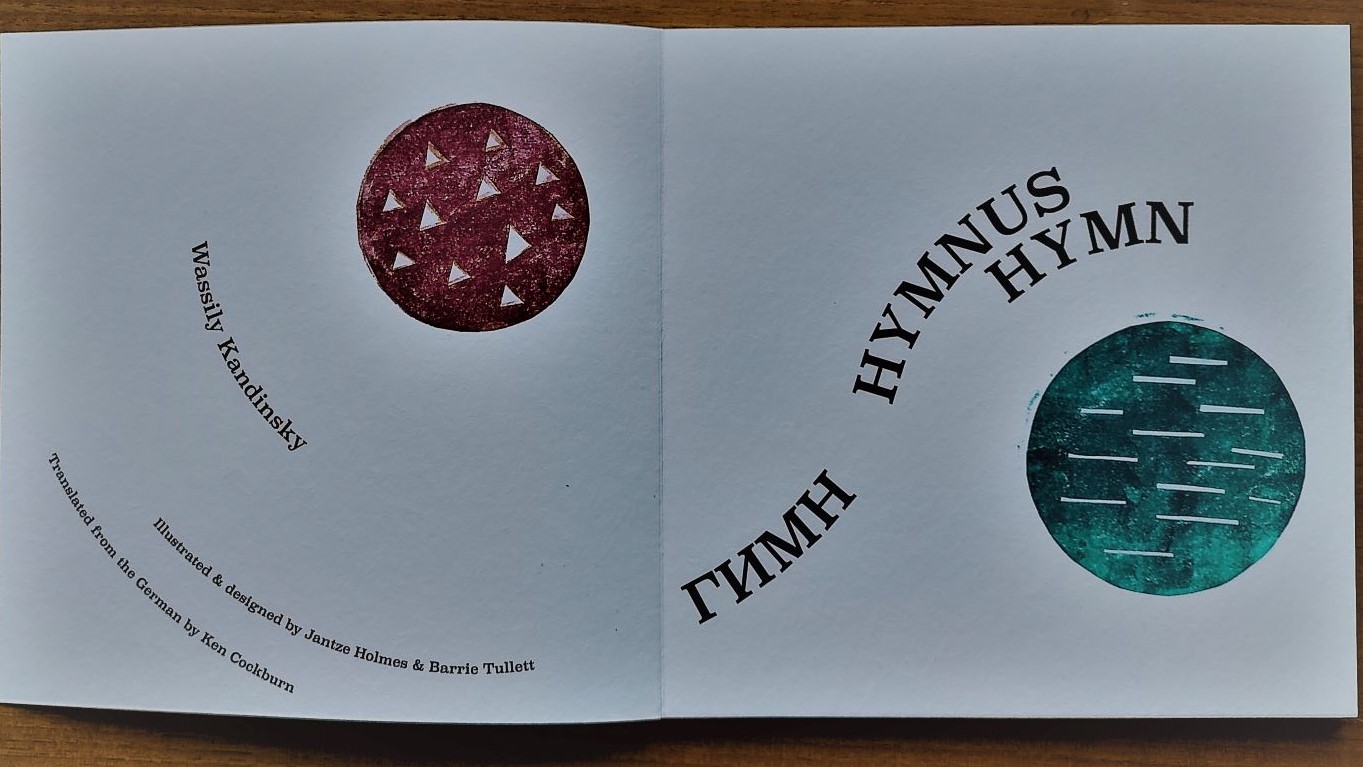
Позже / Später / Later features a single poem by Wassily Kandinsky from his 1913 book Klänge. It’s the second in an ongoing series from The Caseroom Press – the first was Гимн / Hymnus / Hymn, published in 2022. This post from the time shows that book, and gives some background about Kandinsky’s book and the current project.

Wale comprises my selection of quotes about Edinburgh from over the centuries. The title is from Robert Fergusson – ‘Auld Reikie, wale o ika toun / That Scotland kens beneath the moon!’, ‘wale’ meaning the choice, the pick, the best. The cover image shows a detail from the paving outside the Scottish parliament building.

If you’d like copies of any of these, please get in touch via the Contact page.

‘Hands’, A3, £10
‘Close’, A4, £5
Wale, 107x107mm, £5
Позже / Später / Later, 220x220mm, £20
P&P will be added to the above prices.

Edinburgh (2nd edition)

Almost 18 months ago Barie Tullet’s Caseroom Press published the pamphlet Edinburgh: poems and translations. The first edition – hand-sewn, with covers in a wide range of colours – is now sold out, and last month a second edition appeared, with staples and a uniform cover. The contents remain the same – poems about the city written in 1996-97 and 2016, plus translations from Victor Hugo, Theodor Fontane and the 17th century Latin of Arthur Johnston.

The first sales were at last month’s Artists Book Fair at the Fruitmarket Gallery. Also on sale there were two new pamphlets, both featuring poems that would have made the cut for Edinburgh: poems and translations had they been written a little sooner.

They were commissioned by the first Push the Boat Out festival in autumn 2021, and again refer to sites in Edinburgh’s Old Town: ‘Jacob’s Ladder’ beneath the railways bridge at the junction of Calton Road and New Street, and ‘The Ballad of William Knox’ at the poet’s memorial stone in the New Calton Burial Ground, not far from the Stevenson vault, where Robert Louis’s grandfather, father, and uncle are all buried. (There are some photos of his memorial in an earlier blog, part of An Edinburgh Alphabet – scroll down to ‘K’.)

Edinburgh: poems & translations
ISBN 978-1-905821-35-8
210 x 125mm, 16 pages, soft covers

Jacob’s Ladder
No ISBN
282 x 99mm, 4pp, grey endpapers

The Ballad of William Knox
No ISBN
282 x 99mm, 4pp, blue endpapers

Kandinsky’s Hymn (1913 / 2022)

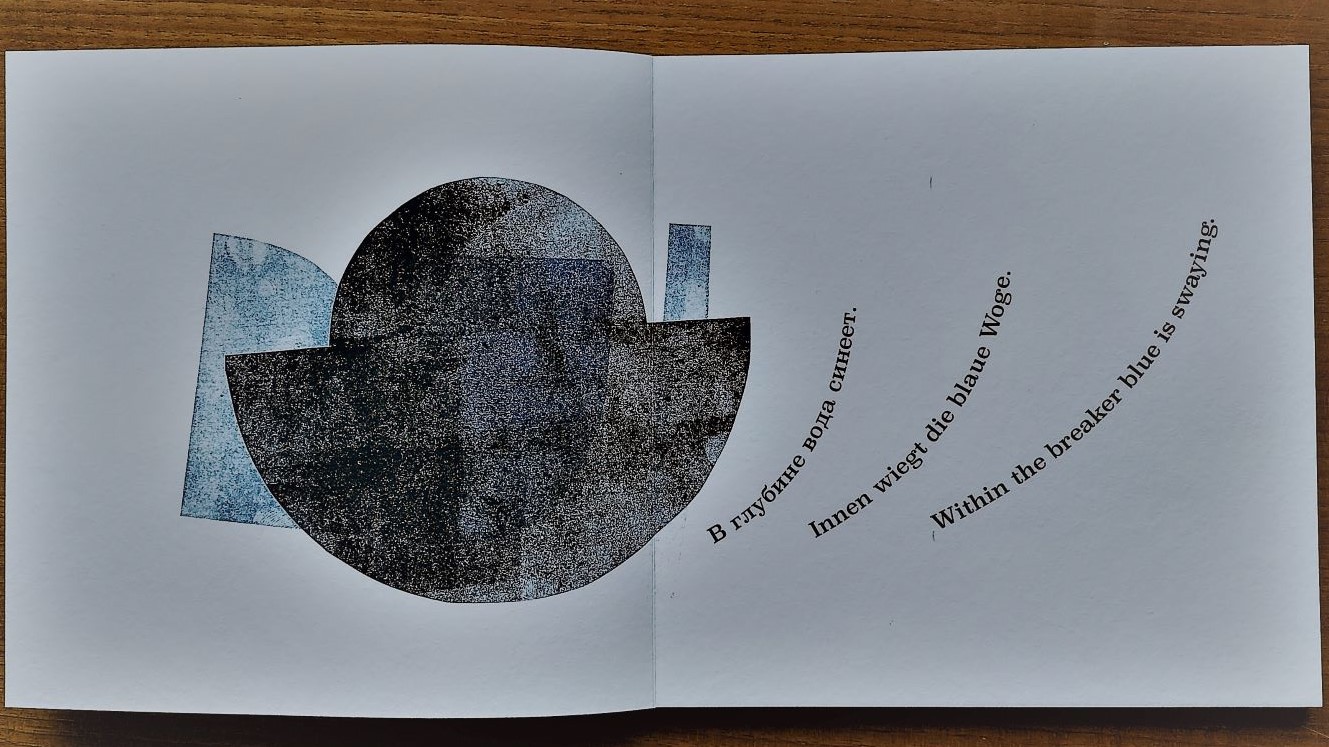
In June I was contacted by my friend Barrie Tullett. His wife Jantze had “an idea to illustrate a poem (or three) by Wassily Kandinsky, from his book Klänge, which was published in 1913”. I was asked to translate the eight-line poem from the German, which I did, and recently they sent me a copy of the finished article, a book featuring one line of the poem (in Russian, German and English), with illustrations, on each page-spread. You can read more about it here.

Apparently Kandinsky originally wrote the texts in Russian, but then found a German publisher, so translated them himself. The idea was that after the German edition, they’d make a Russian one – but the German edition didn’t sell, so it never happened.

This is the complete eight-line poem in German, followed by my translation (in which I’ve prioritised the rhythm, and to a lesser extent the rhymes):

Innen wiegt die blaue Woge.
Das zerrissne rote Tuch
Rote Fetzen. Blaue Wellen.
Das verschlossne alte Buch.
Schauen schweigend in die Ferne.
Dunkles Irren in den Wald.
Tiefer werden blaue Wellen.
Rotes Tuch versinkt nun bald.

Within the breaker blue is swaying.
Cloth that’s red is ripped and torn.
Red is shredded. Blue is wavey.
Padlocked shut the book that’s old.
Silent look into the distance.
Err in darkness in the woods.
Deeper darkens blue that’s wavey.
Cloth that’s red will sink down soon.

You can see the pages of the original if you search for ‘Klänge’ here.

There is a recent edition of the woodcuts available on issuu.

And if you want a bit of background, there is always wikipedia.

Now Listen

I’ve been reading poems into my phone and my laptop quite often over the past few months.

Earlier this year The Academy of American Poets published ‘Home’ as part of the poem-a-day series. It’s a portrait of my father in his last months of his life, and you can read and listen to it here.

Then there are three poems in edition #10 of iamb: poetry seen and heard – ‘Hands’, ‘Rodney’ and ‘Ward’. I’m in good company – Jay Whittaker, Penelope Shuttle and others.

Last year I was commissioned by Edinburgh’s Push the Boat Out poetry festival to write poems about central Edinburgh for A Poetry Mile. I wrote three new poems, and they also accepted a couple of older poems, ‘Close’ and ‘William ‘Deacon’ Brodie’.

You can find recordings of me reading them on the Poetry Map section of the website -again in good company, including Alan Spence and JL Williams – but you do have to hunt for the poems, as even if you know the city well they’re not quite where they should be.

To listen to ‘Jacob’s Ladder’, click the marker on Calton Road just west of the junction with New Street.

‘Close’ is the marker on the High Street by Filling Station.

The marker for ‘Greyfriars Bobby’ is inside Greyfriars Kirkyard.

Rather than inside his eponymous tavern, ‘William ‘Deacon’ Brodie’ can be found loitering at New College, between Mound Place and Castlehill.

‘The Ballad of William Knox’ should be in the New Calton Burial Ground, or New Calton Cemetery as it’s called on the map, which runs from Regent Road down to Calton Road. Knox’s needle stands roughly between Archibald Elliott and Robert Stevenson, but there’s no marker in the vicinity. If you manage to locate him, let me know.

Wet grain

Wet Grain is a new, print-only poetry magazine published in Glasgow, and edited by Patrick Romero & Christian Lemay.

They describe it as “a new journal interested in the lyric grooves that channel and redirect our apprehension of the world and the ideas implacably fankling themselves within it.”

They were kind enough to include three new poems of mine, ‘Provenance’, ‘Muse’ and ‘Among Antiques’, alongside work by Eloise Birtwhistle, Richard Price, Elle Heedles, Colin Herd and many others. The cover art (and the photo above) is by Lorna Wade.

According to their Editorial, “taken together, then, these poems are germ, ferment and mulch, warm with a latent and malty potential for life and growth”.

Copies are available from the website at £5 plus postage.

F L Y

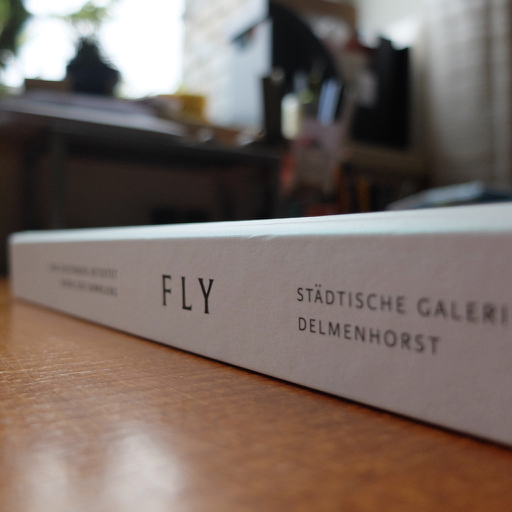
F L Y is a new large-format book book published by the municipal gallery in Delmenhorst, Lower Saxony. In it Arne Rautenberg pairs some of his own poems with selected works from the gallery’s collection of contemporary art. Some of the poems were written specially for the project, others are from his earlier collections.

Edited by Dr Annett Reckert, the book is based on an exhibition that ran from March until September. In a year when so much has been postponed and cancelled, or at best moved online, it’s a delight to realise that some real-life projects were still possible.

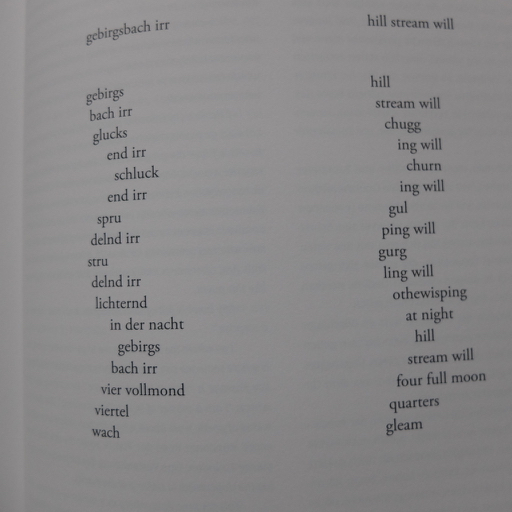
I’ve translated Arne’s works for many years now, and for the book contributed a translation of his poem ‘gebirgsbach irr’. In English it became ‘hill stream will’, as a way of catching the internal ryhme of the title, as well as the play of meaning around ‘… irr / lichternd’; at one level the phrase refers to the flitting movement of the ‘irr [i.e. the stream], while also suggesting ‘irrlicht’, the will o’the wisp.

I’m just sorry I wasn’t able to travel to see the show. Maybe next year such trips will be possible again.

F L Y (Städtische Galerie Delmenhorst & Muthesius Kunsthochschule, 2020), 284pp. ISBN 978-3-944683-31-7

Oxford-Weidenfeld Prize

I’m delighted that Heroines from Abroad is one of 8 books on the shortlist for this year’s Oxford-Weidenfeld PrizeThe prize is for book-length literary translations into English from any living European language. The winner will be announced at the prizegiving and dinner at St Anne’s College, Oxford on Saturday 15 June 2019.

Heroines from Abroad was published last summer by Carcanet. It’s a first collection of poems by Christine Marendon, with her poems in the original German alongside my translations.

HfA front hires

Zbigniew Herbert in Scotland, 1963

Herbert Collected Holy Iona

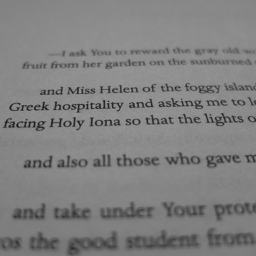
In Zbigniew Herbert’s Collected Poems 1956–1998 I came across a single reference to Scotland, in the poem ‘The Prayer of the Traveler Mr. Cogito’ or, to give it its Polish title, ‘Modlitwa Pana Cogito – podróżnika’. Here is the relevant section in the Polish original, followed by Alissa Valles’s translation from Collected Poems.

a także Miss Helen z mglistej wysepki Mull na Hebrydach za to że przyjęła mnie po grecku i prosiła żeby w nocy zostawić w oknie wychodzącym na Holy Iona zapaloną lampę aby światła ziemi pozdrawiały się

and Miss Helen of the foggy island of Mull in the Hebrides for offering Greek hospitality and asking me to leave a lamp lit at night in the window facing Holy Iona so that the lights of earth would greet each other

The poem is taken from Herbert’s 1983 collection Raport z oblężonego Miasta / Report from a Besieged City. I was curious to know more about the time he spent in Scotland, which was in fact twenty years before this collection appeared, in autumn 1963. According to Andrzej Franaszek’s 2018 biography of Herbert, using public transport Herbert travelled north from London, stopping in Leeds, York and Durham before arriving in Scotland, where he visited Edinburgh, Aberdeen, Inverness, Oban, Mull and Glasgow, before returning via Carlisle to London.

Franaszek quotes from a postcard Herbert sent from Edinburgh on 18 October:

Wdrapałem się na górę koło Edynburga i oczywiście spadłem trochę (niegroźnie). Tak trzeba. Ziemio ty moja szkocka ukochana! Jutro jadę, ale dobrze nie wiem dokąd. Dziś w nocy narada sztabu z mapą. Jestem bardzo szczęśliwy, żeście mnie wypchnęli w świat. (…) Przede mną góry i skały, kozice i georginie. Naprzód! Hej!!!

I scrambled my way onto a mountain near Edinburgh and I fell down a little (not dangerously). Maybe a good thing. My beloved Scottish earth! I am leaving tomorrow, even though I’m not sure where I’m going. Tonight there will be a conference of the High Command over the map. I’m very glad that you pushed me out into the world. (…) Ahead of me mountains and cliffs, mountain goats and dahlias. Onwards! Hey!!!

In another postcard, sent from Inverness, he described his mixed feelings about the country: he was ‘exhausted but happy, head over heels in love with Scotland; its beauty exhilarates the tourist. But life without sex… one has to go back.’

He returned via the west coast and, finding himself in Oban, decided to cross to the nearby Isle of Mull and from cross there to Iona or, as he consistently called it, using the English adjective, Holy Iona. ‘Holy Iona, czyli kartka z podróży’ (‘Holy Iona, or a page of travel’) was written in 1966 for the West German radio station WDR, and published posthumously in the collection Mistrz z Delft (2008). Of his perspective of islands, he wrote:

Wyspy nie należą do krajobrazu mego dzieciństwa. Urodziłem się w środkowej Europie, w połowie drogi między Morzem Bałtyckim a Czarnym. Pejzaż mojej młodości to podlwowskie okolice: jary i łagodne pagórki porośnięte sosną, na której najpiękniej kwitnie pierwszy sypki śnieg. Morze było tam czymś niewyobrażalnym, a wyspy miały posmak baśni.

Islands were not part of the landscape of my childhood. I was born in Central Europe, halfway between the Baltic and the Black Sea. The landscape of my youth was the area near Lwów, crevices and gentles hills covered in pine on which the first dry snow bloomed beautifully. The sea was something unimaginable there, and islands had a scent of fairytales.

The crossing to Iona had something otherwordly about it. It was 29 October, his birthday, and the ferry was no longer sailing. The landlady of his B&B at Fionnphort phoned a local fisherman, who agreed to take Herbert on the short crossing. In his radio talk he described their meeting-place:

Zimny, wilgotny, siwy ranek. Stoję w pobliżu jetty, która jest po prostu betonową ścieżką wchodzącą w morze. Ocean jest wzburzony, wysokie fale rozbijają się na skałach urwistego brzegu. Nagle z mgły wyłania się mała łódka rybacka płynąca w moim kierunku. Było to jak podanie ręki marzeniu.

A cold, damp, gray morning. I am standing near a jetty, which is just a concrete path going into the sea… which was stormy, high waves crashing against a rocky coast. A small open boat appeared from out of the mist; it was like extending your hand to a dream.

Once on Iona, Herbert explored the recently rebuilt abbey complex. He was particularly struck by his encounter with a sculpture, Descent of the Spirit’, by the Lithuanian-born Jewish sculptor Jacques (Jacob) Lipschitz (1891–1973), who fled France for the USA in 1940.
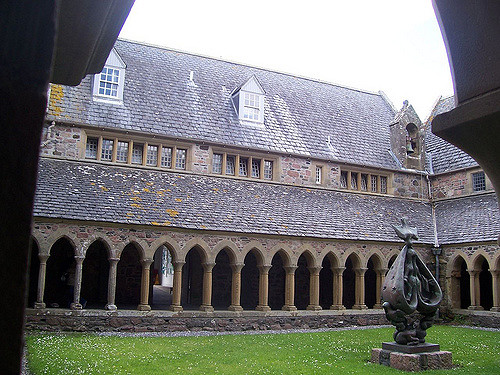
williammarnochionaabbey2008
Photo: William Marnoch, Iona Abbey, 2008

Its inscription, in French, reads:

Jacob Lipchitz juif fidéle à la fonde ses ancêtres a fait cette vierge pour la bonne entente des hommes sur la terre afin que l’esprit régne

Jacob Lipschitz a Jew faithful to the heritage of his ancestors made this virgin for the accord of men on earth so the spirit might reign

Herbert, who had witnessed the destruction of Polish Jewry during the Second World War, appreciated the paradox of recovering signs of community in this, to him, remote place. He expressed gratitude to ‘the Jewish artist who had heard so many words of hatred and responded by reaching for the words of reconciliation’.

Herbert returned to Mull, and the Fionnphort B&B, that same day. The evening brought him the image of light which he later incorporated into the ‘Prayer’:

Po kolacji gospodyni prosiła mnie, abym postawił małą lampkę w oknie wychodzącym na Holy Iona. Taki jest zwyczaj. Nocą światła obu wysp rozmawiają ze sobą. (…) Nie wiadomo, co przyniesie przyszłość i jak długo trwać będzie rozdarcie świata. Ale dopóki w jedną bodaj noc roku światła tej ziemi będą się pozdrawiały, niecała chyba nadzieja jest pogrzebana.

After supper the landlady asked me to put a small lamp in the window overlooking Holy Iona. That is the custom. At night the lights of both islands talk to each other. (…) It is not known what the future will bring and how long it might be until the world is torn apart, but as long as one night of the year, the lights of this land will offer greetings, hope is not buried.’


My thanks to Robin Connelly, Grażyna Fremi, Michał Kuźmiński, Basia Macmillan and Robert Macmillan for their help in sourcing and translating material on Herbert’s trip. As well as the books mentioned above, online there is, in Polish, a useful article from 2007 by Piotr Toczynski about Herbert and Iona, and a recording of Herbert talking about Scotland (scroll down to the heading ‘Szkocja’).
Gleann Badraig

Earlier this year I wrote a sequence of poems about the Isle of Jura, for a book by the photographer Charles March. Charles contacted me out of the blue, thanks in part, I think, to a poem I’d written many years before about the island.

I visited Jura at the start of February, and was taken by boat to Glenbatrick on the west coast, where Charles had taken his photographs over the previous four or five years. Above the beach, and the rugged coastline either side of it, are a number of raised beaches, created by the land gradually rising after the glaciers melted. Looking inland, the Paps of Jura dominate the skyline – Beinn na Oir, Beinn Siantidh and Beinn Chaolias.

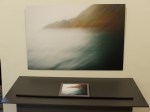
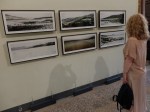
In May and June, Charles’ photographs were featured in an exhibition at the Palazzo Borghese in Rome, where a sample copy of the book was on display.

I received copies of the book just this week – I’d forgotten how large it was. The images are beautifully reproduced, catching the shifting and subtle colours of the Hebrides.

Gleann Badraig is published by Distanz Verlag, Berlin.
390 × 275 mm
96 pages, 60 color images, hardcover with linen
ISBN 978-3-95476-248-4
June 2018
€58.00

I have a few copies for sale – contact me if you’re interested in buying a copy.