All posts by Ken Cockburn

Ken Cockburn is an Edinburgh-based poet, translator, editor and writing tutor.

Poets at Edinburgh Park

These are the twelve herms of Scottish poets, overlooking the grandly named Loch Ross just by the Edinburgh Park Central tram stop, to the west of the city. On the sides of the plinth you can find some information about, and a poem by, each poet, though only Edwin Morgan wrote a poem specifically for his herm.

A human head would never do
under the mists and rains or tugged
by ruthless winds or whipped with leaves
from raving trees. But who is he
in bronze, who is the moveless one?
The poet laughed, it isn’t me.
It’s nearly me, but I am free
to dodge the showers or revel in them,
to walk the alleys under the stars
or waken where the blackbirds are.
Some day my veins will turn to bronze
and I can’t hear, or make, a song.
Then indeed I shall be my head
staring ahead, or so it seems,
but you may find me watching you,
dear traveller, or wheeling round
into your dreams.

Trees for Life at Dundreggan

Dundreggan Jack Heath

Meet me,
On the slopes of Binnlidh Mhor.
Meet me,
Where the shielings were before.

Meet me,
By the bushy juniper.
Meet me,
Where the pinewoods once were.

Hamish Read, after Robin Robertson’s poem ‘Trysts’

DSC08216

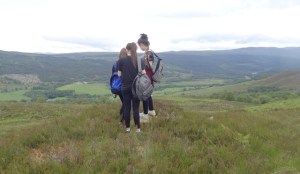
The landscapes we see around us today are simply a snapshot in time; they were, and will be, different from this. As part of the Trees for Life project Rewilding the Highlands, in June 2017 I ran walking and writing sessions for two groups of S3 pupils from Glen Urquhart High School in Drumnadrochit. We spent one day at the TfL estate at Dundreggan, and the following day at school. The aim was to teach pupils something about local habitats, especially in terms of flora and place-names, and to give them opportunities to respond to these landscapes.

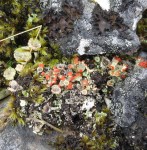
At Dundreggan we followed the route of the Juniper Walk, stopping by the waterfall (loud and midgey); the drystone walls (lichen and wildflowers), and the burn (gorse, thistles, nettles and raspberry). After a break for lunch at the Lodge, we climbed the track towards Binnlidh Beag as far as the lazybeds, again stopping to reflect on what we noticed (sounds, creatures, vegetation) as we progressed. There were some complaints as we climbed, but they were soon overcome by a general euphoria when we reached our destination, beyond the current edge of the forest, as views south and west over Glenmoriston opened up.

The next day at school I led the pupils in a series of writing exercises drawing on their experiences of the previous day, extending that by looking at a selection of Gaelic place-names from across the Highlands (drawn from a larger collection made by Alec Finlay).

Gaelic Couplets Alistair Nicholson

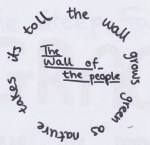
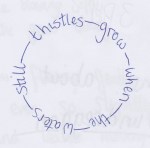
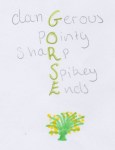
The names referred to flora and fauna, once there, now absent, but which might return: rustling leaves at Leitir Beithe, Birch Face; or rooting trotters at Sgùrr an Tuirc, Boar Peak. Pupils wrote circle poems, acrostics and mesostics, simple walking narratives (comprising short verses about each stop we made on the hill-climb), and poems drawing on real and made-up place names.

From their feedback, what they most enjoyed was walking up the hill, and seeing the creatures we came across, especially a couple of slow-worms.

They appreciated how walking helped them write: “it gave us a lot more ideas and a varied vocabulary… it helped me describe what was there better.”

Through the place-names they glimpsed something of the history of the place: “Gaelic place-names tell us about what was there before and things that aren’t there any more.”

And they were pleased to discover that the name Drumnadrochit comes from Druim na Drochaid, meaning ridge of the bridge.

When asked if they’d like to return to Dundreggan, most said yes, and several had a specific aim in mind: “to climb up the higher hill”.

Teachers also saw benefits for the pupils: “the workshop was really effective in inspiring the majority of the pupils and they really enjoyed learning outdoors for a change.  It made many of them much more aware of what we have on our door step.”


Zbigniew Herbert in Scotland, 1963

Herbert Collected Holy Iona

In Zbigniew Herbert’s Collected Poems 1956–1998 I came across a single reference to Scotland, in the poem ‘The Prayer of the Traveler Mr. Cogito’ or, to give it its Polish title, ‘Modlitwa Pana Cogito – podróżnika’. Here is the relevant section in the Polish original, followed by Alissa Valles’s translation from Collected Poems.

a także Miss Helen z mglistej wysepki Mull na Hebrydach za to że przyjęła mnie po grecku i prosiła żeby w nocy zostawić w oknie wychodzącym na Holy Iona zapaloną lampę aby światła ziemi pozdrawiały się

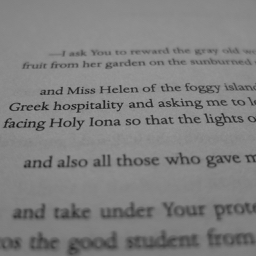
and Miss Helen of the foggy island of Mull in the Hebrides for offering Greek hospitality and asking me to leave a lamp lit at night in the window facing Holy Iona so that the lights of earth would greet each other

The poem is taken from Herbert’s 1983 collection Raport z oblężonego Miasta / Report from a Besieged City. I was curious to know more about the time he spent in Scotland, which was in fact twenty years before this collection appeared, in autumn 1963. According to Andrzej Franaszek’s 2018 biography of Herbert, using public transport Herbert travelled north from London, stopping in Leeds, York and Durham before arriving in Scotland, where he visited Edinburgh, Aberdeen, Inverness, Oban, Mull and Glasgow, before returning via Carlisle to London.

Franaszek quotes from a postcard Herbert sent from Edinburgh on 18 October:

Wdrapałem się na górę koło Edynburga i oczywiście spadłem trochę (niegroźnie). Tak trzeba. Ziemio ty moja szkocka ukochana! Jutro jadę, ale dobrze nie wiem dokąd. Dziś w nocy narada sztabu z mapą. Jestem bardzo szczęśliwy, żeście mnie wypchnęli w świat. (…) Przede mną góry i skały, kozice i georginie. Naprzód! Hej!!!

I scrambled my way onto a mountain near Edinburgh and I fell down a little (not dangerously). Maybe a good thing. My beloved Scottish earth! I am leaving tomorrow, even though I’m not sure where I’m going. Tonight there will be a conference of the High Command over the map. I’m very glad that you pushed me out into the world. (…) Ahead of me mountains and cliffs, mountain goats and dahlias. Onwards! Hey!!!

In another postcard, sent from Inverness, he described his mixed feelings about the country: he was ‘exhausted but happy, head over heels in love with Scotland; its beauty exhilarates the tourist. But life without sex… one has to go back.’

He returned via the west coast and, finding himself in Oban, decided to cross to the nearby Isle of Mull and from cross there to Iona or, as he consistently called it, using the English adjective, Holy Iona. ‘Holy Iona, czyli kartka z podróży’ (‘Holy Iona, or a page of travel’) was written in 1966 for the West German radio station WDR, and published posthumously in the collection Mistrz z Delft (2008). Of his perspective of islands, he wrote:

Wyspy nie należą do krajobrazu mego dzieciństwa. Urodziłem się w środkowej Europie, w połowie drogi między Morzem Bałtyckim a Czarnym. Pejzaż mojej młodości to podlwowskie okolice: jary i łagodne pagórki porośnięte sosną, na której najpiękniej kwitnie pierwszy sypki śnieg. Morze było tam czymś niewyobrażalnym, a wyspy miały posmak baśni.

Islands were not part of the landscape of my childhood. I was born in Central Europe, halfway between the Baltic and the Black Sea. The landscape of my youth was the area near Lwów, crevices and gentles hills covered in pine on which the first dry snow bloomed beautifully. The sea was something unimaginable there, and islands had a scent of fairytales.

The crossing to Iona had something otherwordly about it. It was 29 October, his birthday, and the ferry was no longer sailing. The landlady of his B&B at Fionnphort phoned a local fisherman, who agreed to take Herbert on the short crossing. In his radio talk he described their meeting-place:

Zimny, wilgotny, siwy ranek. Stoję w pobliżu jetty, która jest po prostu betonową ścieżką wchodzącą w morze. Ocean jest wzburzony, wysokie fale rozbijają się na skałach urwistego brzegu. Nagle z mgły wyłania się mała łódka rybacka płynąca w moim kierunku. Było to jak podanie ręki marzeniu.

A cold, damp, gray morning. I am standing near a jetty, which is just a concrete path going into the sea… which was stormy, high waves crashing against a rocky coast. A small open boat appeared from out of the mist; it was like extending your hand to a dream.

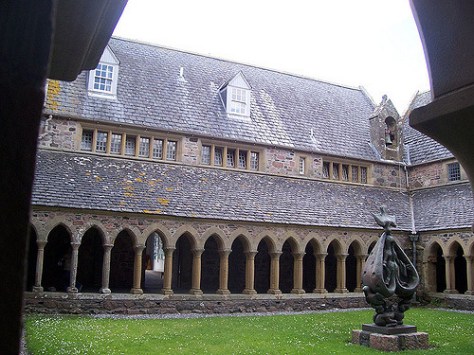
Once on Iona, Herbert explored the recently rebuilt abbey complex. He was particularly struck by his encounter with a sculpture, Descent of the Spirit’, by the Lithuanian-born Jewish sculptor Jacques (Jacob) Lipschitz (1891–1973), who fled France for the USA in 1940.
williammarnochionaabbey2008
Photo: William Marnoch, Iona Abbey, 2008

Its inscription, in French, reads:

Jacob Lipchitz juif fidéle à la fonde ses ancêtres a fait cette vierge pour la bonne entente des hommes sur la terre afin que l’esprit régne

Jacob Lipschitz a Jew faithful to the heritage of his ancestors made this virgin for the accord of men on earth so the spirit might reign

Herbert, who had witnessed the destruction of Polish Jewry during the Second World War, appreciated the paradox of recovering signs of community in this, to him, remote place. He expressed gratitude to ‘the Jewish artist who had heard so many words of hatred and responded by reaching for the words of reconciliation’.

Herbert returned to Mull, and the Fionnphort B&B, that same day. The evening brought him the image of light which he later incorporated into the ‘Prayer’:

Po kolacji gospodyni prosiła mnie, abym postawił małą lampkę w oknie wychodzącym na Holy Iona. Taki jest zwyczaj. Nocą światła obu wysp rozmawiają ze sobą. (…) Nie wiadomo, co przyniesie przyszłość i jak długo trwać będzie rozdarcie świata. Ale dopóki w jedną bodaj noc roku światła tej ziemi będą się pozdrawiały, niecała chyba nadzieja jest pogrzebana.

After supper the landlady asked me to put a small lamp in the window overlooking Holy Iona. That is the custom. At night the lights of both islands talk to each other. (…) It is not known what the future will bring and how long it might be until the world is torn apart, but as long as one night of the year, the lights of this land will offer greetings, hope is not buried.’


My thanks to Robin Connelly, Grażyna Fremi, Michał Kuźmiński, Basia Macmillan and Robert Macmillan for their help in sourcing and translating material on Herbert’s trip. As well as the books mentioned above, online there is, in Polish, a useful article from 2007 by Piotr Toczynski about Herbert and Iona, and a recording of Herbert talking about Scotland (scroll down to the heading ‘Szkocja’).

Paolozzi at Large in Edinburgh


To coincide with the launch of a new book about the artist in his home city, I’m leading two walks featuring poems by Christine De Luca about works by Sir Eduardo Paolozzi (1924–2005). Paolozzi was born in Leith, and while as an adult he lived away from Edinburgh, he was commissioned to make a number of works here during the last twenty years of his life. He also bequested work to the Scottish National Gallery of Modern Art, which houses a reconstruction of his London studio.

The walks are South and East (Friday 2 November, 14.00–16.30) and West and North (Saturday 3 November, 10.00–12.30).

‘South and East’ takes in three groups of sculptures: ‘Egeria and Parthenope’ at King’s Buildings, ‘Early Peoples’ at the Museum of Scotland, and ‘The Manuscript of Monte Cassino’, originally sited at Picardy Place and now temporarily re-located at London Road.

‘West and North’ takes in ‘Wealth of Nations’ at the Gyle Business Park, stained glass windows in St Mary’s Episcopal Cathedral, and works at the Scottish Gallery of Modern Art.

Tickets (£6 / £4) and details of the routes are available via Eventbrite.
‘South and East’ (Friday 2 November, 14.00–16.30)
‘West and North’ (Saturday 3 November, 10.00–12.30).

Paolozzi at Large in Edinburgh (Luath, 2018), edited by Christine De Luca and Carlo Pirozzi, is the first book to look at the artist in his home city. It includes poems written by De Luca, the former Edinburgh Makar, in response to some of Paolozzi’s iconic works which can be seen around Edinburgh, as well as work by many involved in the art world: researchers, archivists and practising (RSA) artists. The book is part of the Eduardo Paolozzi Project created and developed by Carlo Pirozzi (University of Edinburgh). Paolozzi at Large in Edinburgh is to be launched at Blackwell’s Bookshop, South Bridge, Edinburgh on 31 October.

These walks have been developed with the help of funding from this Eduardo Paolozzi Project with the support of Edinburgh World Heritage.

Images, from top: Egeria (detail), Wealth of Nations (detail); MS of Monte Cassino; Paolozzi’s studio (details); Wealth of Nations, Master of the Universe, Egeria.

Poets in Rome

I visited Rome for a few days earlier this year. These are some of the many poets, ancient and modern, I encountered there.

Homer Musei Vaticani

A herm of Homer in the Vatican Museums

Two versions of Sappho –
a herm in the Capitoline Museum, and a statue in the Vatican Museums

Goethe, with his feet up at home in the Via del Corso, c.1787; and his expenses book for his Roman stay, with regular entries for ‘ciocolatta’

Keats’ grave and memorial in the Cimitero Acattolico. The inscription on his grave reads,

This Grave
contains all that was Mortal,
of a
YOUNG ENGLISH POET,
Who,
on his Death Bed,
in the Bitterness of his Heart,
at the Malicious Power of his Enemies,
Desired
these Words to be Engraven on his Tomb Stone

Here lies One
Whose Name was Writ in Water.
Feb 24th 1821

Shelley’s grave in the Cimitero Acattolico, with lines from The Tempest

Marinetti

Marinetti’s house on the Piazza Adriana

Corso Cimitero Acattolico 02

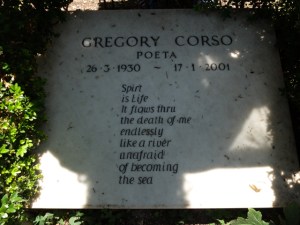
Gregory Corso’s grave in the Cimitero Acattolico

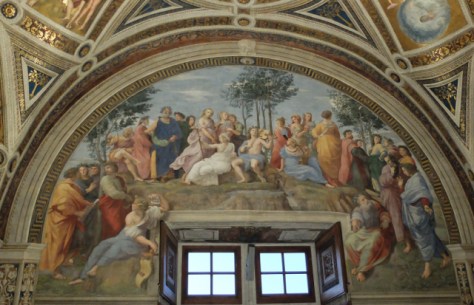
Finally, Raphael’s ‘Parnassus’, in the Room of the Segnatura in the Vatican museums,  painted between 1508 and 1511. Its central figure is the Apollo (playing the violin rather than the more traditional lyre), surrounded by the nine Muses. To the left, Homer is flanked by Dante and Virgil, while Sappho sits beneath them; to the right stand Ariosto and Boccaccio.

Sale di Raffaele Poets


Dunbar’s Close gardens

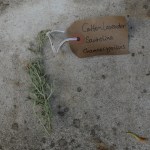
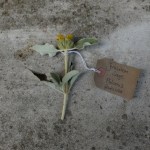
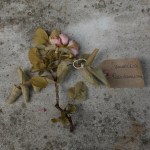
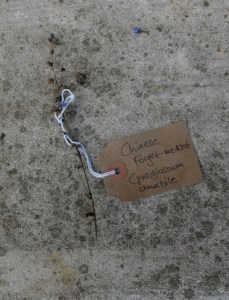
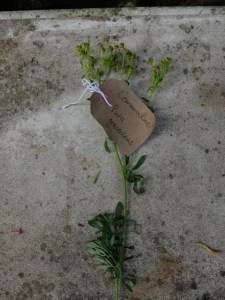
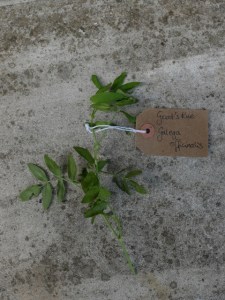
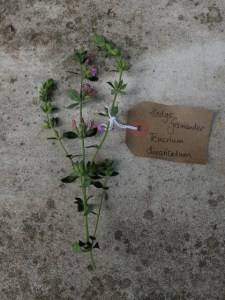
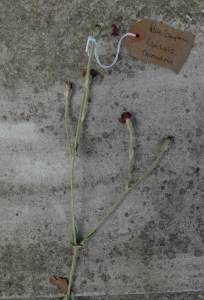
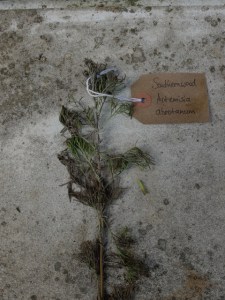
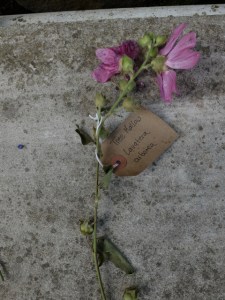
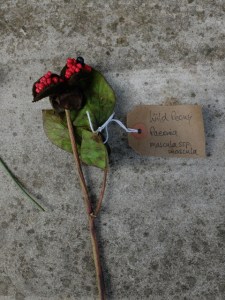
This year’s Fringe walks take in Dunbar’s Close gardens. Earlier this week I found, on one of the stone benches, cuttings of various plants with name-labels attached to them. Here is a selection, with thanks to whoever made them.

Canongate Dunbar's Close 180820 Cotton Lavender  Canongate Dunbar's Close 180820 Jerusalem Sage  Canongate Dunbar's Close 180820 Samask Rose

Canongate Dunbar's Close 180820 Sea Lavender  Canongate Dunbar's Close 180820 Wormwood  Canongate Dunbar's Close 180820 St John's Wort

Canongate Dunbar's Close 180820 Chinese Forget-Me-Not  Canongate Dunbar's Close 180820 Common Rue

Canongate Dunbar's Close 180820 Goat's Rue  Canongate Dunbar's Close 180820 Great Burnet

Canongate Dunbar's Close 180820 Hedge Germander  Canongate Dunbar's Close 180820 Honeysuckle

Canongate Dunbar's Close 180820 Lesser Calamint  Canongate Dunbar's Close 180820 Rose Campion

Canongate Dunbar's Close 180820 Rose gallica  Canongate Dunbar's Close 180820 Southernwood

Canongate Dunbar's Close 180820 Tree Mallow  Canongate Dunbar's Close 180820 Wild Peony


Cotton Lavender    Jerusalem Sage    Damask Rose

Sea Lavender    St John’s Wort    Wormwood

Chinese Forget-Me-Not    Common Rue

Goat’s Rue    Great Burnet

Hedge Germander    Honeysuckle

Lesser Calamint    Rose Campion

Rose Gallica    Southernwood

Tree Mallow    Wild Peony

Gleann Badraig

Earlier this year I wrote a sequence of poems about the Isle of Jura, for a book by the photographer Charles March. Charles contacted me out of the blue, thanks in part, I think, to a poem I’d written many years before about the island.

I visited Jura at the start of February, and was taken by boat to Glenbatrick on the west coast, where Charles had taken his photographs over the previous four or five years. Above the beach, and the rugged coastline either side of it, are a number of raised beaches, created by the land gradually rising after the glaciers melted. Looking inland, the Paps of Jura dominate the skyline – Beinn na Oir, Beinn Siantidh and Beinn Chaolias.

In May and June, Charles’ photographs were featured in an exhibition at the Palazzo Borghese in Rome, where a sample copy of the book was on display.

I received copies of the book just this week – I’d forgotten how large it was. The images are beautifully reproduced, catching the shifting and subtle colours of the Hebrides.

Gleann Badraig is published by Distanz Verlag, Berlin.
390 × 275 mm
96 pages, 60 color images, hardcover with linen
ISBN 978-3-95476-248-4
June 2018
€58.00

I have a few copies for sale – contact me if you’re interested in buying a copy.

Does Poetry Pay?

RBS £1 note

“We are planning to put together a number of case studies on where authors and other creators get their income from and we’re inviting authors to be featured in blogs on the subject. Don’t be shy! These figures really help us in campaigning and negotiating.”

I’m a long-term member of the Society of Authors, which I’ve always found to be a supportive and smart organisation. When I saw this recent call for a blog post I decided to respond, partly to help with the SoA’s campaigning for a better deal for writers, and partly as a way of reflecting on my own situation now and over the past 14 years when I’ve worked freelance.

If you’re interested in how I’ve been making a living as a poet you can read my contribution here. The page gathering all the various authors’ case studies, which will be expanded in the coming weeks and months, is here.

Reading the Streets: Edinburgh Festival Fringe 2018

Canongate SPL 4
Scottish Poetry Library, Edinburgh

I’m presenting poetry walks on the Edinburgh Festival Fringe again this year, after doing so in 2016 and 2017.

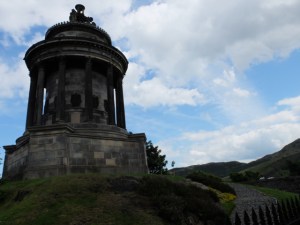
Burns Monument
Burns Monument, Regent Road

As in previous years the walks start and end at the Scottish Poetry Library, off the Canongate near the foot of the Royal Mile. This year’s itinerary includes some sites visited in previous years, including the two nearby graveyards (havens of peace amid the roar of the festival!), while adding new locations, including the Burns Monument on Regent Road. I’ll read some poems I’ve read in previous years, while adding new pieces, including Coleridge’s ecstatic letter to Southey describing his visit in 1803.

Canongate Panmure House from Dunbar's Close garden 2
Panmure House seen from Dunbar’s Close garden

I’m grateful to Valerie Gillies and James Robertson for their permission to include poems they have written about the city. (You can read Valerie’s ‘To Edinburgh’ here.) As well as the linking script, I’ve written a new poem about the philosopher and economist Adam Smith, who lived in the area for the last 12 years of his life, and is buried in the Canongate Kirkyard. (Panmure House, where he lived, has just been renovated by Heriot-Watt University.)

rls-two
Stevenson, from The Strange Case of Dr Jekyll and Mr Hyde (1886)

This year’s walk has the title Reading the Streets, and has as its focus some of the contrasts Edinburgh keeps throwing up. The Old Town / New Town divide is the most obvious and present one, and we’ll cross from one to the other. But there are many others, including at this time of year City / Festival, Residents / Visitors and Local / International. The poems are written in two languages, English / Scots, and since I  include some extracts from diaries and letters there’s a Poetry / Prose contrast too.

Palace Park Parliament
Palace and Paliament against Arthur’s Seat

The new cheek-by-jowl neighbours Palace / Parliament form a contemporary divide, though they’re on the same side in the Historic Time / Geological Time contrast as they look out onto Arthur’s Seat and Salisbury Crags.

NCBG Stevenson vault 2
Stevenson family vault in the New Calton Burial Ground, Edinburgh

I’m also grateful to the Scottish Poetry Library for including the walks in its Fringe programme. They run from Saturday 4 – Monday 27 August, daily (not Thursdays, Fridays) starting at 11.00, and lasting 90 minutes.

Tickets are available from the Fringe box office, and from the SPL via Eventbrite.

Heroines from Abroad

HfA front hires   HfA back

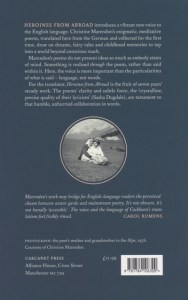
Heroines from Abroad, newly published by Carcanet, is a bilingual (German / English) edition of poems by Christine Marendon, alongside my translations.

Heroines-from-abroad

Christine will be in Scotland this summer, and we are launching the book on 13 July at 8pm at Lighthouse in Edinburgh.

I discovered Christine’s poems via a mutual friend, the poet Arne Rautenberg. Christine had been invited to a festival in Slovenia, and needed English versions of six poems – could I make the translations? I enjoyed their enigmatic imagery and shifts in tone, and made the translations, helped by a correspondence with her.

Several years elapsed, when I always had in the back of my mind that I’d like to return to her work. I came across poems online, and have been translating her slowly but steadily since 2011; translations have appeared in Shearsman, Modern Poetry in Translation, New Books in German, and online at www.no-mans-land.org.

We met for the first time in March 2014, in Hamburg where she lives; shortly afterwards we were invited to read together in London by Sasha Dugdale, then the editor of Modern Poetry in Translation, and it was a pleasure to hear her measured reading voice.

From Bavaria, she grew up speaking both German and Italian, and only began writing in her poetry in her thirties, after attending a reading by the poet Hilde Domin (1909–2006). In Germany her work is published online, and in magazines and anthologies, but she still awaits a first collection. As a translator, she has made German versions of poems by James Wright.

Marendon’s work may bridge for English-language readers the perceived chasm between avant-garde and mainstream poetry. It’s not obscure, it’s not banally ‘accessible’. The voice and the language of Cockburn’s translations feel freshly rinsed.’ Carol Rumens