
I have been sitting for a painted portrait recently. The artist is my friend Angus Reid, poet, film- and theatre-maker, architectural critic, composer… he painted years ago but has just taken it up again recently, when he persuaded his teenage son Mark to sit for him, guitar in hand. Now he’s taken a studio at the Arts Complex at Meadowbank, and I’m his first sitter.

We decide, I can’t quite remember how, that I’ll read poems aloud while he draws and paints. I think this is mainly to stop me getting bored, but it means he’s seeing me with eyes downcast. (One day I play music instead, but this is far less interesting for either of us – I catch myself dropping off on occasion.)
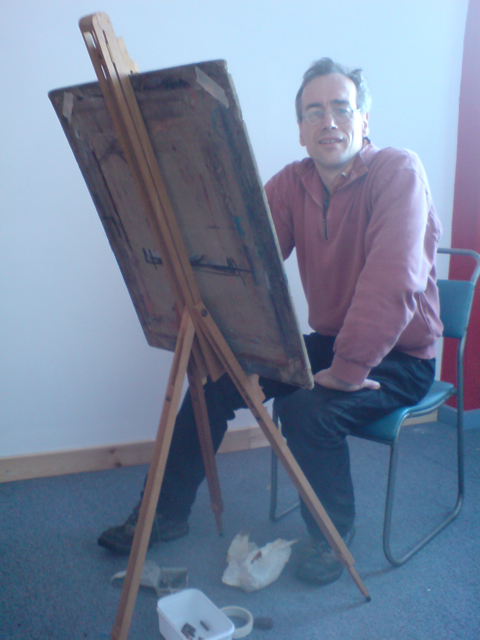
Reading poems aloud is a fine way of critiquing them – their strengths and weaknesses are thrown into relief. Neruda’s Book of Questions is a life-affirming delight despite its repeated interrogation of death (Neruda wrote it only months before his own death); W.S. Graham is harder work than I had imagined, abstract and angular, the specific setting of ‘Johann Joachim Quantz’s Five Lessons’ giving the most satisfaction; MacCaig keeps producing the most startling and exact images, often in otherwise imperfect poems; but it’s Milosz I most enjoy, the good company of his prosy, conversational, curious, wry, humorous tones, that open up further conversations once the poems return to silence.
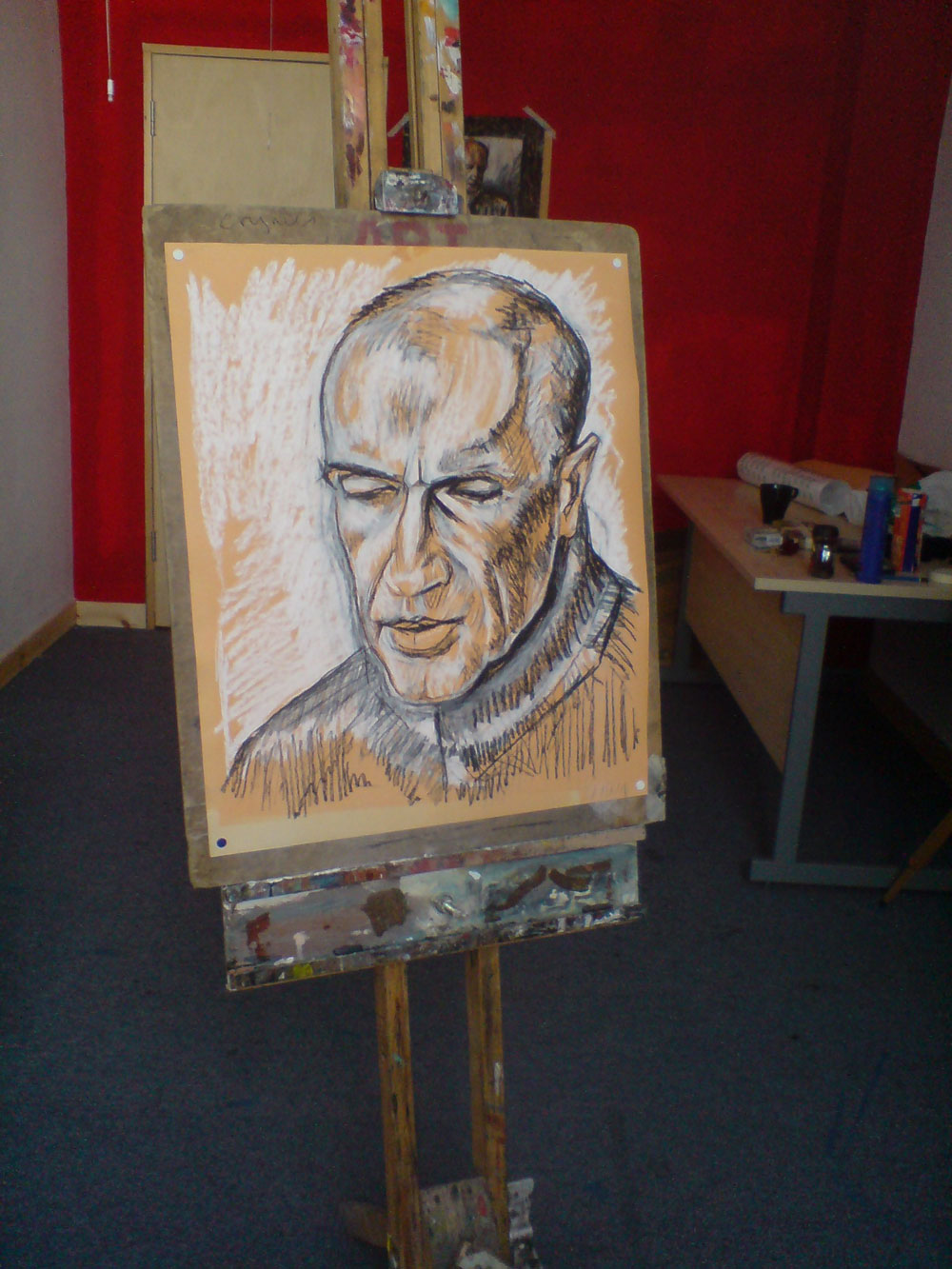
I found Angus’s comments on the process revealing too:
“In the time we have spent together, the image has begun to reflect the pleasure we both take in spoken poetry. The work is still in progress, but one drawing was a break-through, coming after Neruda and Milosz and somewhere in the midst of W.S. Graham and MacCaig: in the face of a middle-aged man reading – a face I know well – there was suddenly a surprise, something unselfconscious, that I was able to observe: small flashes of patience, tenderness and appreciation. The image seemed to be able to go beyond likeness to capture something universal that is otherwise largely hidden by the Ego, and the everyday.”
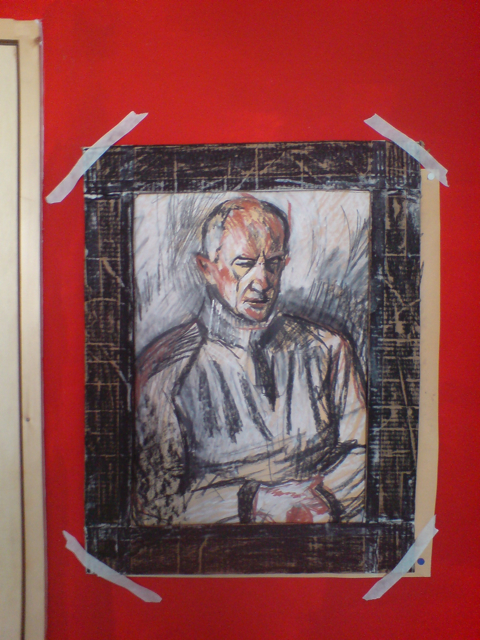
At one level sitting seems an egotistical exercise, spending time having an image made of one’s transient, imperfect self; but at another, like many activities where you give in to time rather than trying to manage it, it’s a way of losing yourself, losing track of time, and finding what else there is.
All posts by Ken Cockburn
Hidden in Hilton

Back in April I ran workshops with Year 5/6 pupils at Hilton Primary School in Newcastle-upon-Tyne, as part of a project by Alec Finlay about habitat and outdoor learning. The focus was on exploring and redeveloping an overgrown garden known as ‘the wildwood’.

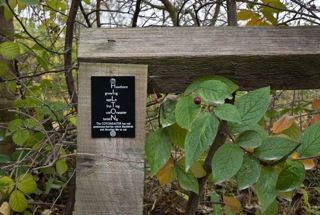
Poet-botanist Colin Will spoke to the children about what was growing there. The visit with Colin gave them a lot of stimuli, and they made notes as they went round. What helped them differentiate the plants was a memorable detail – the ash’s ‘black fingernails’, making it a ‘goth tree’, for example.
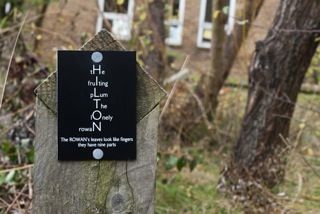

I showed the kids different ways to write about the plants they’d discovered and observed. The mesostic poems have a central stem-word, while embedded poems have a word hidden within it, like a cryptic crossword clue. The two below include tree names.
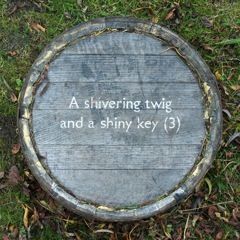
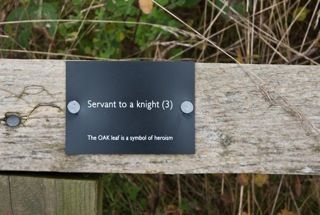
The poems have now been installed in the garden, as labels, bird-boxes and on barrel-seats.
Lewis horizons

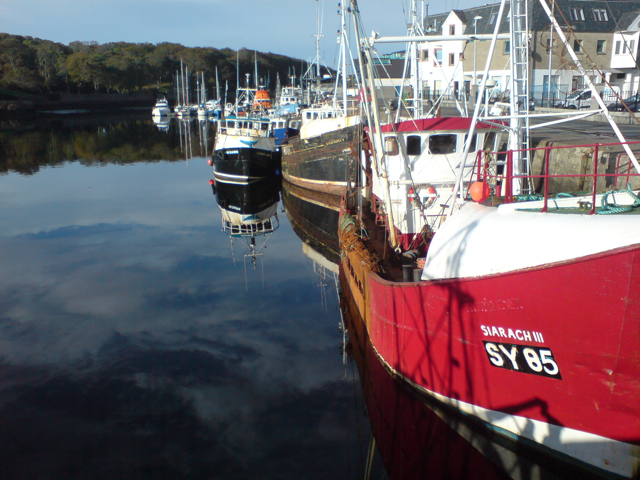
Last month I spent ten days on Lewis and Harris, running schools workshops around the Artist Rooms exhibition Ian Hamilton Finlay: Sailing Dinghy at An Lanntair in Stornoway. The centrepiece of the show was a real dinghy given to Finlay, but it was too big for the lochans at Little Sparta. So it was never sailed, and it’s also unamed.
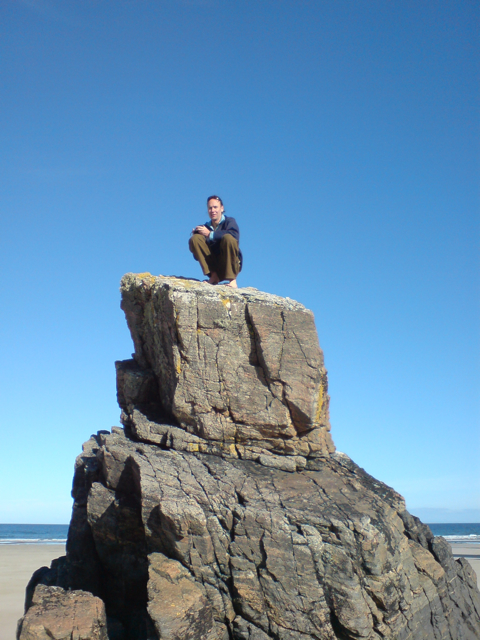
I worked alongside artist Jon Macleod, and as well as working in the gallery, we were able to take some groups out to the beach. Most of the pupils we worked with were familiar with boats, having sailed themselves or, if not, seeing the array of boats in Stornoway harbour or at other moorings around the island.
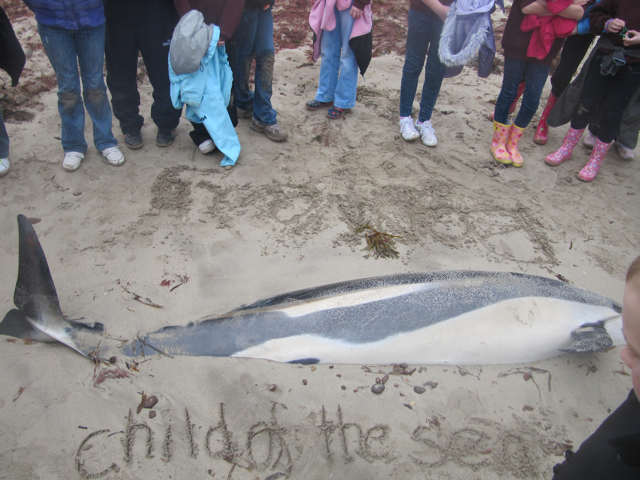

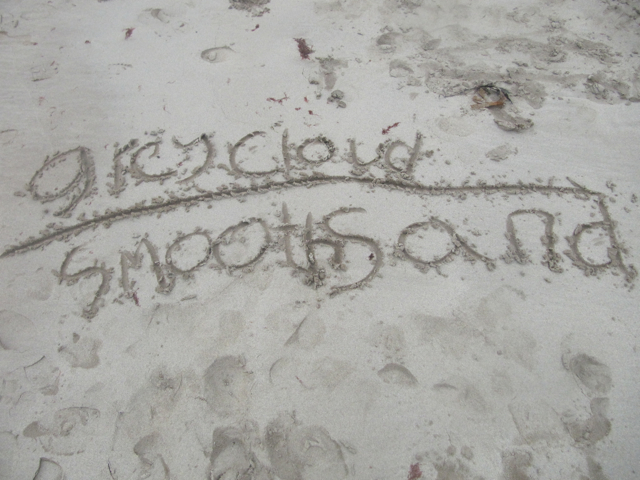
At the beach we said sad farewells to a dead dolphin beached after a high tide, named and drew boats, and wrote ‘horizon poems’ – the line in the middle is the horizon, and above it you write a few words describing what you see above the horizon; and below the line, what you see below.
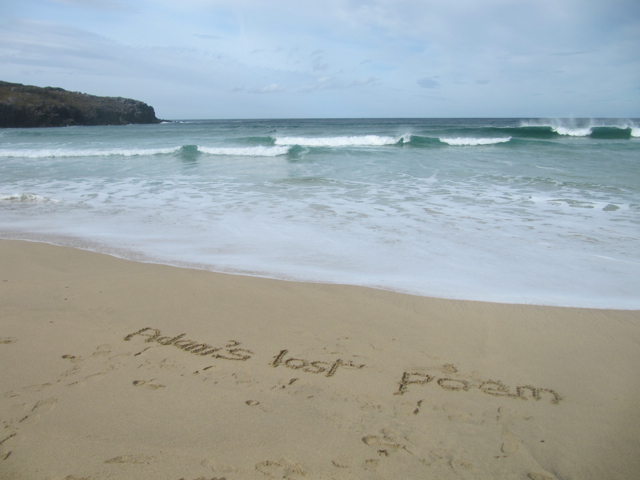
Sometimes the waves got the better of us. When I asked Adam what he written, he cried ‘I can’t remember!’ So he got on with writing a new poem.
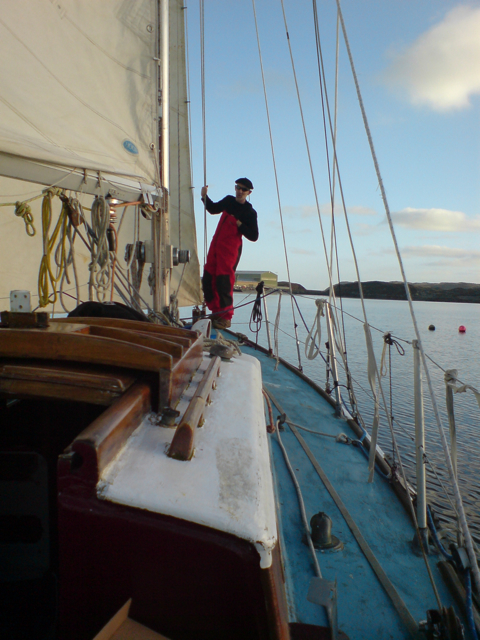
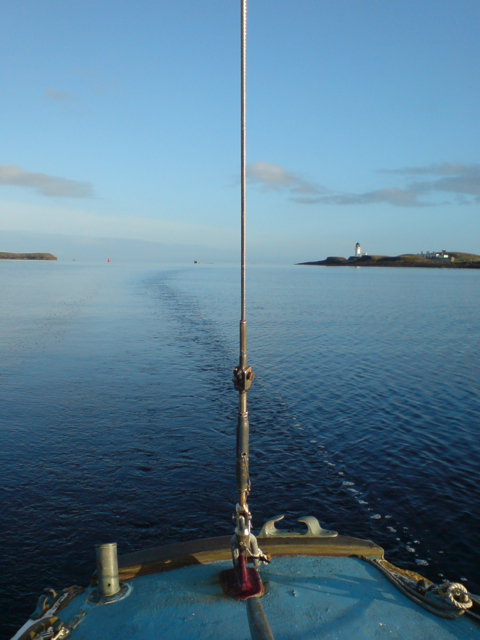
While there I met writer and sailor Ian Stephen, and one afternoon he took me out on El Vigo across a sunny and becalmed Stornoway Bay.


I also managed a couple of stations for The Road North, Dun Carloway on the west coast of Lewis, and Rhenigidale on Harris; the blogs about these will appear soon on the website.
Krakow October
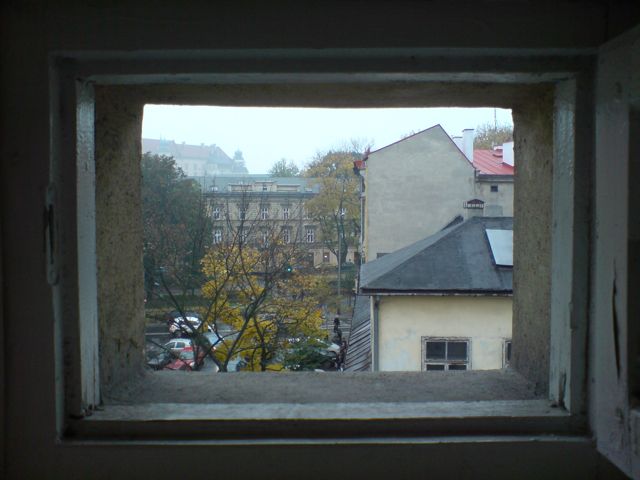

I have a couple of friends who are members of Zielony Balonik, a Polish book group who meet in Edinburgh and Glasgow. Not that I’ve been to any of the meetings, but when I met Grazyna and Robin back in July they told me about a exchange visit they’d organised with a book group near Krakow for October. Why didn’t I come? And Lorna as well? We’d never been to Poland, and it seemed like a good reason to go. In the end we couldn’t make the meeting with the other book group, at Limanova, which sounded like a great success.
On Saturday morning we rendezvoused at Camelot on Tomasza, and fortified by good breakfasts walked to the National Museum, to meet Grazyna, Alexander and Larissa. We walked round the 20th century Polish paintings galleries, stopped longest at the Witkacy self- and commercial portraits, though we lacked the code to know which particular high guided them.


I sat a while in the full-size set reconstruction for Kantor’s Powrót Odysa (Return of Ulysses), performed covertly in the Nazi-occupied city in 1944, and which by (apparent) coincidence a friend had mentioned only recently.

On Sunday we enjoyed a tour of Kazimierz, the former Jewish quarter, with the novelists Małgorzata and Michał Kuźmińscy, who’ve written two books set there, one just before World War Two, and one just after, when it was a real centre of the black market.

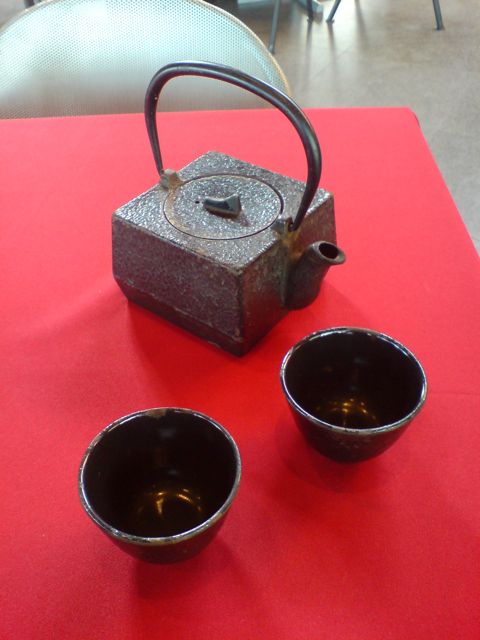
One highlight of the rest of our stay was our visit to the Manggha Museum of Japanese Art and Technology, where we saw still life with a japanese doll, a nicely curated exhibition of early 20th century Polish paintings influenced by Japonisme, and featuring many of the Japanese artefacts (woodblocks, robes, figures) portrayed in the paintings. The café does excellent Japanese tea – I enjoyed the kokeicha, a type new to me – and we’d recommend the sushi set.

One evening I met the poet Wojciech Bonowicz, who introduced me to a group of writers preparing a ‘magazine’, that is a live presentation of selected texts – a throwback to the Communist days, apparently, when publishing was difficult and risky. They invited me to read as well but, having no Polish and other plans for that evening, I made do with their company there and then, against a backdrop of 60s Polish pop they merrily sang and occasionally danced along to.

We attended the concert Disturbed Calm at St Katherine’s Church, part of the Unsound festival – were lucky to get in, as the 800 tickets were sold out in advance, but did so after a long wait. The venue rather outdid the music during Canadian ‘sound sculptor’ Tim Hecker’s set, but Swedish percussion-and-voice duo wildbirds and peacedrums were more compelling, especially when complemented by a 14-strong choir.
And we were taken with the Schindler Factory, a rich and sobering presentation of Krakow during the dark days of World War Two. There’s a mini-model of the Powrót Odysa set here too, without further explanation.
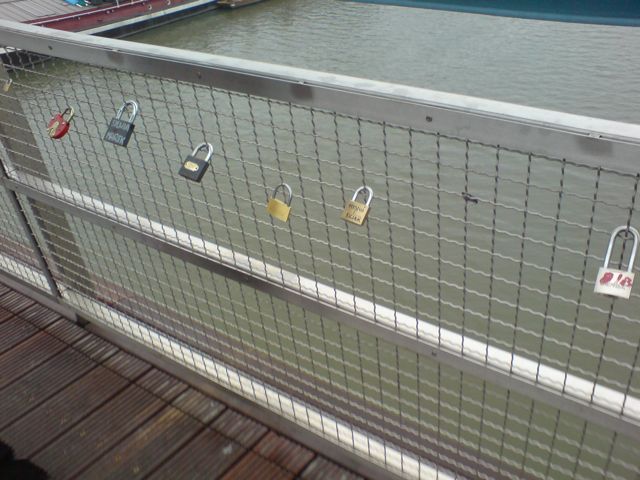
On the way there, we were charmed by these annotated padlocks on a pedestrian bridge over the Vistula – contemporary beechbark lovehearts. Lorna thought the keys would have been thrown in the river.

Argyll


Last week The Road North led to Argyll. It was part family holiday as well, and there were six of us in total. Fewer stations than Perthshire, and no two-in-one-day, so we should get the blogs up sooner than last time. There’s a new web address, which takes you to a map of Scotland with all the stations marked; the darker ones are those we’ve blogged to date, the lighter ones those to come.
Other than Dunstaffnage Castle which I visited in 1998, when I was visiting primary schools in the area with the Scottish Poetry Library van, last week’s destinations were new to me – Achnabreck, Kilmartin, Dunadd, Kilmichael Galssary, Luing, Crinan. The cup-and-ring marked rocks at Achnabreck are astonishing beautiful, a density of perfect circles rippling through milennia… and despite the rain, the walk cairn-to-cairn along the ‘linear cemetery’ in Kilmartin Glen was one of the highlights of the week for the girls.


The black slate beach at Luing was a revalation to me, and my thanks go to Norrie Bissell for showing us round there; that was our Matsushima, Basho’s ‘magnificent vista’ where ‘all sorts of islands gather’ – fourteen in our case, compared to his 263, but magnificent it certainly was that bright afternoon, as we looked from Jura across the Garvellachs to the south coast of Mull. I missed the beach at Carsaid, as I was walking to (and nearly missing) Castle Dounie above Crinan; again the view was spectacular, and now I had a much better idea of what I was looking at.

Alec led us to Loch Na Torrnalaich, between Kilmartin and Kilmichael… or, as it turned out, the unnamed lochan just to the south (he said it was smaller than he remembered). But there were waterlilies there too, and we swam, and it was beautiful, other than the bites I took away with me.

We ended the week with Pat Law, her husband Andy and daughter Kirsty, who’d sailed over from Lochmaddy, having dropped a dozen messages-in-bottles into the Minch, to await their fate. Over the table in the Crafty Kitchen at Ardfern, we toasted ‘journeys’. Long may they continue.

Setting out

I recently spent a week in Perthshire with Alec Finlay, the first big trip of our project The Road North. We stayed in Acharn, on the south shore of Loch Tay, and Dunira, between Comrie and St Fillans. From Acharn, guided by Basho (and assisted by amongst others The Modern Antiquarian) we travelled to Aberfeldy, Weem, Fortingall, Glen Lyon and Schiehallion; from Dunira we went to Dalchonzie, Dundurn, Glen Lednock, Dunkeld and Birnam. Alec’s father lived at Dunira in the 1950s, and we found his shepherd’s cottage there, smartened up as a hunting-lodge; his poem ‘Dalchonzie’ features “the railway” and “the mill”, and we found both, and though neither now run, the mill-building has been renovated as a self-catering cottage.


The weather was very kind to us; there was sun and little wind at Schiehallion’s summit, we river-bathed a couple of times, and both came back more tanned than weather-beaten, though did suffer from the midges. My only soaking was at the top of Birnam Hill, after a steep, clammy and midgey climb through the woods, so the rain wasn’t so unwelcome. We’re currently writing up the trip for the blog, and in the longer term will write a renga / word-map / skyline poem for each location.

Next stop is Argyll in a fortnight – Crinan, Dunadd, Kilmartin, Luing, Dunstaffnage – mostly places new to me.

Reading the Streets

This pamphlet was launched at The Jazz Bar in Edinburgh last week. It’s the first publication by Neil Christie’s Duende Press, and features a sequence of six ‘city’ tanka, and seven haiku about the moon. Neil has produced it as a little concertina, small enough to open to its full extent with a single pair of arms. The poems have been beautifully illustrated by Libby Walker, who graduated from Edinburgh College of Art last year. There’s a continuous and very busy image running through the tanka, and separate, more colourful and abstract images complement the haiku.

You can get hold of a copy – the printed version, or a pdf – from the Duende Press website, and also at the Scottish Poetry Library.
Neil is a fine graphic designer, and I’ve worked with him on several Scottish Poetry Library projects over the years, including the CD The Jewel Box (2000) and the postcard book Poem Prints (2005), but this is the first time I’ve worked on a ‘personal’ project with him. Neil has also designed most of knucker press’s output, and there was a new knucker booklet launched last night as well. How to Wire a Life for Love features Liz Bassett’s astutely observed and finely crafted poems, with illustrations by Angelika Kroeger.
The Road North
A project I’ll run with poet, publisher and artist Alec Finlay has been awarded funding from Creative Scotland’s Vital Spark awards. The Road North is a ‘translation’ of the Japanese classic Oku no Hosomichi by the poet Basho, in which he recounts a journey made in 1689 with his friend and fellow-poet Sora. They travelled north from the capital Edo (now Tokyo), heading into the mountains and across to the west coast. On their way they called on friends and visited sites famous from poetry and history, or for their beauty.
Basho’s book is written in 53 ‘stations’ or chapters, and for each of these we’ll find an equivalent place in Scotland. Basho describes mountains, waterfalls, famous trees, ruined castles, harbour-towns and rural villages, so there are plenty of equivalents for us to choose from! Ben Dorain definitely reminds me of Mount Fuji.
Our road north – with many detours – will take us from Edinburgh to Inverness, west to Skye, and south again to Argyll and Galloway. Unlike Basho, we have modern methods of transport at our disposal, so rather than a single continuous journey we’ll make a series of shorter journeys to our various ‘stations’.
For each ‘station’ we’ll write a ‘renga’, or verse-chain. This Japanese form is usually composed communally, and Basho and Sora wrote renga as they travelled, though these aren’t included in the book. We’ll write together, with writers and others we visit and meet on the way, and we’ll also draw on ‘found’ material we pick up on the way – signs, inscriptions, conversations – as well as drawing on information available on websites such as flickr.
The renga will be made available via a website, each presented visually as a word-map, in the form of a skyline taken from that location, and as an audio file. The audio version will also be available in situ, using QR technology. Working in partnership with local organisations and landowners, we’ll leave a plaque which, when read with a QR reader on a mobile phone, will take you to the relevant webpage. It’s all new to me, but Alec has developed this form of what one might call site-specific publication in the Peak District.
We’re planning to start our journeys in mid-May. Basho and Sora set out on the 16th, so we’ll do likewise, and hope the cold winter means the cherry blossom is still around then.
Edinburgh Old Town Walking Tour – 6 Feb
After a morning of drizzle, it was fair at lunchtime, but the weather closed in atmospherically as we walked, all the shades of grey you could ever wish for.
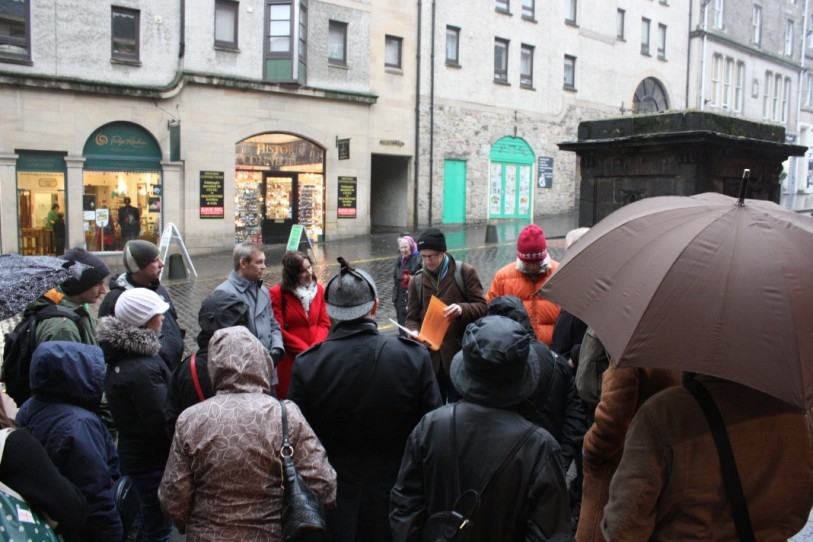
Tweeddale Court, with its publishing connections past and present (Oliver & Boyd, Canongate, The List), and the former home of the Scottish Poetry Library, was very still, bolted doors and no sign of life. As I read my poem ‘Courtyard Reading’, about the open festival events the SPL used to run there, I felt like I was raising a few ghosts. From Jeffrey St the Old Royal High School, mentioned in Robert Garioch’s ‘Embro to the Ploy’, was invisible through the fog.
After a children’s rhyme in the spacious Chessel’s Court, and a tragic ballad in the vennel at John Street, we paid homage to Robert Fergusson at the Canongate Kirk. His sculpted image strides energetically downhill, while his gravestone bears a verse written by his great admirer Robert Burns.

Sadly Dunbar’s Close was locked, but we were able to glimpse the ornamental hedges through the gate.
We were lucky to have on the tour the poet Angus Reid, who read his sonnet about the Scottish parliament building, and the shapes that pattern its exterior. Inexplicable to many, they are to Reid a clear emblem of democracy:
not the fingers not even the palm but
the power of the right hand the hammer
the sign of assent the vote the demos
(That last word means in Greek ‘the people’, and is where the word ‘democracy’ comes from, government by the people.)
We concluded in Crichton’s Close at the new home of the Scottish Poetry Library, with another sonnet, by Iain Crichton Smith, part of which is inscribed in the fabric of the building: ‘this house, this poem… this fresh hypothesis’.

I’ll be running another poetry tour on 27th February – email events@cityofliterature.com to book.
These events are part of the Carry a Poem programme.
A Renga for St James

This renga, or ‘verse-chain’, was composed at St James Mill, Norwich, over four days in early July 2009 by eighteen writers in all, and flows over 109m of hoardings on the north bank of River Wensum in central Norwich.

St James Place is a large riverside site currently being redeveloped, and the renga is the first part of the St James Collection, a series of temporary and permanent artworks for the site. The renga, like the Collection as a whole, draws on the history of the site as a monastery, and later a print works.

The whole renga is available here.
If you would like a printed version of the renga, e-mail me your postal address via the ‘Contacts’ page and I’ll send a copy out to you.

