All posts by Ken Cockburn

Ken Cockburn is an Edinburgh-based poet, translator, editor and writing tutor.

F L Y

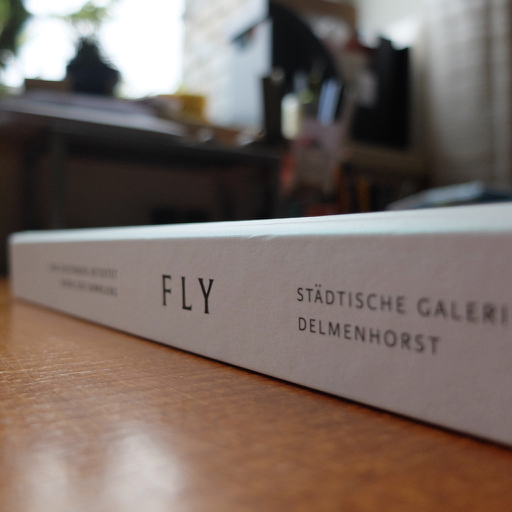
F L Y is a new large-format book book published by the municipal gallery in Delmenhorst, Lower Saxony. In it Arne Rautenberg pairs some of his own poems with selected works from the gallery’s collection of contemporary art. Some of the poems were written specially for the project, others are from his earlier collections.

Edited by Dr Annett Reckert, the book is based on an exhibition that ran from March until September. In a year when so much has been postponed and cancelled, or at best moved online, it’s a delight to realise that some real-life projects were still possible.

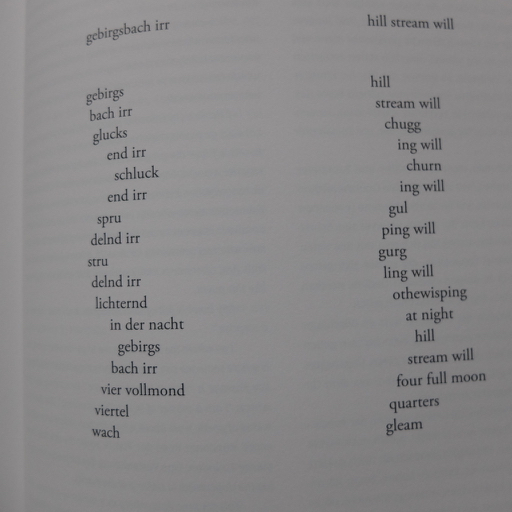
I’ve translated Arne’s works for many years now, and for the book contributed a translation of his poem ‘gebirgsbach irr’. In English it became ‘hill stream will’, as a way of catching the internal ryhme of the title, as well as the play of meaning around ‘… irr / lichternd’; at one level the phrase refers to the flitting movement of the ‘irr [i.e. the stream], while also suggesting ‘irrlicht’, the will o’the wisp.

I’m just sorry I wasn’t able to travel to see the show. Maybe next year such trips will be possible again.

F L Y (Städtische Galerie Delmenhorst & Muthesius Kunsthochschule, 2020), 284pp. ISBN 978-3-944683-31-7

Where are the birds taking me?

Where are the birds taking me?
Poems & prints by Ken Cockburn and Lisa Hooper
An exhibition for Wigtown Book Festival 2020

I met artist Lisa Hooper last year when I was writer-in-residence for Spring Fling & Wigtown Book Festival.

We put together a portfolio of poems and prints and approached the Book Festival about exhibiting them this year. And then Covid happened… so here they are online.

Although if you do make it to the WBF shop and gallery at 11 Main Street during the festival period (24 September to 4 October), you will be able see a set of Lisa’s prints.

There are nine prints, each featuring a different bird: blackbird, chough, corncrake, goldfinch, heron, herring gull, raven, snipe and wren. All feature in poems I wrote for last year’s WBF, and the prints were made by Lisa in response to the poems in early 2020.

All these birds have been present in Dumfries and Galloway, though corncrakes are now absent, and choughs the rarest of visitors. They, like most of the others, remain present as place-names, even if the languages spoken by those who coined these names are now also either absent or rare.

For example, Drumatrane and Cairnywellan (both from Gaelic) are ridge of the corncrake and rock of the gulls, while Cronkley (from Old English) is the heron’s clearing, and Penfran Burn (Old Welsh) flows down the raven’s hill.

The prints are in editions of 10 and available for sale framed (as singles or as a group of nine) and unframed. Unframed prints are also available by mail order. Please contact claire@wigtownbookfestival.com for details.

Where are the birds taking me?

More far than near
more guessed than known
more heard than seen

their flight
their calls
their plumage

bullfinch-red or siskin-yellow
black silk of a raven
salt-white of a herring gull
the blue flash of a magpie’s wing

as sudden as thought
as absent as forgetting

to apprehend them requires
a focus on stillness

an apprehensive stillness
opening all the elsewheres
the birds are taking us to.

Ken Cockburn, 2019

Duncan Ban MacIntyre

duncan ban mcintyre memorial greyfriars 1

Described on his grave memorial as ‘the celebrated Celtic bard’, Donnachadh Mac An t-Saoir (1724–1812) spent much of his long life in Edinburgh. Known in English as Duncan Ban MacIntyre, he moved from Breadalbane to Edinburgh in 1767, and was employed, like many Highlanders in the city, as a member of the City Guard. His wife ran a pub in the Lawnmarket. They lived in Roxburgh Close, off the north side of the High Street, where this plaque remembers him.

512px-Plaque_to_Duncan_Ban_MacIntyre,_Roxburgh_Close,_Edinburgh

Illiterate, he nevertheless published three editions of his poems as Orain Ghaidhealach (Gaelic Songs) in 1768, 1790 and 1804, assisted by his friend the Rev. John Stewart, ministers being at the time often the only people fully literate in Gaelic. Each edition was funded by subscription, and MacIntyre travelled across Scotland to persuade, with some success, potential readers to sign up.

Additional poems were added to second and third editions. ‘Oran Dhùn Eideann’ (Song to Edinburgh) first appeared in the third edition, and sings the praises of the poet’s adopted city. Below is the poem’s penultimate stanza in Gaelic, then in English and French (translated by, respectively, Angus MacLeod and Donald James Macleod).

Tha Dun-éideann boidheach
Air iomadh seòl na dhà,
Gun bhaile anns an rioghachd so
Nach deanadh striochdadh dha ;
A liuthad fear a dh’innsinn ann
A bélreadh cis do chach,
Daoin-uaisle casg’ an iota
Ag òl air fion na Spàinnt’.

Edinburgh is beautiful
in many diverse ways;
there is no city in this realm
but would yield it precedence.
How many men I could tell of there,
who would give others fee,
while gentlemen slake their thirst
by drinking Spanish wine.

Edimbourg est belle
En bien des façons ;
Il n’y a point de ville dans ce royaume,
Qui ne doive reconnaître sa supériorité ;
Il y a beaucoup de personnes que je pourrais nommer
Qui donnaient des revenus à d’autres,
Des messieurs qui étanchent leur soif
En buvant le vin d’Espagne.

He is buried in Greyfriars Kirkyard.

duncan ban mcintyre memorial greyfriars 2

Photo credits:

“File:Plaque to Duncan Ban MacIntyre, Roxburgh Close, Edinburgh.jpg” by Stephencdickson is licensed under CC BY-SA 4.0

“duncan ban mcintyre memorial greyfriars” by Gary Thomson is licensed under CC BY-NC-ND 2.0

“duncan ban mcintyre memorial greyfriars” by Gary Thomson is licensed under CC BY-NC-ND 2.0

Poems that count

Screenshot 2020-05-13 at 18.16.21

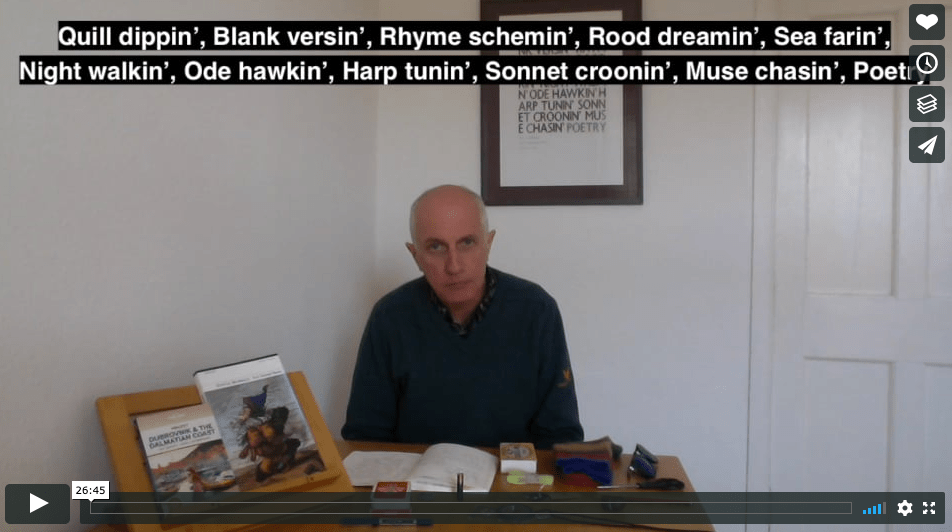
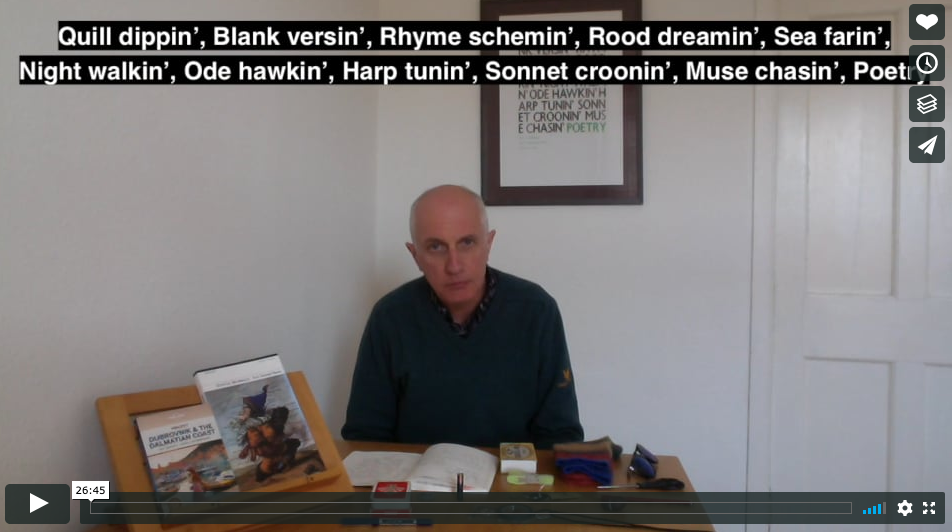
‘Poems that count’ is a short film I’ve made  for Luminate Scotland.

https://player.vimeo.com/video/415642145

I was supposed to be working on a Luminate project at the moment, going into care homes and sharing poems and writing activities with residents and staff. Sadly that’s become impossible, so Luminate have been uploading films with ideas for creative activities to their website.

There are quite a few now, and ‘Poems that count’, which I made last week, has just been added. In it I offer 5 ways to write a poem, using the numbers 1 to 5 to get started:

1   a word to start a mesostic
2   opposites – love and hate
3   first person, second person, third person
4   the points of the compass
5   fingers

It was an interesting exercise, working out to present an activity to a person or persons unknown, without the usual opportunity for dialogue or any of the other ways we communicate face-to-face.

If you try any of the exercises, let me know how you get on!


Thomas Stevenson, Civil Engineer

NCBG Stevenson vault 2

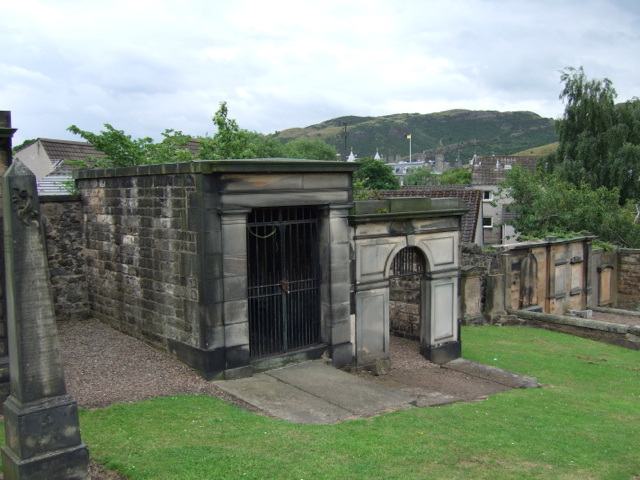
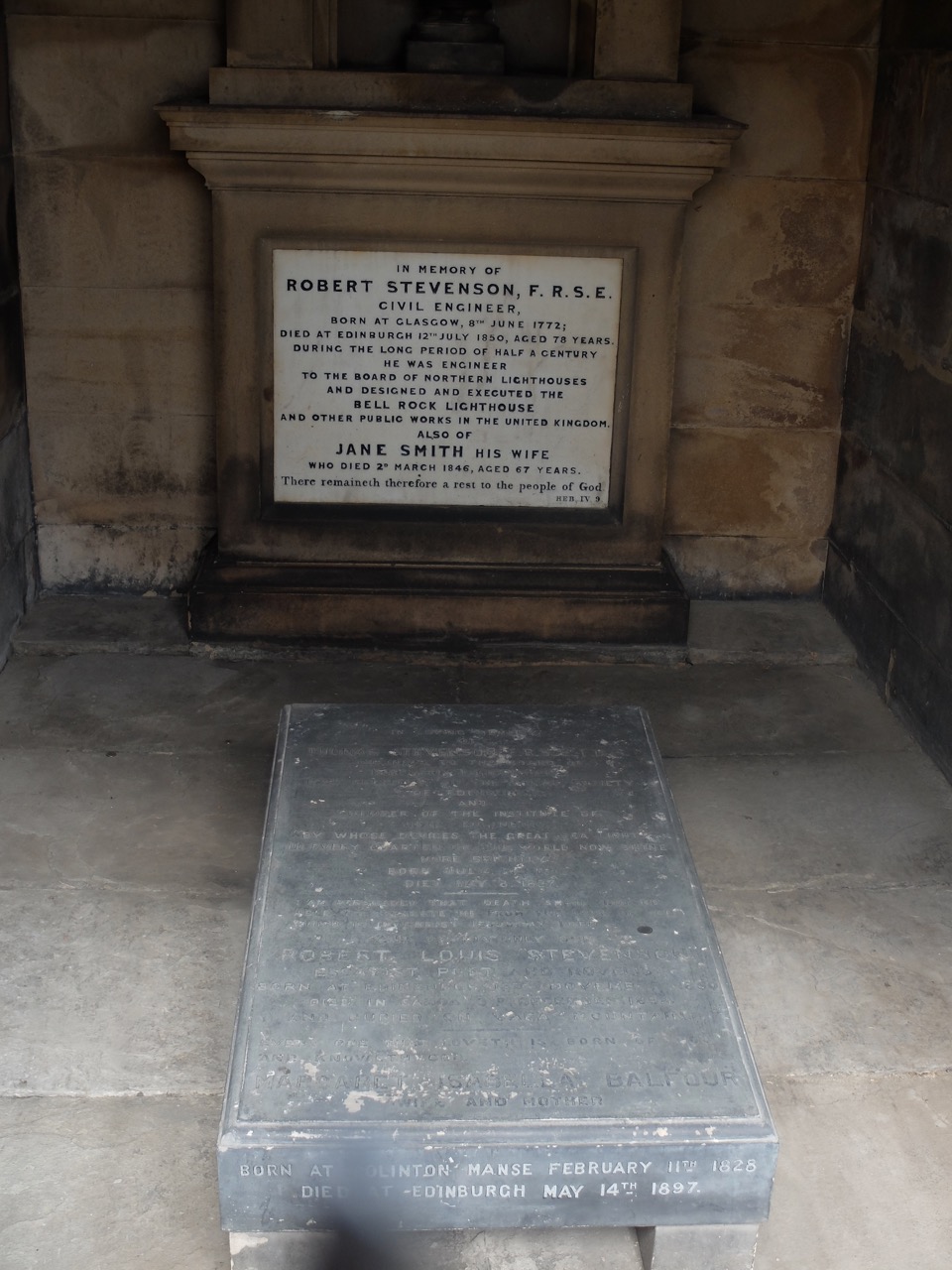
I wrote about Robert Louis Stevenson, and the Stevenson family vault in the New Calton Burial Ground, here (scroll down to V for Vailima). Through the grille you can read inscriptions commemorating Robert Stevenson and Jane Smith, RLS’s paternal grandparents, and their sons Alan and Thomas. Thomas was RLS’s father.

RLS’s last visit to Edinburgh was in May 1887, to see his dying father. He arrived on the 6th, and his father died two days later; RLS was too ill to attend the funeral on the 13th. After his father’s death, RLS wrote a short appreciation, ‘Thomas Stevenson, Civil Engineer’ published as Chapter IX in Memories and Portraits (1887).

After praising his father’s public achievements in optics and as a designer of “shore-lights…, beacons… and harbours”, RLS turned to the private person:

“He was a man of a somewhat antique strain: with a blended sternness and softness that was wholly Scottish and at first somewhat bewildering; with a profound essential melancholy of disposition and (what often accompanies it) the most humorous geniality in company; shrewd and childish; passionately attached, passionately prejudiced; a man of many extremes, many faults of temper, and no very stable foothold for himself among life’s troubles. (…) He had excellent taste, though whimsical and partial; collected old furniture and delighted specially in sunflowers long before the days of Mr. Wilde; took a lasting pleasure in prints and pictures… and though he read little, was constant to his favourite books… Guy Mannering [by Walter Scott] and The Parent’s Assistant [by Maria Edgeworth], of which he never wearied.”

Thomas Stevenson’s stone has not aged well and, despite recent cleaning, is tricky to read and to photograph, certainly compared with the white marble memorials to his father and brother. The text reads:

In Loving Memory
of
Thomas Stevenson, R.S.E. ****
Engineer to the Board of
Northern Lighthouses
Past President of the Royal Society
of Edinburgh
and
Member of the Institute of
Civil Engineers.
“By whose devices the great sea lights
in every quarter of the world now shine
more brightly.”
Born July 22 1818
Died May 8 1887
I am persuaded that death shall not be
able to separate me from the love of God
which is in Christ Jesus my Lord

and of his only son
Robert Louis Stevenson
Essayist Poet and Novelist
born at Edinburgh 13th November 1850
died in Samoa 3rd December 1894
and buried on Vaea Mountain.
Every one that loveth is born of God
and knoweth God.

Margaret Isabella Balfour
Wife and mother
Born at Colinton Manse February 11th 1829
Died at Edinburgh May 14th 1897.

NCBG Stevenson Thomas & Robert

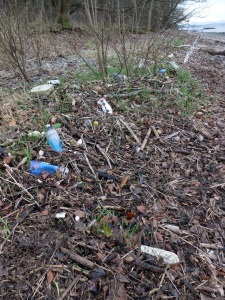
the plastic debris of the oceans

Cramond foreshore 1I recently ran some secondary school workshops for the StAnza poetry festival.

This year’s StAnza artist-in-residence, Astrid Jaekel, chose two poems I’m very familiar with for her festival exhibition, Plastik (Kunst). One is by the German poet and artist Arne Rautenberg, which I’d translated as ‘i declare the plastic debris of the oceans’. The other is George Mackay Brown’s ‘Beachcomber’, a poem I’ve used many times in workshops. Astrid’s lasercuts of the poem can be seen along Rose Street in Edinburgh.

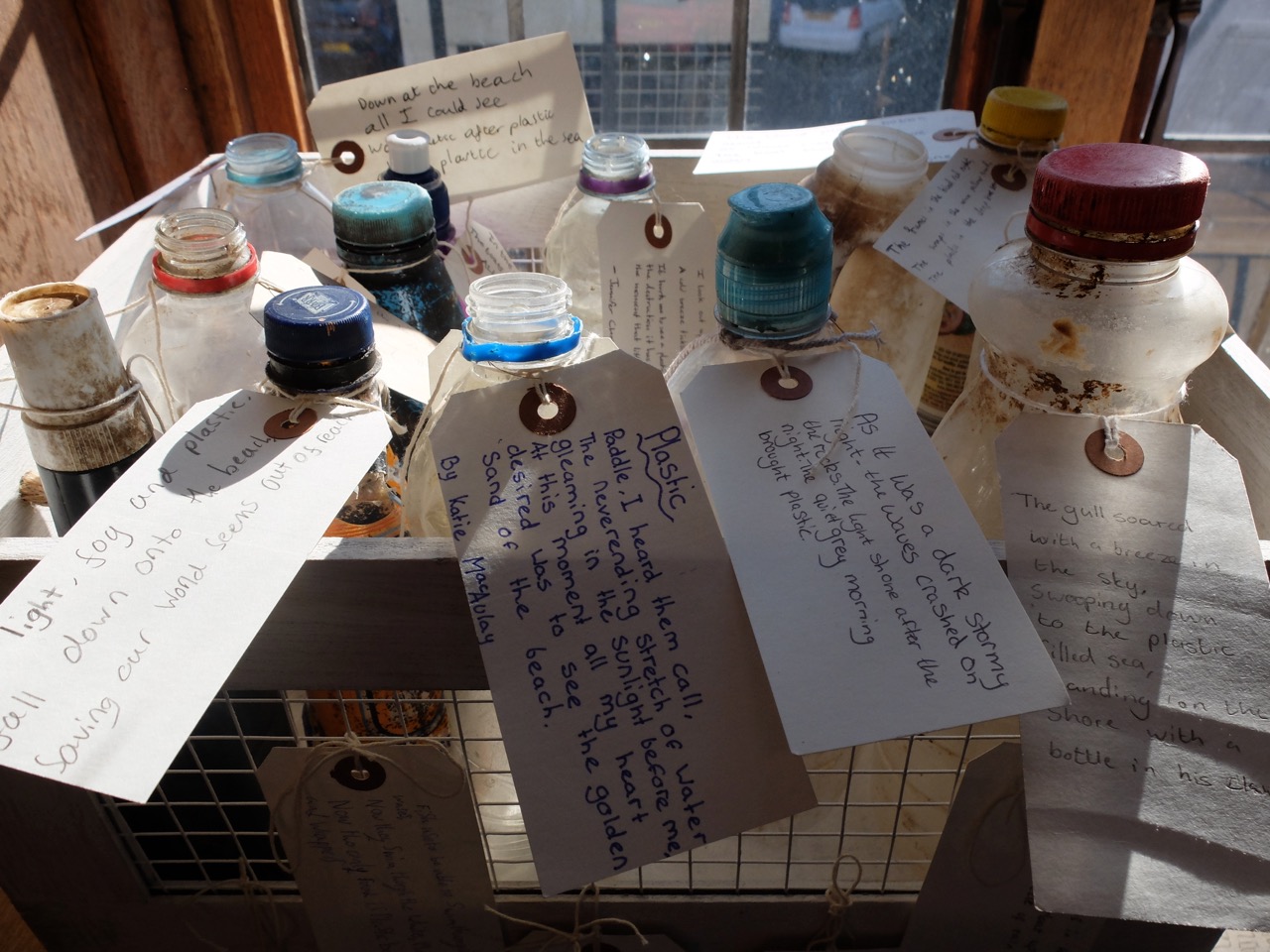
  • Before the school sessions, I combed beaches on either side of the Firth of Forth, gathering plastic debris. I also prepared a set of of about 80 cards featuring single words relating to the Scottish coast and beaches (pebble, pool, blue, grey, gull, seaweed, boat, wave and so on), and various ‘rules’ for writing a poem using three of these words, such as
  • write a poem in which the three words appear in alphabetical order
  • write a poem using one of the three words as the title of the poem, one as the first word, and one the last
  • write a three-line poem, with each line containing one of the three words; the first line should be about the sea, the second about the land, and the third about the air

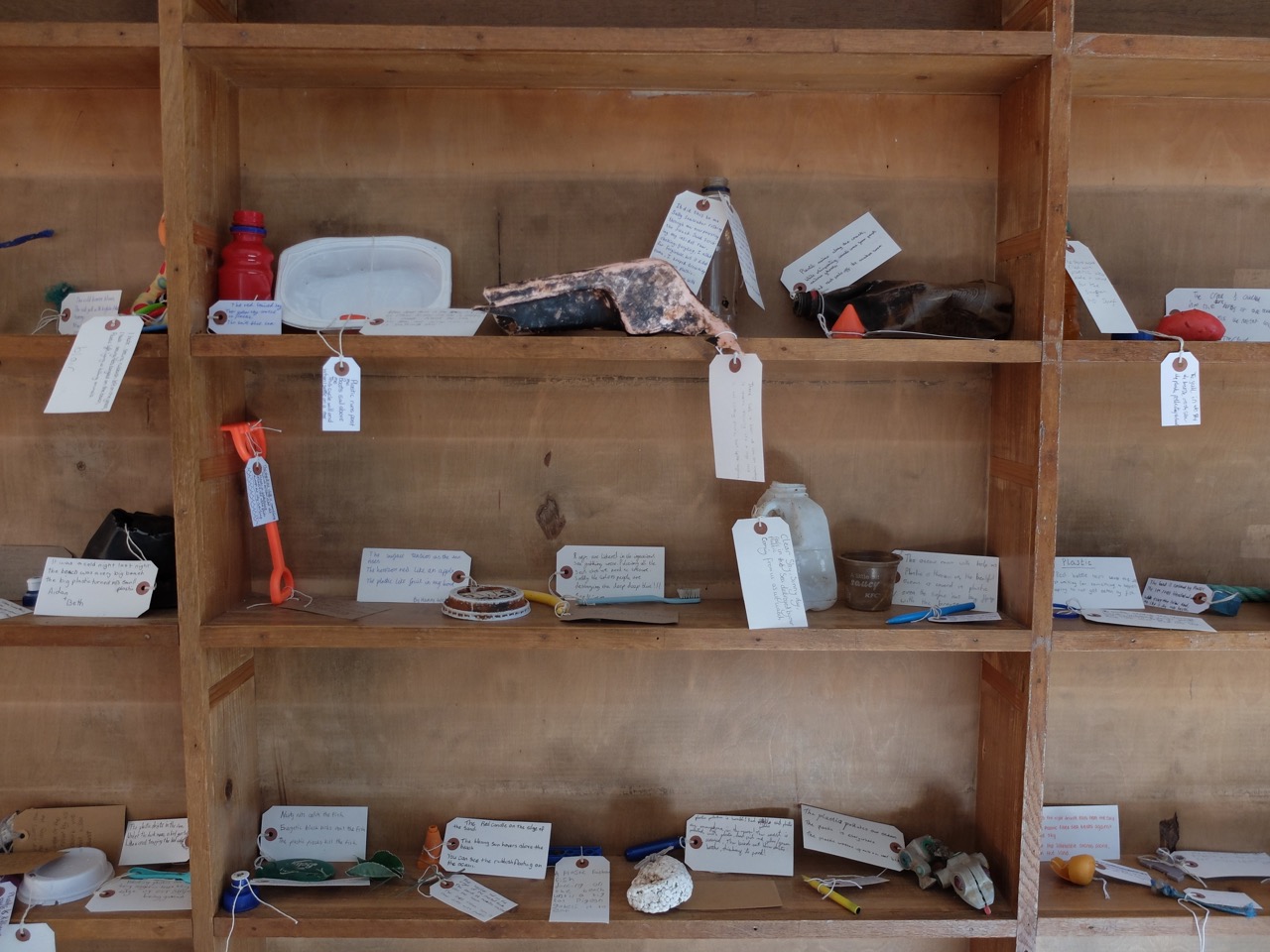
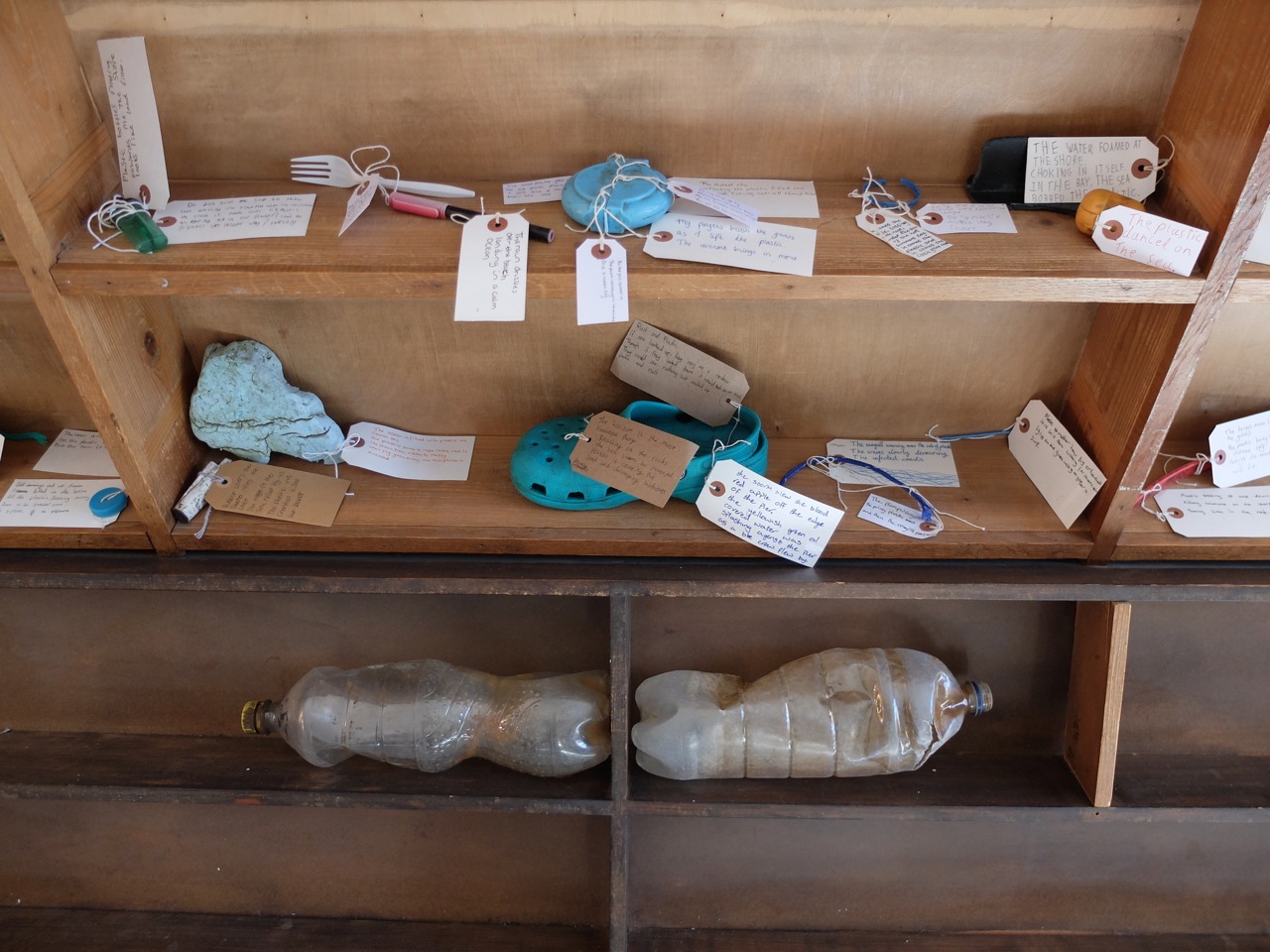
In class pupils were dealt a ‘hand’ of three cards, plus a rule, and asked to write a poem or poems. They then wrote their poems on luggage-labels and tied these to pieces of jetsam. (Between sessions, the class and their teacher at Waid Academy, Anstruther, went out and gathered their own plastic debris.)

These poems+objects were exhibited during StAnza, upstairs in J.G. Innes, the bookshop and stationer’s on South Street.

StAnza 2020 display 2StAnza 2020 display 4StAnza 2020 display 1

My thanks to all involved at Madras Academy, Waid Academy and St Leonard’s School, and at StAnza.

James ‘Ossian’ Macpherson

Ossian Fingal image

Born in 1736, James Macpherson was a native Gaelic speaker from Badenoch, who studied Classics at Aberdeen. Fragments of Ancient Poetry, collected in the Highlands of Scotland (1760) were supposedly his translations of works by an ancient Celtic bard, Ossian. The Fragments invariably describe a doomed love triangle.

Its success led to MacPherson being encouraged, and funded, by a group of patriotic Edinburgh gentlemen (none of whom spoke Gaelic) to travel to the Highlands and retrieve the epic poem he suggested was extant there. This led to the publication of Fingal (1762) and Temora (1765). Macpherson’s Ossian poems were hugely popular and internationally influential for many decades, even while there were doubts about the work’s authenticity. It seems that Macpherson was working from extant Gaelic texts, which he considered to be corrupted versions of older poems, and which deserved ‘improvement’ for modern tastes in the course of translation.

Samuel Johnson was one of the skeptics. According to Boswell, “he denied merit to Fingal, supposing it to be the production of a man who has had the advantages that the present age affords; and said, ‘nothing is more easy than to write enough in that style if once you begin’.”

One of MacPherson’s champions was Hugh Blair (1718–1800), a Church of Scotland minister who was later appointed Professor of Rhetoric and Belles Lettres at Edinburgh University. MacPherson composed much of Fingal in Blackfriars Wynd, Edinburgh, where Blair lived. Blair wrote ‘A Critical Dissertation on the Poems Of Ossian, the Son of Fingal’ (1763), included in every edition of Ossian after 1765. Here is an extract.

It is necessary here to observe, that the beauties of Ossian’s writings cannot be felt by those who have given them only a single or hasty perusal. His manner is so different from that of the poets to whom we are most accustomed; his style is so concise, and so much crowned with imagery; the mind is kept at such a stretch in accompanying the author; that an ordinary reader is at first apt to be dazzled and fatigued, rather than pleased. His poems require to he taken up at intervals, and to be frequently reviewed; and then it is impossible but his beauties must open to every reader who is capable of sensibility. Those who have the highest degree of it will relish them the most.

And here is an extract from Fingal, which can be read with the benefit of Blair’s, or Johnson’s, perspective.

Ossian_Fingal

Now I behold the chiefs, in the pride of their former deeds ! Their souls are kindled at the battles of old ; and the actions of other times. Their eyes are like flames of fire. And roll in search of the foes of the land. Their mighty hands are on their swords. And lightning pours from their sides of steel.

They came like streams from the mountains ; each rushed roaring from his hill. Bright are the chiefs of battle, in the armour of their fathers. Gloomy and dark their heroes follow, like the gathering of the rainy clouds behind the red meteors of heaven.

The sound of crashing arms ascend. The grey dogs howl between. Unequally bursts the song of battle. And rocking Cromla echoes round. On Lena’s dusky heath they stood, like mist that shades the hills of autumn : when broken and dark it settles high, and lifts its head to heaven. (…)

Each hero is a pillar of darkness, and the sword a beam of fire in his hand. The field echoes from wing to wing, as a hundred hammers that rise by turns on the red son of the furnace. (…)

As the troubled noise of the ocean when roll the waves on high: as the last peal of the thunder of heaven, such is the noise of battle. Though Cormac’s hundred bards were there to give the war to song ; feeble were the voices of a hundred bards to send the deaths to future times. For many were the falls of the heroes ; and wide poured the blood of the valiant.

MacPherson, unfazed by controversy, later produced a version of Homer’s Iliad, became an MP, died a wealthy man and was buried in Poets’ Corner in Westminster Abbey.
 

Robert Burns

I’m now offering a Robert Burns poetry walk, as well as a illustrated talk about Burns and Edinburgh.

NLS Burns 02
Robert Burns by John Tweed

Burns visited Edinburgh twice – first from late November 1786 to early May 1787, and again from mid-October 1787 to mid-February 1788 – and there are many sites on or near the Royal Mile with Burns connections.

In the Canongate Kirkyard is the grave of the poet Robert Fergusson, which Burns commissioned; and that of Nancy McLehose, Burns’ ‘Clarinda’, who he met and fell in love with in Edinburgh, and corresponded with for several years.

His memorial, on the side of Calton Hill, can be seen from the kirkyard, while lower down is Graham Fagen’s work in neon, ‘A Drama in time’ (2016), “centred on the story of the Roselle, a ship that sailed from the Port of Leith to Kingston, Jamaica in 1786. Robert Burns had booked a passage on the boat, but never sailed.”

For more details see Walks and Talks, or get in touch.

Norman MacCaig

Herms Norman MacCaig
Norman MacCaig by David Annand

It’s almost a quarter century since the death of Norman MacCaig, on 23 January 1996.

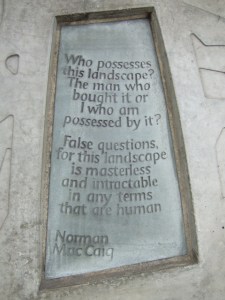
MacCaig is often thought of as a poet of remote places – Assynt and Harris, in particular – but he lived and worked most of his life in Edinburgh, and the city features in many of his poems, including these lines on the Scottish Parliament building’s Canongate wall:

Inscription_Parliament_MacCaig

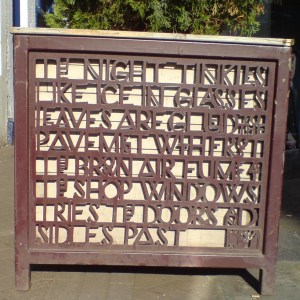
You’ll also encounter him on Rose Street:

EPT Rose St MacCaig
MacCaig, from ‘November Night, Edinburgh’, Rose Street

I’ve just come across ‘Drop-out in Edinburgh’ from his collection The World’s Room (1974), in which the sounds of the city are neatly summed up as

… warpipes and genteel pianos
and the sawing voices of lawyers.

That poem articulates the city’s opposites as “caves of guilt… pinnacles of jubilation”. In an earlier poem, ‘Out from a Lecture’, having bemoaned the dullness of lectures and book-learning, he is heartened by an everyday epiphany:

The High Street sticks his elbows in my ribs,
Lifts up a dram of shopfronts; shuts that book.
– And I raise my little glass where like a cherry
The sun’s stuck on a chimney-stack, and drink.

Slàinte!


The Gentle Shepherd

Allan Ramsay

The poet Allan Ramsay died in Edinburgh on 7 January, 1758.

GK Ramsay 1

He is remembered in Greyfriars Kirkyard by this stone, erected a century or so after his death, whose opening text reads:

In this Cemetery
Was Interred the Mortal Part
of an Immortal Poet.
ALLAN RAMSAY
Author of the GENTLE SHEPHERD,
And other admirable Poems in the Scottish Dialect.
He was born in 1686, and Died in 1758.

The following four lines confused me when I first read them, as I knew them from a gravestone elsewhere in Edinburgh.

No sculptur’d Marble here, nor pompous lay,
No storied Urn nor animated Bust;
This simple stone directs pale Scotia’s way
To pour her sorrows o’er the Poet’s dust.

Written in 1787 by Robert Burns for Robert Fergusson, these lines are carved on the latter’s headstone in the Canongate Kirkyard. They have been borrowed, or repurposed, to remember Ramsay, though in the process Burns and Fergusson have been forgotten. Cut-and-paste, 19th century style.

Burns Fergusson epitaph

Ramsay’s The Gentle Shepherd is a pastoral comedy in Scots from 1725. A few steps away from Robert Fergusson’s grave is that of Adam Smith, who said of Ramsay’s work, ‘it is the duty of a poet to write like a gentleman. I dislike that homely style which some think fit to call the language of nature and simplicity and so forth.’

Here’s a brief extract, in which a young man praises his love’s singing.

PATIE.
Jenny sings saft the ‘Broom o Cowdenknowes’,
An Rosie lilts the ‘Milkin o the Yowes’.
There’s nane like Nancy ‘Jenny Nettles’ sings;
At turns in Maggy Lauder’, Marion dings;
But when my Peggy sings, wi sweeter skill,
The ‘Boatman’ or the ‘Lass o Patie’s Mill’,-
It is a thoosand times mair sweet to me;
Tho they sing weel, they canna sing like thee.