Thanks to everyone who has visited the website https://edinburghpoetrytours.co.uk/ over the past few years. As of today (6 September 2023) this site will no longer be available.
Almost 18 months ago Barie Tullet’s Caseroom Press published the pamphlet Edinburgh: poems and translations. The first edition – hand-sewn, with covers in a wide range of colours – is now sold out, and last month a second edition appeared, with staples and a uniform cover. The contents remain the same – poems about the city written in 1996-97 and 2016, plus translations from Victor Hugo, Theodor Fontane and the 17th century Latin of Arthur Johnston.
The first sales were at last month’s Artists Book Fair at the Fruitmarket Gallery. Also on sale there were two new pamphlets, both featuring poems that would have made the cut for Edinburgh: poems and translations had they been written a little sooner.
They were commissioned by the first Push the Boat Out festival in autumn 2021, and again refer to sites in Edinburgh’s Old Town: ‘Jacob’s Ladder’ beneath the railways bridge at the junction of Calton Road and New Street, and ‘The Ballad of William Knox’ at the poet’s memorial stone in the New Calton Burial Ground, not far from the Stevenson vault, where Robert Louis’s grandfather, father, and uncle are all buried. (There are some photos of his memorial in an earlier blog, part of An Edinburgh Alphabet – scroll down to ‘K’.)
Edinburgh: poems & translations ISBN 978-1-905821-35-8 210 x 125mm, 16 pages, soft covers
Jacob’s Ladder No ISBN 282 x 99mm, 4pp, grey endpapers
The Ballad of William Knox No ISBN 282 x 99mm, 4pp, blue endpapers
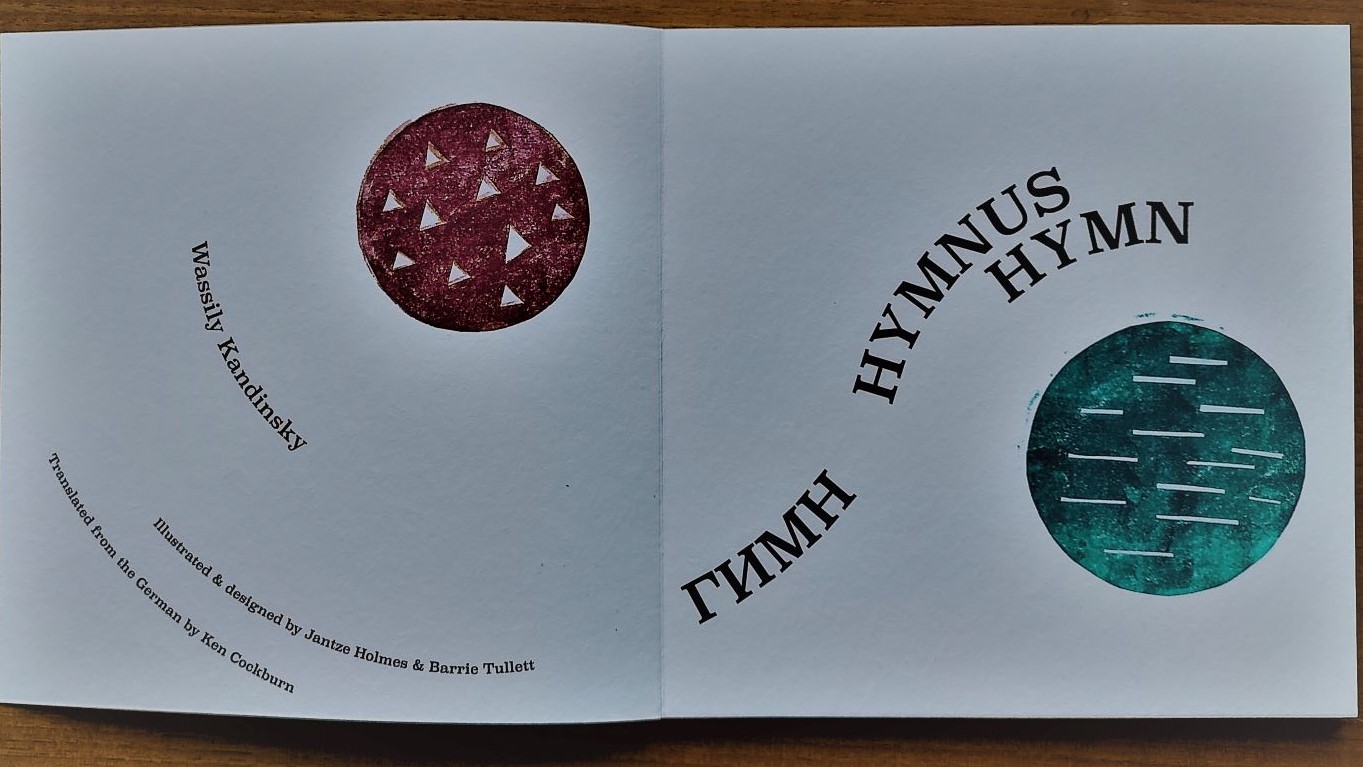
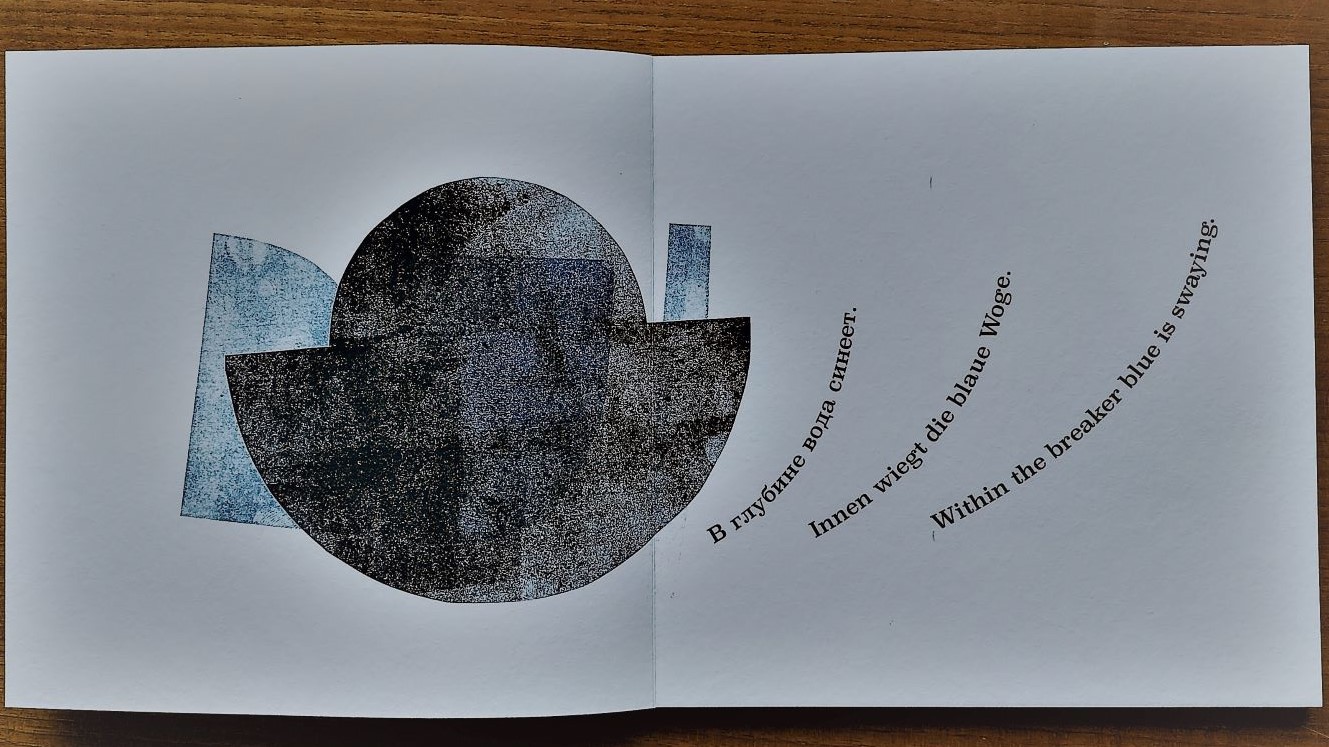
In June I was contacted by my friend Barrie Tullett. His wife Jantze had “an idea to illustrate a poem (or three) by Wassily Kandinsky, from his book Klänge, which was published in 1913”. I was asked to translate the eight-line poem from the German, which I did, and recently they sent me a copy of the finished article, a book featuring one line of the poem (in Russian, German and English), with illustrations, on each page-spread. You can read more about it here.
Apparently Kandinsky originally wrote the texts in Russian, but then found a German publisher, so translated them himself. The idea was that after the German edition, they’d make a Russian one – but the German edition didn’t sell, so it never happened.
This is the complete eight-line poem in German, followed by my translation (in which I’ve prioritised the rhythm, and to a lesser extent the rhymes):
Innen wiegt die blaue Woge. Das zerrissne rote Tuch Rote Fetzen. Blaue Wellen. Das verschlossne alte Buch. Schauen schweigend in die Ferne. Dunkles Irren in den Wald. Tiefer werden blaue Wellen. Rotes Tuch versinkt nun bald.
Within the breaker blue is swaying. Cloth that’s red is ripped and torn. Red is shredded. Blue is wavey. Padlocked shut the book that’s old. Silent look into the distance. Err in darkness in the woods. Deeper darkens blue that’s wavey. Cloth that’s red will sink down soon.
You can see the pages of the original if you search for ‘Klänge’ here.
There is a recent edition of the woodcuts available on issuu.
And if you want a bit of background, there is always wikipedia.
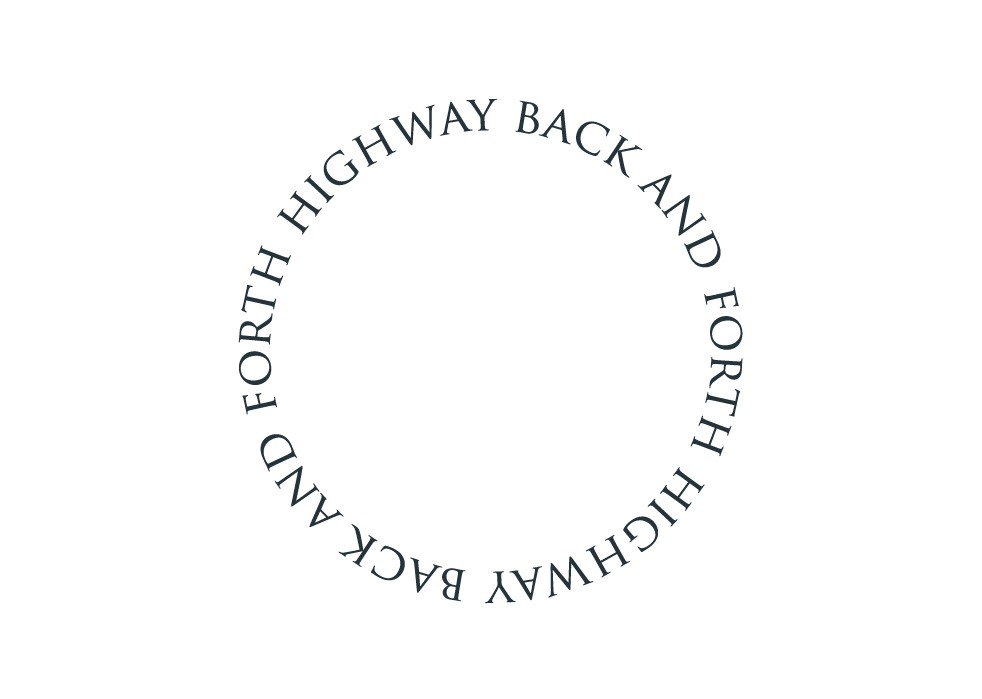
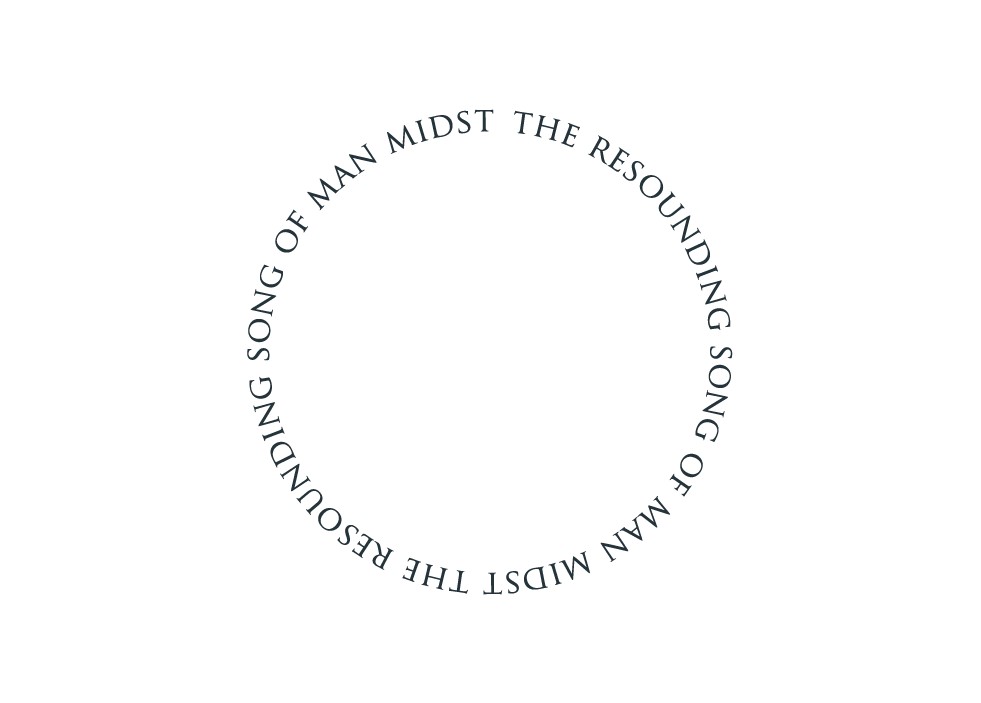
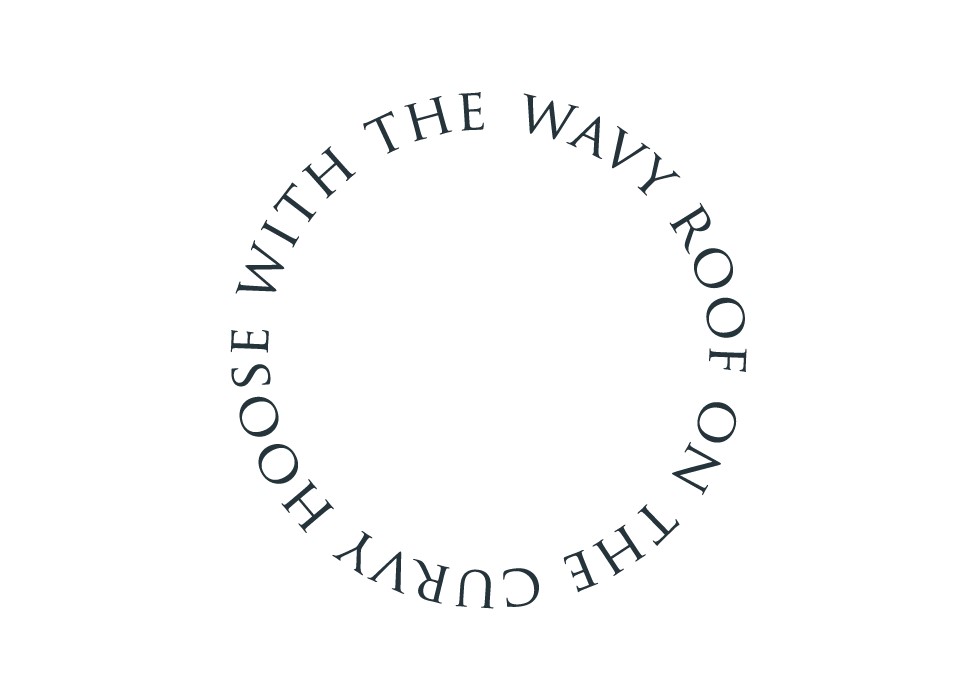
The recent post on Circle Poems reminded me of a project I did a few years ago in Inverness. The Teachers Resource includes a photograph of a circle poem carved into sandstone, and installed by the River Ness. The poem came from some circle poem workshops I led for local residents, and some of their other poems were published as postcards. For some reason I didn’t blog about them at the time, but I managed to find the files and present them here.
I was asked to write a Teachers Resource for this year’s National Poetry Day, on the theme of ‘Environment’. I decided to focus on Circle Poems, a form I’ve used occasionally over the years, as a way of thinking about sustainability and recycling, as well as highlighting the temporal cycles we all live within – days, weeks, years, the four seasons, the waxing and waning moon.
I’ve included some examples of my own circle poems within it, and I’ll add a couple more here.
The ‘moon’ circle was published in Quait, issue 2 (2015).
I’ve been reading poems into my phone and my laptop quite often over the past few months.
Earlier this year The Academy of American Poets published ‘Home’ as part of the poem-a-day series. It’s a portrait of my father in his last months of his life, and you can read and listen to it here.
Then there are three poems in edition #10 of iamb: poetry seen and heard – ‘Hands’, ‘Rodney’ and ‘Ward’. I’m in good company – Jay Whittaker, Penelope Shuttle and others.
Last year I was commissioned by Edinburgh’s Push the Boat Out poetry festival to write poems about central Edinburgh for A Poetry Mile. I wrote three new poems, and they also accepted a couple of older poems, ‘Close’ and ‘William ‘Deacon’ Brodie’.
You can find recordings of me reading them on the Poetry Map section of the website -again in good company, including Alan Spence and JL Williams – but you do have to hunt for the poems, as even if you know the city well they’re not quite where they should be.
To listen to ‘Jacob’s Ladder’, click the marker on Calton Road just west of the junction with New Street.
‘Close’ is the marker on the High Street by Filling Station.
The marker for ‘Greyfriars Bobby’ is inside Greyfriars Kirkyard.
Rather than inside his eponymous tavern, ‘William ‘Deacon’ Brodie’ can be found loitering at New College, between Mound Place and Castlehill.
‘The Ballad of William Knox’ should be in the New Calton Burial Ground, or New Calton Cemetery as it’s called on the map, which runs from Regent Road down to Calton Road. Knox’s needle stands roughly between Archibald Elliott and Robert Stevenson, but there’s no marker in the vicinity. If you manage to locate him, let me know.
It’s been a long time since I offered a poetry walk in the Old Town – almost two years. I gave some illustrated talks to U3A groups before the first lockdown, and since then have done a couple of online presentations.
In early 2020 I had a pamphlet of poems ready to publish with The Caseroom Press in early summer, with a view to promoting it during that year’s Edinburgh Fringe… but things didn’t go according to plan. For a while it seemed possible I could do something for the 2021 Fringe, but deadlines came and went.
It’s now ready, and I’m launching it in the days following National Poetry Day. First there’s a walk through the Old Town, from St Giles down the High Street and Canongate and into Holyrood Park, and then I’m also doing an online launch a few days later, for those unable (or unwilling) to venture into central Edinburgh and brave the autumn weather.
The walk is on Saturday 9 October at 11.00; the online launch on Tuesday 12 October at 19.00. For the latter I’ll be joined by Barrie Tullett, who designed and published the pamphlet for The Caseroom Press. You can book both the walk and the online launch via Eventbrite, and when booking you also have the option to buy a copy of the pamphlet.
Edinburgh: poems and translations includes original poems about Register House (and specifically the magnificent central dome designed by Robert Adam), the Scottish parliament building, and my then four-year old daughter running up and down Fleshmarket Close. There’s also a poem about Deacon Brodie who, despite being a legendary Edinburgh character, has been neglected by poets. The translations are of poems by Arthur Johnston, the 17th century Latin poet much admired by his near-namesake Samuel Johnson, by Victor Hugo, who conjures a romantically ruined Holyrood despite never visiting the city, and by Theodor Fontane, who did visit but whose ‘John Knox’s Death’ is full of anachronisms, all intentional no doubt
Otherwise, if you’d like to buy a copy of the book get in touch! Until 12th October they cost £5.00 + P&P (thereafter £7.00 + P&P). As the photo above shows, the books are available in a variety of cover colours. If you have a preference, let me know.
Edinburgh: poems & translations ISBN 978-1-905821-35-8 210 x 130mm, 16 pages, soft covers, saddle stitch binding
I read a couple of my bird poems, and then asked folk to use their powers of memory, observation and imagination to write something about their own experiences of birds.
These are some of the texts that came out of the session.
The Spirit of Birds

Sometimes I am the sandpiper
 Sea loving, shore wading
  Searching, darting
   Watching for intruders
  Moving quickly and never
 getting stuck in the soft sand
or washed away by waves or tide

Sometimes I am the mute swan
 Pond floating, reed resting
  Bobbing, sweeping
   Ignoring all intruders
  Stretching calmly and never
 worrying about being seen,
flying away whenever I like

Sometimes I am the raven
 Gate guarding, tree swaying
  Hunting, calling
   Laughing at intruders
  Circling from up high and never
 getting lost in the city
or caught picking pocket or bin

Sometimes I am the songbird
 Feather dusting, hedge rustling
  Whistling, warbling
   Warning of intruders
  Calling in my kinfolk and never
 missing the sunrise,
weaving arias into the night

Linda Haggerstone
I finally finished my poem after walking home from shopping and hearing a large number of smallish birds calling to each other from tree and rooftops. I could not see what they were, but I had to stop and listen. I knew then what was missing from my poem: the songbird.
I’ve since sent the poem out in a homemade card (with birds) to another randomly chosen participant in the #KindnessByPost activity (my second) from the Mental Health Collective. I love reading it aloud.
Skylarks Easter hymn the Bonaly track
piccolo the cleugh head
Curlew calls thin the Capelawside air
flute the thermals to the source of the Leith

Helen Boden


Birds near me

I can hear birdsong from outside, there is a tree in front of my window.
Saw a few birds at Strathclyde Park but it is full of people there.
The swans take over Hogganfield Park in Glasgow, they are everywhere!

*

A dove can fly high up in the sky
Look down to the city centre
See all the people rushing along from above
Must find a crumb to survive

Antje Bothin


Heron

Attuned to Spring
I spend time
eavesdropping
console myself with embroideries
of fanned plumage
balanced on cream silk
stitching the wind
under the wide wingbeat
of a rising heron
into each fibre

MT Taylor
Wings

Three stories up wide white-winged gulls possess the space
outside my human sanctuary

Swinging/swooping circumscribed by flight
bodies swift as steel torpedoes
slicing/relentlessly through liquid light.

Wild as the wind they ride
the upward drafts/Glasgow’s capricious turbulence,
pausing fleetingly/suspended
on the apex of a wilful thought
then streaming down
towards the grey-green waters of the Clyde
smacking its surface as they gather pace
and hurtle skywards once again
into the spaciousness they occupy
outside my timid time and place.

Annie Webster

swallow

I am a long-haul traveller
I see the world
no need for passports or papers
as I zig and zag to and fro
places you will only ever know
from stamps or on the news
but I am drawn   magnetic/navigated
by warmth and food and love
and from above I watch the climate change
the glaciers’ melt
the river beds dry
fly with locusts set on destruction
witness pollution
the rising seas
decline in bees
the refugees
strange animals you’ll never see
the greens   the blues   the desert yellows
but now I’m coming home to roost
to meet my mate
to warn you to take care
before it’s far too late

Kay Ritchie
Window Watching Bird Enthusiast
When the first lockdown started last year and we were asked to stay at home, the hyperactive energy that usually permeated the air was settling into a gentle simmer. The streets and sky were quiet and clear of that dirty, stuffy invisible fog that suffocated our observations of the smaller life that was growing and surviving all around us. In having to stay indoors and with outdoor access shrunk to 5 miles, my local area became my own wider world. That 1 hour of outside time took me through lanes and streets I was too anxious to explore, fearfully expecting the Neighbourhood Watch to misinterpret my slow aimless wandering and casual glances through curtainless windows as scouting for a potential breaking and entering instead of human curiosity and inspiration for my own home decor. It took me to plants and trees and patches of woodlands I’d passed on the bus that I promised I’d visit at the weekend only to forget a few minutes later as the bus pulls into my stop and I start thinking about all the possible dangers that are lurking in the shadowy corners of the 5 minute speed-walk home. The less people were around and the more common daytime wandering had become, the dangers that had previously presented themselves were not quite as loud. I still had anxiety that would hold me hostage for days at a time which, in hindsight, I now recognise as hyper-vigilance and actively living through a pretty stressful few years of uncertainty.
Still, even amongst all that anxiety and trauma, I had found respite in the lockdown. I didn’t feel as guilty for staying indoors and would sit at my living room window hidden from street view by a young blackthorn tree and a flourishing fuchsia bush. In this guilt-free bliss, I started to notice things I hadn’t seen before. Bumblebees were frequent visitors to the little ballet-dancer flowers of the fuchsia; their little striped bodies disappearing into the pink and purple nectar source. The more I looked, the more I would see. The bush was a packed out lunchtime buffet for these hungry little pollinators. I listened more carefully to the sounds gliding through my open window. With the sound of cars and planes infrequent, the songs and calls of birds and squirrels were accepting their solo in the urban orchestra of sound. I wanted to meet these birds that I would see only as a blur dive-bombing into the massive rhododendron that was taking up half of my front garden. I’d installed an app to identify the chirps and melodies of these avian mysteries and could now recognise robins, blue tits, starlings and blackbirds by sound, but now I needed the visual component to realise these birds. I set up bird feeders outside all 3 windows of my ground-floor flat, fat balls in coconut shells hung from sturdy branches, their delicious innards enticing them as close to the window as possible. The first diners came a few hours later – a robin with its stout red chest instantly recognisable, and a blue tit with its yellow neck surprised me how much smaller it was than the other feasting birds. The sparrows with their shades of brown favoured the feeder at the living room window, while a family of blue tits favoured the secluded shade of the bedroom window, much to the delight of my cat who would fall asleep watching one peck upside-down through the gaps in the mesh of the plastic feeder while others hop from branch to branch, side-stepping closer and closer, awaiting their turn to fill their bellies.
Becoming familiar and finding joy in these little creatures cemented my fondness and delight for birds and most definitely got me through the hardest moments during lockdown, so when scrolling through the SMHAF events, my heart fluttered when I saw the workshop ‘Where Are The Birds Taking Me?’ What better way to honour these magnificent creatures than to immortalize them through words. We were first tasked with spending some time writing about places where we have seen birds and how they characterise those places. Once I had gone through the usual suspects (seagulls, pigeons and crows), I was taken to a recent 2am wander where I had spotted a songthrush regaling stories of the local cityscape, singing songs of car alarms and owners calling for their dogs, filtering through the branches on the tree-lined walkway of the old Leith Railway line.
We were then asked to write descriptions of comparisons of calls, plumage and flight. David Attenborough’s narration of the Birds of Paradise in Papua New Guinea flashed into my mind. Feathery works of art that have evolved elaborate and vibrant plumage make them the fashion icons of the jungle. Our drab street pigeon has nothing on them. I remember years ago being blown away by the Australian Lyrebird (again thanks to Sir Attenborough). It could mimic natural and artificial environmental sounds including chainsaws, the beeping of a reversing truck and camera shutters. I heard a blackbird mimic a seagull once. If they are our equivalent of environmental indicators, there must be a healthy abundance of seagulls next to the Morrisons in Granton.
Our last quick bit of writing was to choose an area where the birds can access, but we cannot and tap into the bird’s eye view. This activity was a little more challenging as my mind was filled with environments from the sky to the sea, under bridges to the space between mountain peaks. I pictured a migratory bird sailing through the atmosphere, passing over landscapes uninhabitable and inaccessible to man. With ease, they glide over changing seasons that we are only witness to on the ground. How cold and beautiful it must be from up there.
The more we wrote and shared our experiences and observations of birds, the more I became aware of the diversity and expanse of the bird world. I recently went on a small adventure not too far from home and spotted birds I hadn’t seen before. I met 3 pheasants grazing on farmland and 2 male bullfinches just going about their business. There are always new birds to identify and get to know locally and more widely. Even the ones we already know have personalities and variations – one of the sparrows that visits my window feeder likes to dig for particular seeds and makes a mess on my windowsill. It’s been more than a year since we first went in to lockdown and I am pleased that this is the hobby that has emerged from it.
I leave with a short poem:
A mallard lazily breezes through reeds in the centre of a pond. Hidden from view, Like a predator in the savannah, It sees you, but not you it. Only the wiggle of the tips of the reeds give any indication of the life inside. It navigates effortlessly through the jungle of stalks, Unknown presences avoided silently. How quiet and peaceful it must be, To be invisible to the human eye.
Nic Saunders
With thanks to all those who took part, to Roisin Robertson at Renfrewshire Council for programming the event as part of the festival, and to all the birds who appeared to us on the day and subsequently.
Processing…
Success! You're on the list.
Whoops! There was an error and we couldn't process your subscription. Please reload the page and try again.
I’m asking the question again, this time for StAnza 2021.
The birds – herring gull, goldfinch, heron, raven, wren, chough, corncrake snipe and blackbird – feature in a digital installation of nine prints by Lisa Hooper and nine poems by myself.
It’s available from 6 to 31 March.
The poems came out of a residency at the Wigtown Book Festival in 2019, and were first combined with Lisa’s prints as a presentation for the (online) Wigtown Book Festival in 2020.
Wet Grain is a new, print-only poetry magazine published in Glasgow, and edited by Patrick Romero & Christian Lemay.
They describe it as “a new journal interested in the lyric grooves that channel and redirect our apprehension of the world and the ideas implacably fankling themselves within it.”
They were kind enough to include three new poems of mine, ‘Provenance’, ‘Muse’ and ‘Among Antiques’, alongside work by Eloise Birtwhistle, Richard Price, Elle Heedles, Colin Herd and many others. The cover art (and the photo above) is by Lorna Wade.
According to their Editorial, “taken together, then, these poems are germ, ferment and mulch, warm with a latent and malty potential for life and growth”.
Copies are available from the website at £5 plus postage.













 Poems on the page and in the world