Tag Archives: Edinburgh

An Edinburgh Alphabet, H–M

H is for Holyrood

Holyrood Abbey and Palace Holyrood Palace RLS 1 Holyrood Palace
The Palace of Holyroodhouse sits at the foot of the Canongate, below Salisbury Crags and Arthur’s Seat. The abbey, built long before the palace, has long been a ruin. Here are three (prose) views of Holyrood: Boswell’s private ceremony as he leaves the city for London; Dorothy Wordsworth’s disappointment at the state both of the ruined abbey and the unruined palace; and Robert Louis Stevenson’s portrait of this corner of the city.

Boswell: I made the chaise stop at the foot of the Canongate… walked to the Abbey of Holyroodhouse, went round the Piazzas, bowed thrice: once to the Palace itself, once to the crown of Scotland above the gate in front, and once to the venerable old Chapel. I next stood in the court before the Palace, and bowed thrice to Arthur Seat, that lofty romantic mountain on which I have so often strayed in my days of youth, indulged meditation and felt the raptures of a soul filled with ideas of the magnificence of GOD and his creation. Having thus gratified my agreeable whim and superstitious humour, I felt a warm glow of satisfaction. (Journal, 15 November 1762)

Wordsworth: Though the rain was very heavy we remained upon the hill for some time, then returned by the same road by which we had come, through green flat fields, formerly the pleasure-grounds of Holyrood House, on the edge of which stands the old roofless chapel, of venerable architecture. It is a pity that it should be suffered to fall down, for the walls appear to be yet entire. Very near to the chapel is Holyrood House, which we could not but lament has nothing ancient in its appearance, being sash-windowed and not an irregular pile. It is very like a building for some national establishment, – a hospital for soldiers or sailors. (Journal, 16 September 1803)

Stevenson: The Palace of Holyrood has been left aside in the growth of Edinburgh, and stands grey and silent in a workman’s quarter and among breweries and gas works. It is a house of many memories. Great people of yore, kings and queens, buffoons and grave ambassadors, played their stately farce for centuries in Holyrood. Wars have been plotted, dancing has lasted deep into the night, – murder has been done in its chambers. There Prince Charlie held his phantom levees, and in a very gallant manner represented a fallen dynasty for some hours. Now, all these things of clay are mingled with the dust, the king’s crown itself is shown for sixpence to the vulgar; but the stone palace has outlived these charges. (from Edinburgh: Picturesque Notes, 1878)

I is for Inscriptions

Inscription_MakarsCourt_GMBrown Inscription_MakarsCourt_Hay Inscription_MakarsCourt_Spark

Inscription_Parliament_Brooksbank Inscription_Parliament_Hopkins Inscription_Parliament_Jackson Inscription_Parliament_MacCaig

Poems are written into the fabric of Edinburgh. Here are a few examples from Makars Court, between the Lawnmarket and the Mound, outside the Writers Museum (Brown, Hay and Spark); and from the Canongate Wall of the Scottish Parliament (Brooksbank, Hopkins, Jackson and MacCaig).

J is for Johnson

Johnson_BoydsEntry Johnson_withBoswell_HighStreet

‘Boyd’s Inn, at which Dr Samuel Johnson arrived in Edinburgh, 14th August, 1773 on his memorable tour of the Hebrides.’

Johnson had come to Scotland to meet his friend (and future biographer) James Boswell. After a few days in Edinburgh they set out north; when they returned to Edinburgh in November they had seen the islands of Skye, Raasay, Coll, Mull, Ulva, Inchkenneth and Iona. Both men wrote accounts of their journey; Boswell’s The Journal of a Tour to the Hebrides begins with Johnson’s arrival in Edinburgh. (On the last leg of his journey north, Johnson’s travelling companion has been a Mr Scott.)

‘Late in the evening, I received a note from him, that he was arrived at Boyd’s inn, at the head of the Canongate. I went to him directly. He embraced me cordially; and I exulted in the thought, that I now had him actually in Caledonia. Mr Scott’s amiable manners, and attachment to our Socrates, at once united me to him. He told me that, before I came in, the Doctor had unluckily had a bad specimen of Scottish cleanliness. He then drank no fermented liquor. He asked to have his lemonade made sweeter; upon which the waiter, with his greasy fingers, lifted a lump of sugar, and put it into it. The Doctor, in indignation, threw it out of the window. Scott said, he was afraid he would have knocked the waiter down. (…) Mr Johnson and I walked arm-in-arm up the High Street, to my house in James’s court: it was a dusky night: I could not prevent his being assailed by the evening effluvia of Edinburgh… A zealous Scotsman would have wished Mr Johnson to be without one of his five senses upon this occasion. As we marched slowly along, he grumbled in my ear, ‘I smell you in the dark!’ But he acknowledged that the breadth of the street, and the loftiness of the buildings on each side, made a noble appearance.’

K is for Knox

Knox_gravestone Knox_gravestone2 Knox_gravestone3 Knox_LincolnStatue

Not John but William, though his gravestone in the New Calton Burying Ground it’s written that he was ‘a branch of the stock of the great reformer John Knox’. The poet William Knox died in 1825 aged only 36; of him it was written that his early death was caused by ‘the undue gratification of his social propensities’. Throwing off his ancestor’s disapproval of fun, by the sound of it. His poetry is largely forgotten, but it was popular in his lifetime, and for some time afterwards. His poem ‘Mortality’ is, again according to his gravestone, ‘engraved in letters of gold on the walls of the Imperial Palace, St Peterburg’; not only that, ‘it was the favourite poem of Abraham Lincoln’. Its first and last verses are inscribed on his stone; the fact the stone’s surface has become so worn fits well Knox’s theme of the transience of earthly matters. (There is, incidentally, a statue of Lincoln not far from Knox’s grave, in the Old Calton Burial Ground, on a memorial to Scots who fought on the Union side in the American Civil War.)

Oh, why should the spirit of mortal be proud?
Like a swift-fleeting meteor, a fast-flying cloud,
A flash of the lightning, a break of the wave,
He passes from life to his rest in the grave.

‘Tis the wink of an eye – ’tis the draught of a breath –
From the blossom of health to the paleness of death,
From the gilded saloon to the bier and the shroud –
Oh, why should the spirit of mortal be proud?

L is for Lorimer

Lorimer_Parliament_1_ Corinthians_13

Outside Queensberry House, the 17th-century building integrated into the Scottish Parliament building, a text is inscribed on the ground: ‘Gin I speak wi the tungs o men an angels, but hae nae luve i my hairt, I am no nane better nor dunnerin bress or a rínging cymbal’. It’s taken from the translation into Scots of the New Testament made by William Lorimer (1885-1967). Lorimer taught Ancient Greek at various universities, and when he retired was Professor of Greek at the University of St Andrews. He was also a long-term contributor to the Scottish National Dictionary, and he spent his retirement translating the New Testament from Greek into Scots. The work was unfinished when he died, but it was completed by his son Robin and published to acclaim in 1983. (Canongate Books published a new edition recently.) The text outside the Parliament is from 1 Corinthians 13; here is a longer extract, and the equivalent passage in the King James Version.

Gin I speak wi the tungs o men an angels, but hae nae luve i my hairt, I am no nane better nor dunnerin bress or a rínging cymbal. Gin I hae the gift o prophecíe an am acquent wi the saicret mind o God, an ken aathing ither at man may ken, an gin I hae siccan faith as can flit the hills frae their larachs – gin I hae aa that, but hae nae luve i my hairt, I am nocht. Gin I skail aa my guids an graith in awmous, an gin I gíe up my bodie tae be brunt in aiss – gin I een dae that, but hae nae luve i my hairt, I am nane the better o it.

Though I speak with the tongues of men and of angels, and have not charity, I am become as sounding brass, or a tinkling cymbal. And though I have the gift of prophecy, and understand all mysteries, and all knowledge; and though I have all faith, so that I could remove mountains, and have not charity, I am nothing. And though I bestow all my goods to feed the poor, and though I give my body to be burned, and have not charity, it profiteth me nothing.

M is for Makar

Makar_ChristineDeLuca

Makar: ‘the author of a literary work; a poet’ (Scottish National Dictionary). Since 2002 Edinburgh has had its own makar, appointed by representatives of the city council and several literary organisations. The current makar is Christine De Luca; she followed Ron Butlin, Valerie Gillies and Stewart Conn. Over the summer Christine has organised a series of poetry readings at the City Art Centre, and the Museum of Edinburgh; she’s pictured in the courtyard of the latter. With Ingrid Murray she wrote ‘A Month Down the Mile’, a poem in 31 verses describing people and places past and present of the Royal Mile, from the castle to palace.
 Her blog can be read here.
An Edinburgh Alphabet, A–G

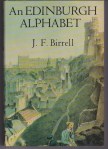
An Edinburgh AlphabetThis Edinburgh Alphabet features poems (and some prose) about the city; I’m posting it on Facebook in July and August. I’ve taken the idea partly from J.F. Birrell’s book  from 1980, which I came across by chance recently in an Oxfam bookshop; and partly from the exhibition currently running at the City Art Centre.


A is for Auld Reikie

Auld_Reikie_RF  Burns Fergusson epitaph

Edinburgh’s cramped and densely populated Old Town was known as Auld Reikie (‘Old Smoky’). The poet of its bustle and vapours was Robert Fergusson, who wrote in both Scots and English, but it’s for the Scots work that he is best remembered; his longest poem ‘Auld Reikie’, captures the sights, sounds and smells of the city he lived in.

He died in 1774, tragically young, and was buried in the Canongate Kirkyard. beneath a stone commissioned by Robert Burns. Today on the Canongate, David Annand’s bronze statue of the poet, book in hand, walks beneath the cherry trees. At his feet are inscribed the opening lines of ‘Auld Reikie’.

Auld Reikie, wale o’ ilka toun
That Scotland kens beneath the moon;
Whare couthy chiels at e’ening meet
Their bizzing craigs and mous to weet;
And blythely gar auld Care gae by
wi blinkit and wi bleering eye…

(wale: best; ilka: each; mouthy: friendly; chiels: fellows; craigs: throats)

B is for Burns

Burns Moument 1 Burns Moument 2 Burns Moument 3

Robert Burns (1759–1796) was born, grew up and farmed in Ayrshire. His Poems, Chiefly in the Scottish Dialect were published to acclaim in 1786, and he travelled to Edinburgh at the end of that year hoping to find a patron. He was welcomed and celebrated, but disappointed in his hopes; eventually he had to take a job as an exciseman to achieve a measure of financial security.

While in Edinburgh he arranged for a stone to be erected in the Canongate Kirkyard for the poet Robert Fergusson (1750–1774), who had been buried there in a pauper’s grave. Burns knew and admired his work, and wrote this epitaph for his stone:

No sculptur’d Marble here, nor pompous lay,
No storied Urn nor animated Bust;
This simple stone directs pale Scotia’s way
To pour her sorrows o’er the Poet’s dust.

Ironically, Burns himself was memorialised in ‘sculptur’d marble’ by the citizens of Edinburgh. In 1824 John Flaxman was commissioned to produce a life-size statue of Burns in white marble, and a monument was built to house it, designed by Thomas Hamilton. If Fergusson lived in Auld Reikie, after his death the city become known as the ‘Athens of the North’, thanks to such buildings as Hamilton’s neo-classical Royal High School. As his template for the nearby Burns’ monument, Hamilton chose the Choragic Monument of Lysicrates in Athens. Completed in 1831, in 1839 it was handed over to the care of the city council, when the statue was moved due to smoke from the gasworks below discolouring the marble; Auld Reikie was determined not to be forgotten. The statue is now in the Scottish National Portrait Gallery on Queen Street.


C is for Clarinda

Clarinda

‘Clarinda’ was Agnes (Nancy) M’Lehose (1758–1841). She met Robert Burns in December 1787 when he was visiting Edinburgh for the second time, and they began a ‘passionate friendship’. Married with four children, she was estranged from her husband (who lived in Jamaica where he owned a plantation). She had moved from Glasgow to Edinburgh where she was supported by relatives including her cousin William Craig, a lawyer and judge.

It’s thought her and Burns’ relationship wasn’t sexual – as a married woman she had too much to lose. Burns managed to get one of her serving girls pregnant – perhaps a sign of his frustration at this state of affairs. When he left Edinburgh they wrote to each other, and it was her idea to use the ‘Arcadian’ names of Clarinda and Sylvander. He wrote several poems to her, which don’t rank amoing his finest.

They last met in December 1791. She was about to sail for the West Indies to attempt – vainly, as it turned out – a reconcilation with her husband. By then he was married, and living in Dumfries where he worked for the Excise department. On the occasion of their last meeting he wrote for her ‘Ae Fond Kiss’.


D is for Dùn Eideann

DùnEideann_DBMgrave

Dùn Eideann is the Gaelic name for Edinburgh. A Gaelic speaker who lived in the city was the poet Donnchadh Bàn Mac an t-Saoir, whose name is anglicised as Duncan Ban MacIntyre (1724–1812). From Glen Orchy in Argyll, he worked there and in Perthshire before settling in Edinburgh in 1767 where he served with the City Guard. He is buried in Greyfriars Kirkyard.

Among his poems is ‘Oran Dhùn Eideann’ (Song to Edinburgh), which praises many aspects of the city: soldiers, ladies, and judges; lamps, bells and coaches; the castle, palace and infirmary. Below is the opening verse in Gaelic and English (translated by Angus Macleod, in The songs of Duncan Ban Macintyre, 1978), and I’ll add a link to a now digitised earlier edition of his work published in France.

‘S e baile mór Dhùn Eideann
A b’ éibhinn leam bhith ann,
Aite fialaidh farsaing
A bha tlachdmhor anns gach ball;
Gearasdain is batraidh
Is rampairean gu teann,
Taighean móra ‘s caisteal
Anns an tric an d’ stad an camp.

‘Tis in Edinburgh city
I would rejoice to be—
a bountiful and spacious place
that pleased in all respects:
garrison and battery
and ramparts all compact;
great buildings and a castle

where oft the camp has stayed.

E is for Eneados

Eneados_GavinDouglas Eneados_GavinDouglas_MakarsCourt Eneados_SicIturAdAstra

When Gavin Douglas (1474–1522) translated Virgil’s Aeneid into Scots – ‘our awyn langage’, as he put it – in 1512–13, he was Provost of St Giles in Edinburgh. Soon after it was completed came the disastrous Scottish defeat at the Battle of Flodden, and Douglas spent the rest of his life involved in political intrigues. He died in London, where his Eneados was published thirty years after his death. It was the first complete translation of Virgil’s work into a northern European language, and was extended by Douglas’s own prologues; Ezra Pound reckoned it “better than the original, as Douglas had heard the sea”.

From its founding in 1128 until its amalgamation with Edinburgh in 1856, the Canongate was an independent burgh. Its Latin motto, SIC ITUR AD ASTRA – ‘thus one travels to the stars’ – was taken from the Aeneid. Virgil’s epic tells the story of Aeneas, a Trojan who is destined to found the imperial city of Rome. The phrase comes in a section which describes the God Apollo descending to praise Aeneas’ son Iulus, who has distinguished himself in battle. Douglas’s version runs

Down from the regioun of the hevin tho
The brycht curland haryt Appollo,
Apon a clowd syttand quhayr he wald,
The ostis of Italianis can behald,
And eyk new Troyis cite, with cheyr glayd
Till lulus the victor thus he sayd :
Eik and continew thy new vailyeand deidis,
Thou yong child ; for that is the way the ledis
Up to the sternis and the hevynnis hie,
Thou verray Goddis ofspring, quod he,
That sal engendir Goddis of thy seyd.

F is for Finlay

Finlay Coble SP 1 Finlay Green Waters SPL Finlay Hunter Square 1 Finlay RLS A Man of Letters 2

Ian Hamilton Finlay (1925–2006) is a poet best known for his garden, Little Sparta, south of Edinburgh in the Pentland Hills, made with his wife Sue. It is a small piece of the world dense with resonances and echoes, especially of the absent worlds of the sea and classical antiquity. Finlay made several works for sites in Edinburgh. A tapestry of the poem ‘Green Waters’, made of fishing boat names, hangs in the Scottish Poetry Library, while ‘Coble’ can be found in the The Scottish Parliament; bronze baskets of northern and southern fruits with accompanying quotations can be found in Hunter Square, by the Tron Kirk on the High Street; and his memorial to Robert Louis Stevenson, ‘A Man of Letters’, is in Princes Street Gardens.

G is for Golden

Golden City 1 Golden City 2 Golden City 3

In 1965 James T.R. Ritchie published Golden City, a follow-up to his earlier collection (and film) of Edinburgh children’s rhymes, songs and sayings, The Singing Street. He writes in the Prologue to Golden City that “I made it a rule never to take any rhymes out of any book, only to note down what I heard by word of mouth, and from the pupils of this one school.” (The school was Norton Park School, just off Easter Road.)


Spring on the Canongate

It’s nearly the end of April, and despite ongoing night-frosts and occasional hail, there are signs of spring on the Mile.

Canongate spring John Knox House

The figure on John Knox House pointing towards the sun is lit by the sun.

Robert Fergusson walks beneath a canopy of cherry blossom, which stretches to shadow the board listing the kirkyard’s famous dead.

Canongate spring AWAKE

And a contemporary author knows what time of year it is too.


ECLIPSE: Enlightenment

DF Lunar Eclipse Solar Eclipse

Coinciding with the lunar eclipse on 4 April, and following the recent solar eclipse, David Faithfull’s ‘Moon draws Sun / Earth draws Moon’ has been projected onto the side of Castle Mill Works in Fountainbridge. As part of the Dark Matters project, we discussed in situ the installation and its connections with Enlightenment Edinburgh. (Thanks to Judith Liddle for the photos below.)

The Encyclopaedia Britannica was founded in Edinburgh in the 1760s, and early editions were printed in in Fountainbridge. The city at the time was just beginning to expand from the old town huddled for protection beneath the castle; and of its home city the EB states approvingly that “a plan of a new town to the north is fixed upon, and is actually carrying into execution with surprising rapidity, and with an elegance and taste that does honour to this country.”

I read parts of the ASTRONOMY ‘treatise’ from the first edition of the EB from 1768. While telescopes had given us a sense of the size of the universe, we had as yet no sense of geological time – that had to wait until James Hutton’s Theory of the Earth, elaborated in the 1780s and published in book form in 1795. And the author’s belief in a benevolent deity led him to this, to our minds certainly, surprising conclusion:

[There is] no room to doubt, but that all the planets and moons in the [solar] system are designed as commodious habitations for creatures endued with capacities of knowing and adoring their beneficent Creator. (…) From what we know of our own system, it may be reasonably concluded, that all the rest are with equal wisdom contrived, situated and provided with accommodations for rational inhabitants.

This, the author contends, extends even to comets:

The extreme heat, the dense atmosphere, the gross vapours, the chaotic state of the comets seem at first sight to indicate them altogether unfit for the purposes of animal life, and a most miserable habitation for rational beings ; and therefore some are of the opinion that they are so many hells for tormenting the dammed with perpetual vicissitudes of heat and cold. But when we consider, on the other hand, the infinite power and goodness of the Deity, the latter inclining, and the former enabling him to make creatures suited to all states and circumstances ; that matter exists only for the sake of intelligent beings ; and that where-ever we find it, we always find it pregnant with life, or necessarily subservient thereto ; the numberless species, the astonishing diversity of animals in earth, air, water, and even on other animals ; every blade of grass, every leaf, every fluid swarming with life ; and every one of these enjoying such gratifications as the nature and state of each requires ; When we reflect moreover, that some centuries ago, till experience undeceived us, a great part of the earth was judged uninhabitable, the torrid zone by reason of excessive heat, and the frigid zones because of their intolerable cold ; it seems highly probable, that such numerous and large masses of durable matter as the comets are, however unlikely they be to our earth, are not destitute of beings capable of contemplating with wonder, and acknowledging with gratitude, the wisdom, symmetry, and beauty of the creation ; which is more plainly to be observed in their extensive tour through the heavens, than in our more confined circuit. If further conjecture is permitted, may we not suppose them instrumental in recruiting the expanded fuel of the sun, and supplying the exhausted moisture of the planets? However difficult it may be, circumstanced as we are, to find out their particular destination, this is an undoubted truth, that wherever the Deity exerts his power, there he also manifests his wisdom and goodness.

Reading this, I am surprised Edinburgh was not also the founding city of science fiction literature.

DF Eclipse

Come dusk, the generator was switched on, and David’s installation played over the wall of the Castle Mill Works, a former rubber factory, earmarked to become the new home of Edinburgh Printmakers Workshop in a few years time.

And come dusk, we were all feeling the cold, and were glad of a chance to warm ourselves around the bonfire.

Bonfire

The Ash Grove

2013-05-24 16.31.13

The Ash Grove

a springtime ash, whose leaves emerge from black
an unlocked ash, so profligate with keys
a mourning ash, its branches heaped on pyres
a lettered ash, in the alphabet of trees
a hedgerow ash, which twists among the briars
a spreading ash, in summer’s heat a bield
a sporting ash, to take the shinty field

a warlike ash, for arrows and for spears
a lightning ash, and flame that flash provides
a hanging ash, a shade of dule and tears
a timeless ash, the horse which Odin rides
a steam-bent ash, which hoops the barrel staves
a buoyant ash, a charm against the waves
a blighted ash, whose crown is dying back

I wrote this poem recently and it now forms part of an exhibition, ‘Moving Forward from Ash Dieback’, which will tour to venues across Scotland – it is currently on display at both the Royal Botanic Garden Edinburgh and The Botanic Gardens, Glasgow. Find out more here.

2013-05-24 16.30.50

Letterpress & Typewriters

I spent Saturday at the Scottish Poetry Library in Edinburgh. They were running their annual bookfair, By Leaves We Live, and it must have been one of the best attended ever. I was mostly at The Caseroom Press table with Barrie Tullett, who brought a small selection from his typewriter collection to display, and be used. They were joined by Edwin Morgan’s Blue Bell (part of his archive held by the SPL), and a red Olivetti Valentine, which Angus Reid had bought for his daughter in a Stockbridge charity shop for a tenner, but which drew admiring and even covetous looks from those that know about typewriters.

Barrie recently drew on the old Pepsi advert to write a text about LETTERPRESSIN’, which he letterpressed as a poster, and asked if I’d contribute something similar about POETRY. I obliged, and the result is above. It’s in an edition of 25, at £25.00 each, and copies are still available from the SPL.

A good day of conversations, rounded off with a party for Hamish Whyte’s Mariscat Press, now thirty years young and still going strong.

~in the fields

After our collaboration on Ink, I’ve had the pleasure of working again with ~in the fields, and written texts for two works in their current show at New Media Scotland, Inspace, part of the Edinburgh Art Festival 2012.

Yen To See Distant Places features ‘3D’ images – images literally made up of three layers, that is background, middleground and foreground, or ‘The Sublime’, ‘The Beautiful’ and ‘The Picturesque’. There are fifteen of each, so 45 in total, presented in the gallery on stands, and they can be physically moved. When three are placed in a particular spot on the floor, they are ‘read’ by sensors, which create on a screen a three-part composite image.

from steep and solitary rocks, to
groves deep and high—
an air of majesty and dejection
*****
from gloomy raptures, to
the lonely down—
sepulchral yew

Each ‘ground’ also has its own associated line of text, and beneath the composite image a composite three-line text appears. Just as the ‘grounds’ are adapted from 19th century engravings drawn mainly from Sir Walter Scott’s ‘Provincial Antiquities and Picturesque Scenery of Scotland’, so the lines are drawn from 19th century texts, especially Scott’s. I think of these little three-liners as ‘Romantic haiku’. The composite images (though not, sadly, the texts) are then transmitted to St. Andrew Square where they can be viewed through a telescope located by the Edinburgh Art Festival pavilion.

Drifts Through Debris is a modern take on the 16th century book wheel of Agostino Ramelli. Ramelli’s wheel was made to allow comparisons to be made between different texts – you could have several books open at a time, and by turning the wheel you could compare and contrast their contents.

This wheel features video screens, and draws attention to the growing problem of oceanic plastic pollution. Footage includes archive material from the 1940s extolling the virtues of plastic as a way of utilising what would otherwise be waste products, and responses by two dancers – Sue Hawksley and Tony Mills – to images of sea-creatures constrained in various ways by plastic debris.

I wrote texts to the same images, and extracts from these are presented as part of the soundtrack to the video loops. The wheel is made of steel, with spaces at the hub for small projectors – a clever piece of contemporary design – but you turn it by pulling on handles made of driftwood, so it also has a nice tactile element to it.

The third work in the show is A Diagram of Floating Stones – in tall, thin aquariums, lace-knit wrapped stones from Shetland beaches are given buoyancy by plastic found on the same beaches.

I think it’s a great show – conceptually and visually strong, a fascinating mesh of old and new technologies, and acknowledging the gallery visitor as active participant rather than passive consumer. There are pictures of the opening, and of the works, here.

Seven Hills, Seven Questions

I walked Edinburgh’s Seven Hills as planned at the end of last month, mainly in warm unseasonal sunshine, though the day we walked to the Castle Rock was gothically haar-shrouded. [January 2017 – the various blogs about the walks (on another website) are sadly no longer available.)

The project culminated with an event at Fingerpost (formerly Croy Miners’ Welfare) last Wednesday (18 April), which is World Heritage Day – an exhibition / installation space animated by film, theatre, choral singing, my reading of ‘Seven Questions’.

I managed a walk on Croy Hill, where the Antonine Wall ran – the ditch (right) is the most obvious extant feature. The view above (centre) is looking north, barbarianwards.

Seven Hills: Poetry Walks in Edinburgh, 22-24 March 2012

Image
The lower summit at Blackford Hill

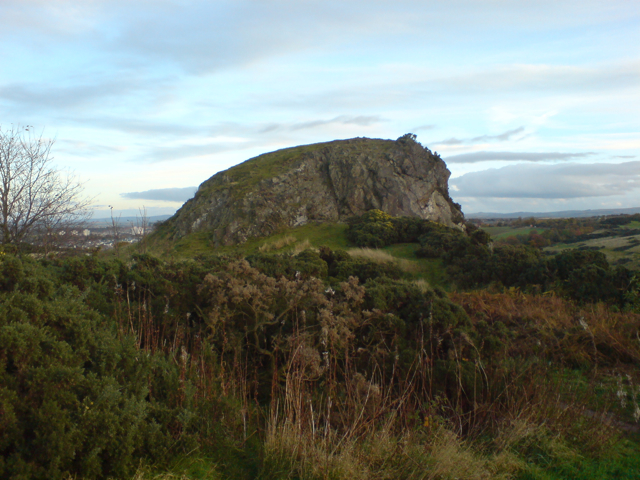
Edinburgh, like Rome, is a city built on seven hills. I’m running three poetry walks later this month to some of those hills, as part of the preparations for World Heritage Day 2012 on 18 April.

Image
Below Calton Hill

Here are the details:
Calton Hill
Thursday 22 March, 1.30pm–5.00pm, meet at Scottish Poetry Library, 5 Crichton’s Close, Canongate, Edinburgh EH8 8DT, where we’ll return after the walk

Arthur’s Seat
Friday 23 March, 1.30pm–5.00pm, meet at Scottish Poetry Library, where we’ll return after the walk

Castlehill
Saturday 24, 1.30pm–5.00pm, meet outside the Scottish Parliament visitors’ entrance (opposite the Queen’s Gallery); the walk will finish at Edinburgh Castle

Image
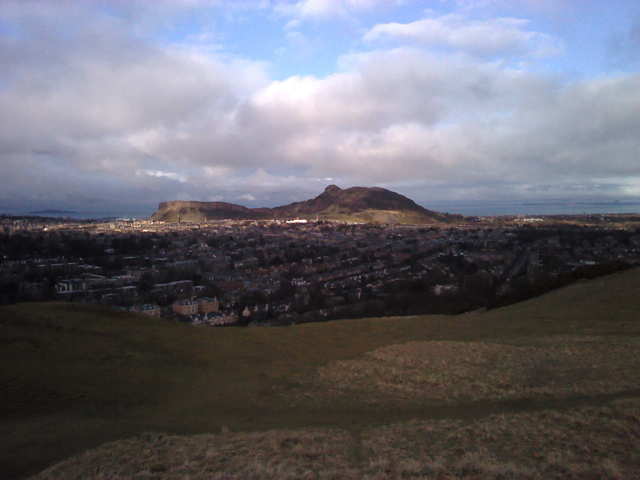
Arthur's Seat seen from the David Hume Tower

All the walks are free, but please book via e-mail as numbers are limited: kencockburn@blueyonder.co.uk

On the day please bring waterproofs and a notebook, and wear footwear suitable for rough underfoot conditions.

At the end of each walk we will spend some time discussing the walk, and reading what we’ve written; on Thursday and Friday at the Scottish Poetry Library, and on Saturday at the Education Room in Edinburgh Castle.

Image
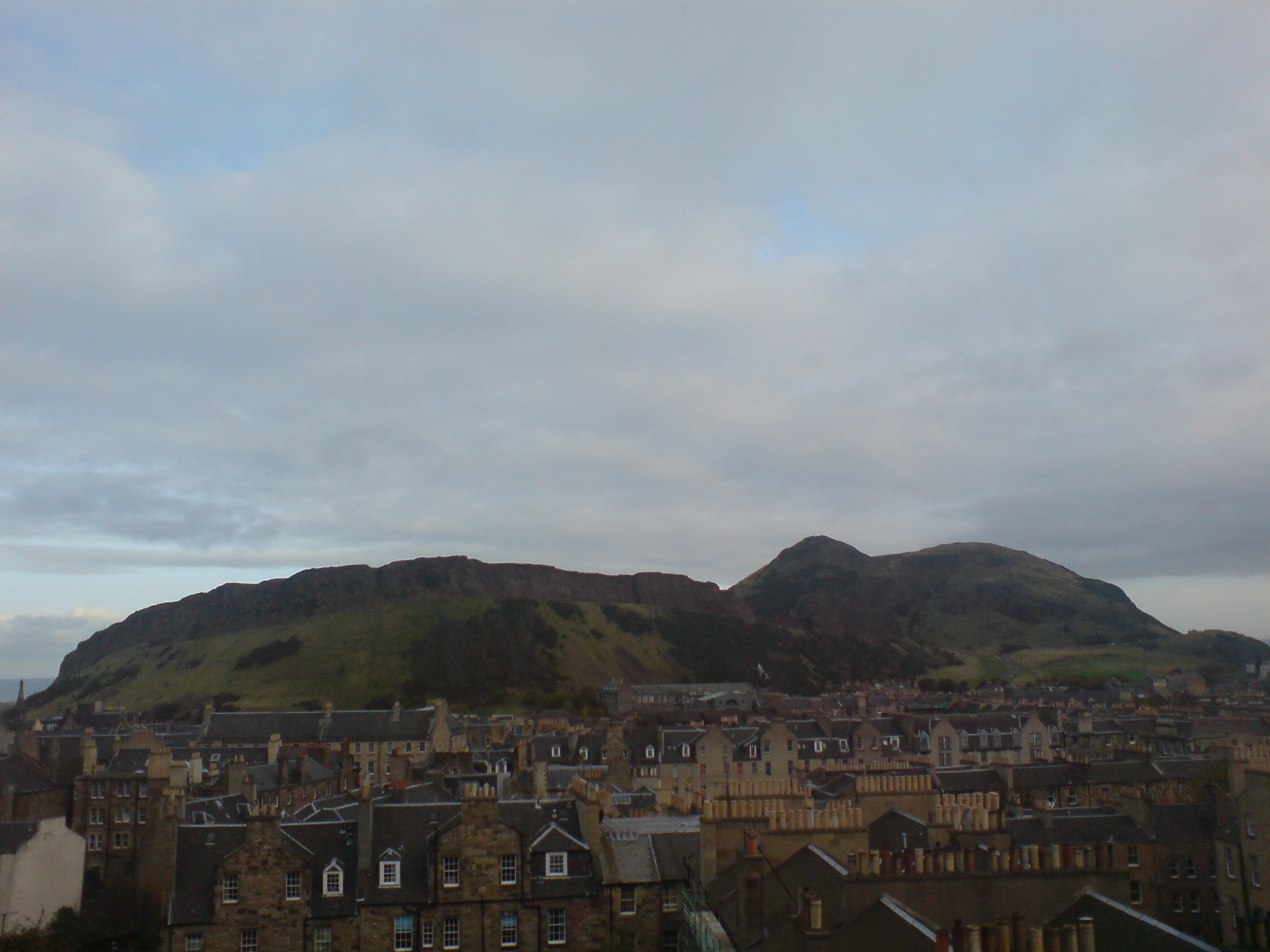
Salisbury Crags and Arthur's Seat, seen from Blackford Hill

A bit of background:

‘Seven Hills’ is part of Shadows of our Ancestors, supported by Historic Scotland and UNESCO, which promotes and celebrates Scotland’s five World Heritage sites – Edinburgh Old and New Towns, New Lanark, the Antonine Wall, St Kilda and The Heart of Neolithic Orkney. A group of five artists – a poet, a sculptor, a performance artist, a photographer and a composer – will each work at one of these sites, developing work for the public celebration of World Heritage Day on Wednesday 18 April, which will take place at Croy Miners’ Welfare, North Lanarkshire, next to the line of the Antonine Wall.

Image
Brigid Collins's artwork for Shadows of our Ancestors 2012

All the artists are working loosely to the theme of ‘AD 142’, the year the Antonine Wall was begun. ‘Seven Hills’ will link to the theme by considering aspects of the land that broadly haven’t changed since Roman times – uplands and lowlands, coast and sea, the Scottish weather – as well as referring to the history of the Roman presence in the area, and considering the changes over time.

I’ll blog the walks to Calton Hill, Arthur’s Seat and Castlehill (as well as further walks I’ll make to Edinburgh’s other hills) and gather texts for the April  event. All those coming on the walks will be also invited to contribute work they make up on the hills  – poems, photos, recordings – to the project blog, and to the event at Croy.