I drove to St Andrews today to set up The Road North ‘sampler’ for StAnza – poem-labels, whisky miniatures, tea-drawing, tea-cups, books (Seton Gordon) and the mirror-map. If you’re in St Andrews this week, pop in to the public library from Thursday to Saturday and have a look.
Edinburgh, like Rome, is a city built on seven hills. I’m running three poetry walks later this month to some of those hills, as part of the preparations for World Heritage Day 2012 on 18 April.
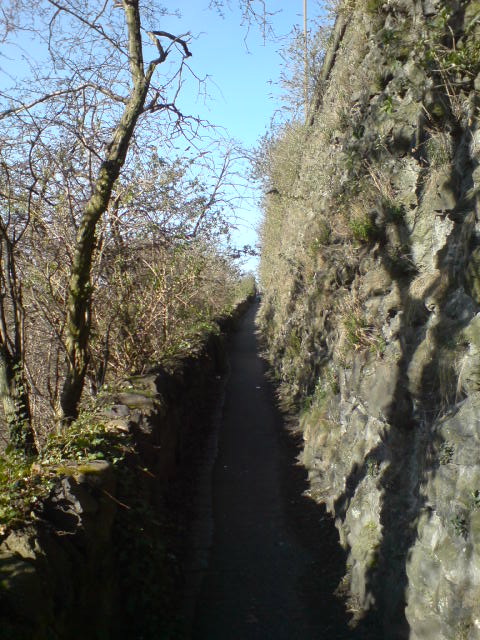
Below Calton Hill
Here are the details: Calton Hill Thursday 22 March, 1.30pm–5.00pm, meet at Scottish Poetry Library, 5 Crichton’s Close, Canongate, Edinburgh EH8 8DT, where we’ll return after the walk
Arthur’s Seat Friday 23 March, 1.30pm–5.00pm, meet at Scottish Poetry Library, where we’ll return after the walk
Castlehill Saturday 24, 1.30pm–5.00pm, meet outside the Scottish Parliament visitors’ entrance (opposite the Queen’s Gallery); the walk will finish at Edinburgh Castle
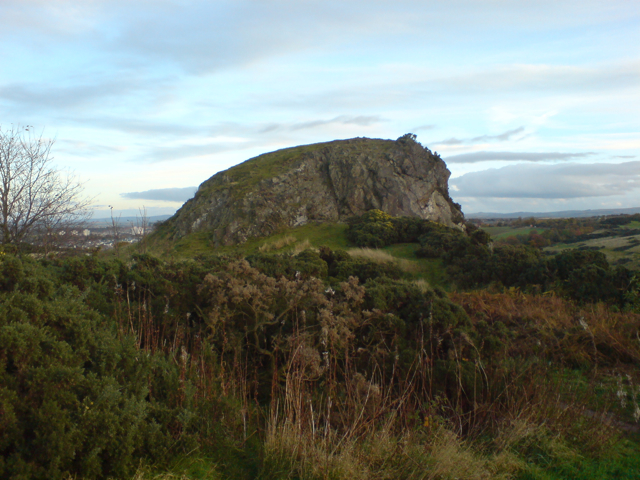
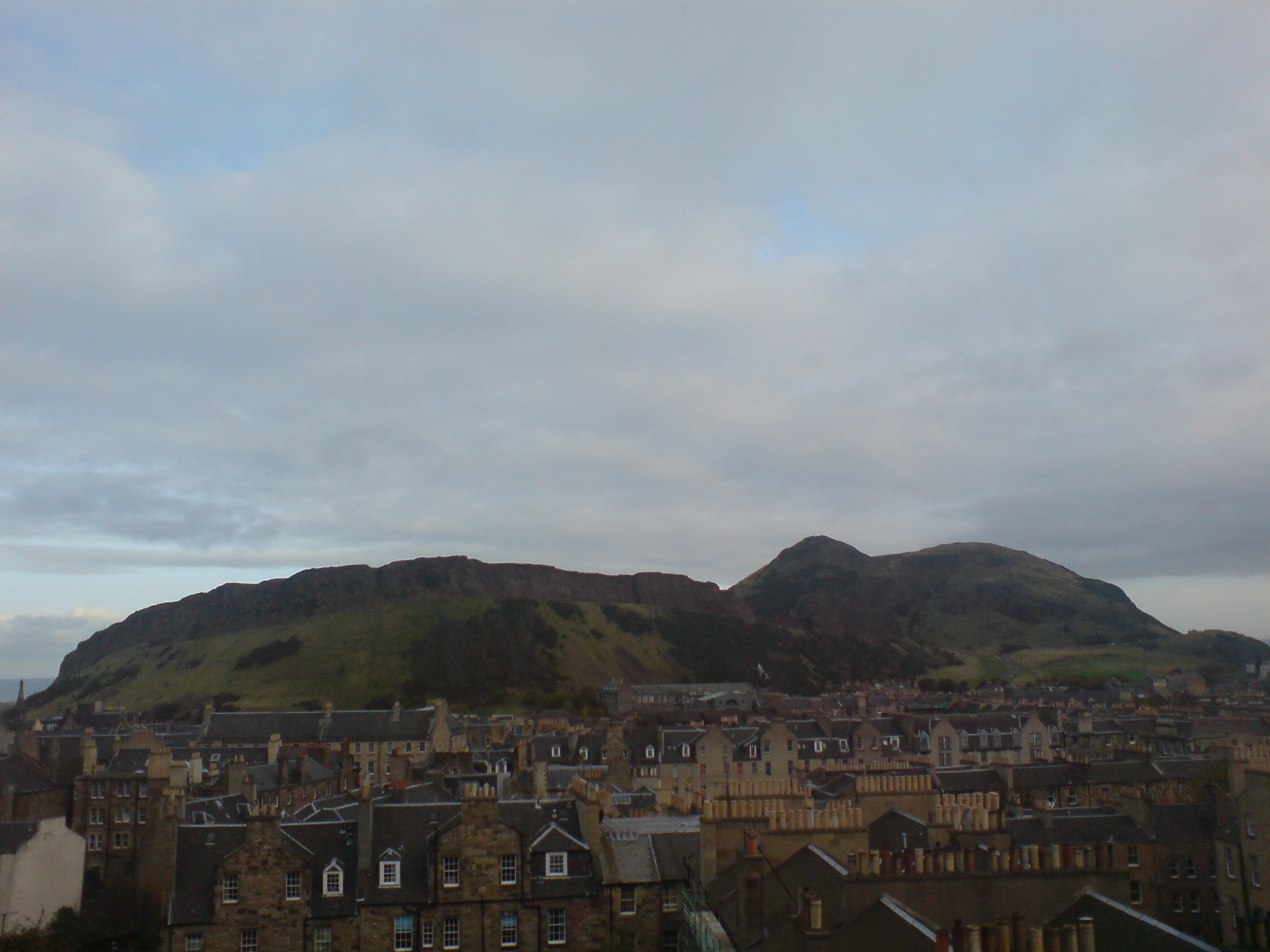
Arthur's Seat seen from the David Hume Tower
All the walks are free, but please book via e-mail as numbers are limited: kencockburn@blueyonder.co.uk
On the day please bring waterproofs and a notebook, and wear footwear suitable for rough underfoot conditions.
At the end of each walk we will spend some time discussing the walk, and reading what we’ve written; on Thursday and Friday at the Scottish Poetry Library, and on Saturday at the Education Room in Edinburgh Castle.
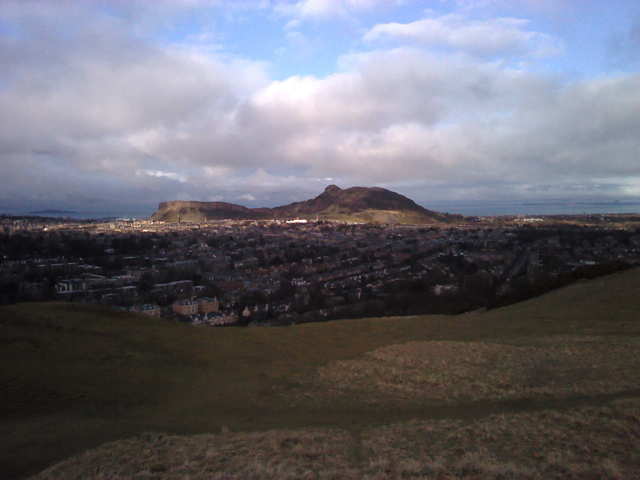
Salisbury Crags and Arthur's Seat, seen from Blackford Hill
A bit of background:
‘Seven Hills’ is part of Shadows of our Ancestors, supported by Historic Scotland and UNESCO, which promotes and celebrates Scotland’s five World Heritage sites – Edinburgh Old and New Towns, New Lanark, the Antonine Wall, St Kilda and The Heart of Neolithic Orkney. A group of five artists – a poet, a sculptor, a performance artist, a photographer and a composer – will each work at one of these sites, developing work for the public celebration of World Heritage Day on Wednesday 18 April, which will take place at Croy Miners’ Welfare, North Lanarkshire, next to the line of the Antonine Wall.
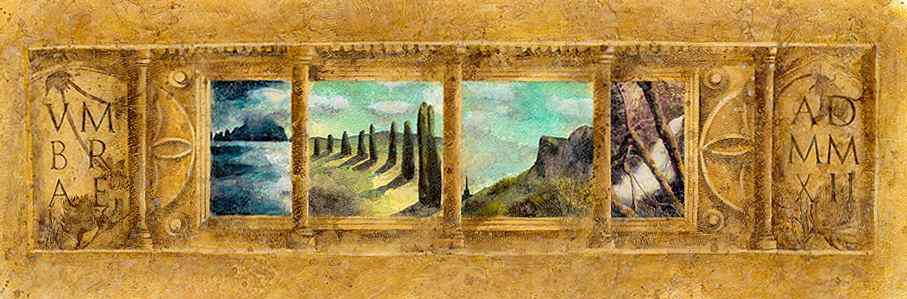
Brigid Collins's artwork for Shadows of our Ancestors 2012
All the artists are working loosely to the theme of ‘AD 142’, the year the Antonine Wall was begun. ‘Seven Hills’ will link to the theme by considering aspects of the land that broadly haven’t changed since Roman times – uplands and lowlands, coast and sea, the Scottish weather – as well as referring to the history of the Roman presence in the area, and considering the changes over time.
I’ll blog the walks to Calton Hill, Arthur’s Seat and Castlehill (as well as further walks I’ll make to Edinburgh’s other hills) and gather texts for the April event. All those coming on the walks will be also invited to contribute work they make up on the hills – poems, photos, recordings – to the project blog, and to the event at Croy.
I’ve had translations of German-language poems published in several magazines this autumn.
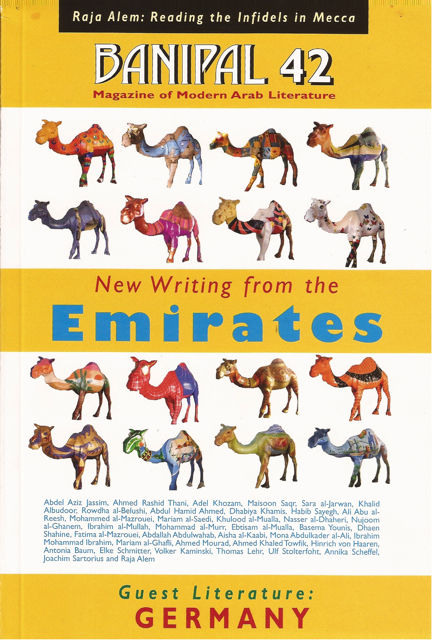
Banipal describes itself as a ‘magazine of modern Arabic literature’. Some years ago I translated for it poems by Adel Karasholi, a Syrian Kurd long exiled in Germany, who now writes in German. The magazine has now started to feature a ‘Guest Literature’ in each issue, and Banipal 42 features Germany. The editors asked me to translate six poems by Ulf Stolterfoht. He’s not an easy writer to translate – he himself has translated J.H. Prynne and Tom Raworth into German, and his work is similar to theirs in its slipperiness. I approached task with some trepidation, but was helped by Ulf’s patient responses to my questions, and I came to enjoy their unexpected twists and turns, their extravagant playfulness. There’s a good interview with him (in English) here.
Modern Poetry in Translation has published a poem each by Thomas Brasch, Thomas Rosenlöcher and Heiner Müller. It’s taken my translations of poems by Brasch and Rosenlöcher previously (issues 3/6 and 3/11 respectively). Heiner Müller I knew of as a playwright, until I discovered a volume of his poems when visiting Berlin in 2009. ’Napoleon at Wagram’ uses the dialectical method – like musical counterpoint – two very different narratives, about Napoleon and Lenin, are juxtaposed, and the reader is invited to make the connection.
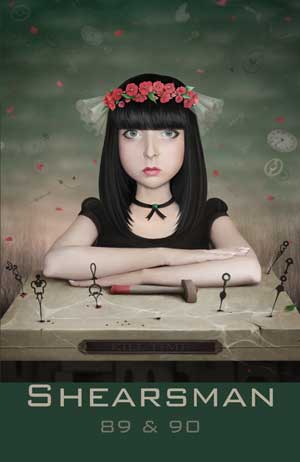
Poems by Christine Marendon are in Feathers & Lime (2007); earlier this year I began working on her poems again, and four have just been published in Shearsman 89/90, and another two in the on-line journal no man’s land. I like the enigmatic imagery of her work: tantalising hints and glimpses of characters, situations and narratives.
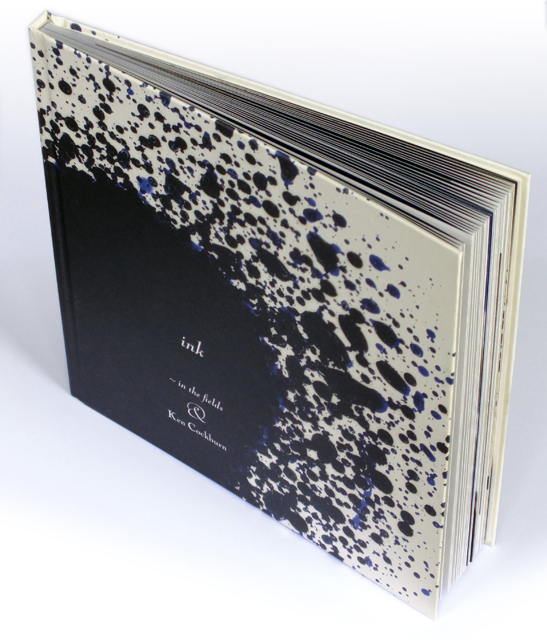
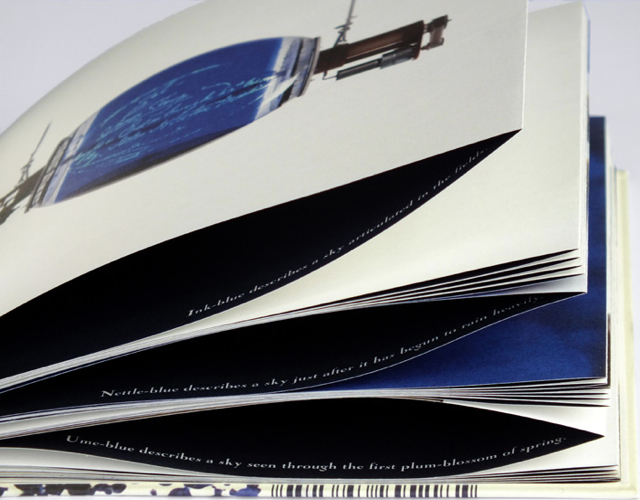
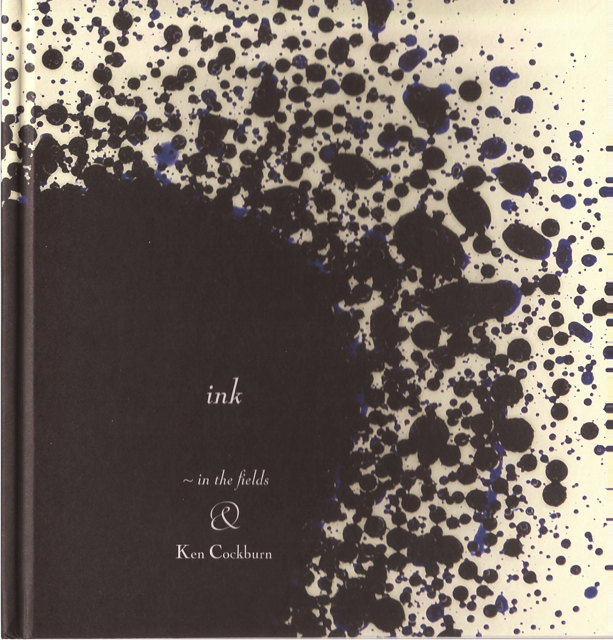
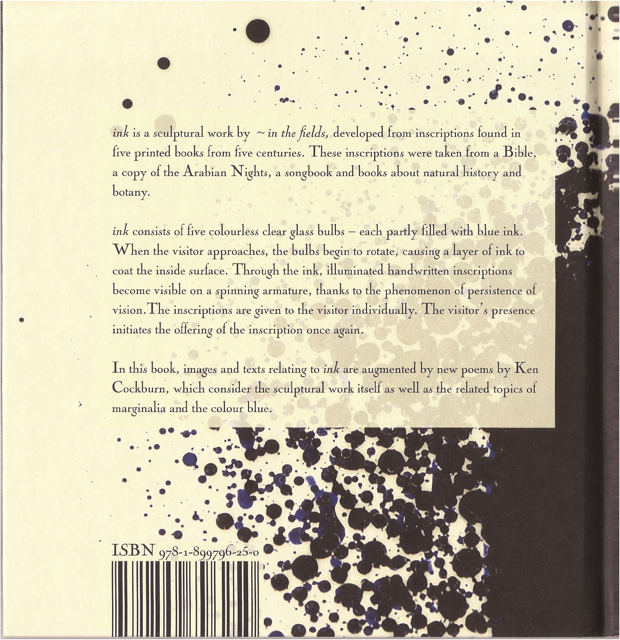
ink will be launched at 7pm on Tuesday 22 November at The Fruitmarket Gallery, 45 Market Street, Edinburgh EH1 1DF. The book will be for sale at the special price of £18.00. Dr. Anette Hagan from the National Library of Scotland will speak about book inscriptions, and Pfaelzer Wein (red and white wine from the Palatinate region of Germany) will be served. ink is a beautiful new artist book, featuring full-colour images of the prize-winning sculptural work ink by ~in the fields, and specially written texts by myself – poems, circle poems, ‘Reflections on the writing of marginalia’, and a hidden alphabet poem offering twenty-six imaginary shades of blue. In addition, the contributors present their ‘blueographies’. ~ in the fields are artists Nicole Heidtke and Stefan Baumberger. In 2010 they won the Berlin University of the Arts Award for Interdisciplinary Art and Science for their sculptural work ink. Their visual art practice draws on archival material, environmental topics and ephemeral artefacts, such as lost forms of cinema. ink was developed from inscriptions found in five printed books from five centuries – a Bible, a copy of the Arabian Nights, a songbook, and books about natural history and botany. ink consists of five colourless clear glass bulbs – each partly filled with blue ink. When the visitor approaches, the bulbs begin to rotate, causing a layer of ink to coat the inside surface. Through the ink, illuminated handwritten inscriptions become visible on a spinning armature, thanks to the phenomenon of persistence of vision. The inscriptions are given to the visitor individually. The visitor’s presence initiates the offering of the inscription once again.
Details 208 x 198 mm Hard covers 52 pages Full colour French folds Edition: 500 Publisher: Abertay University Press, July 2011 ISBN 978 1 899796 25 0 Recommended Retail Price: £24.95 If you would like to receive more information about the book, please write to me, or to studio@in-the-fields.org
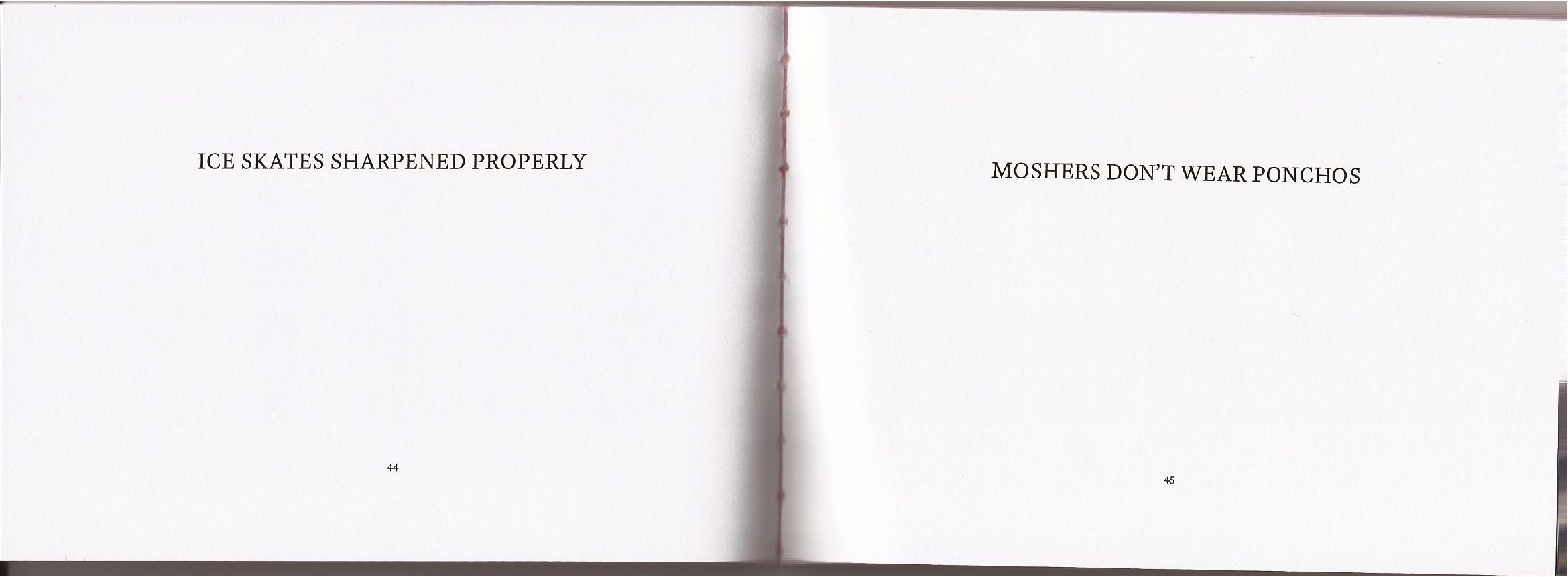
This simple little book has been a while in the making. Its contents are taken from notebooks and photos from the past ten years, and its first draft was considerably longer, including short poems, mesostics, prose extracts, lists and made-up definitions. I whittled it down, removing the longer and ‘composed’ texts, and re-sequenced everything, before sending it to Barrie Tullett at The Caseroom Press. He made a couple of dummies – first a Z-book with two front covers, then one the same size as the finished book, but portrait-format. We flipped that to landscape so all the texts worked as single-line pieces, and finally we had this simple little book.
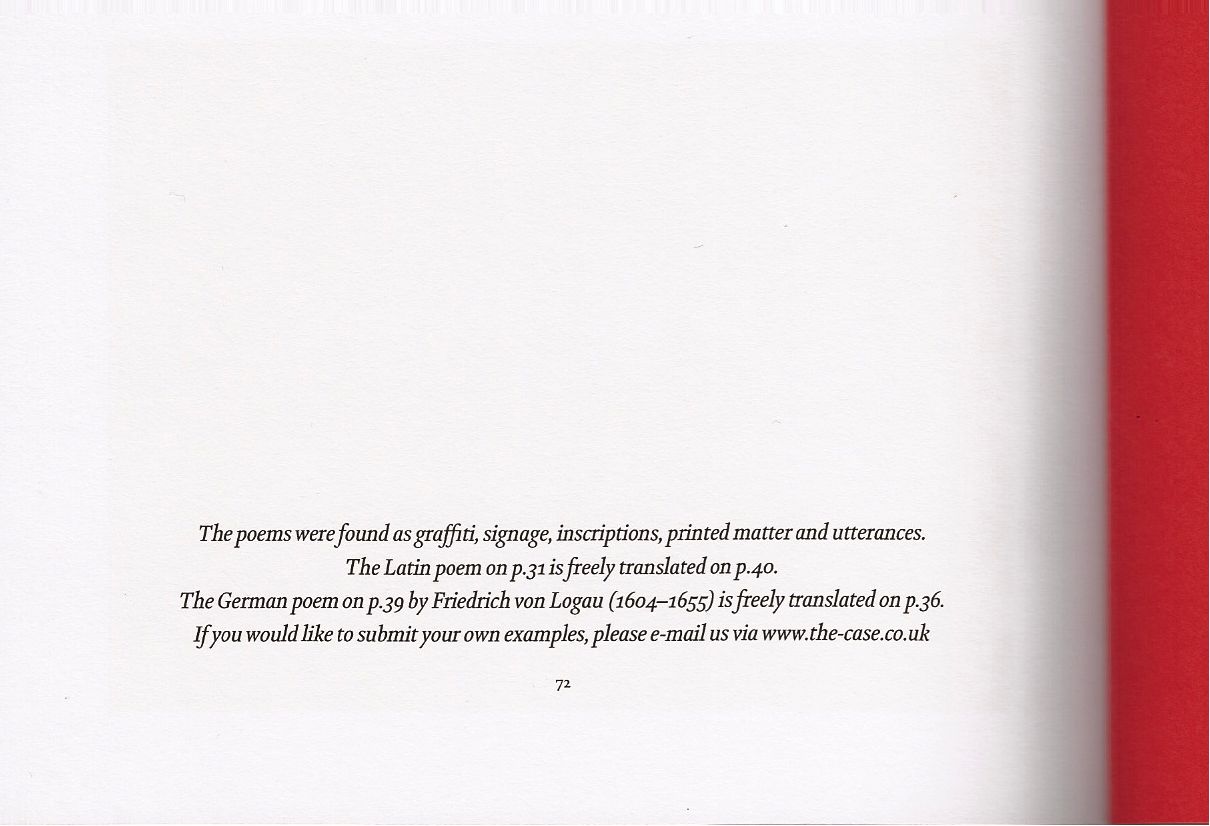
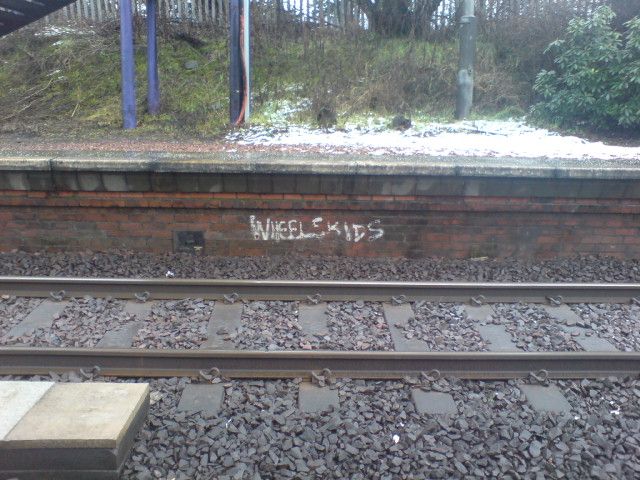
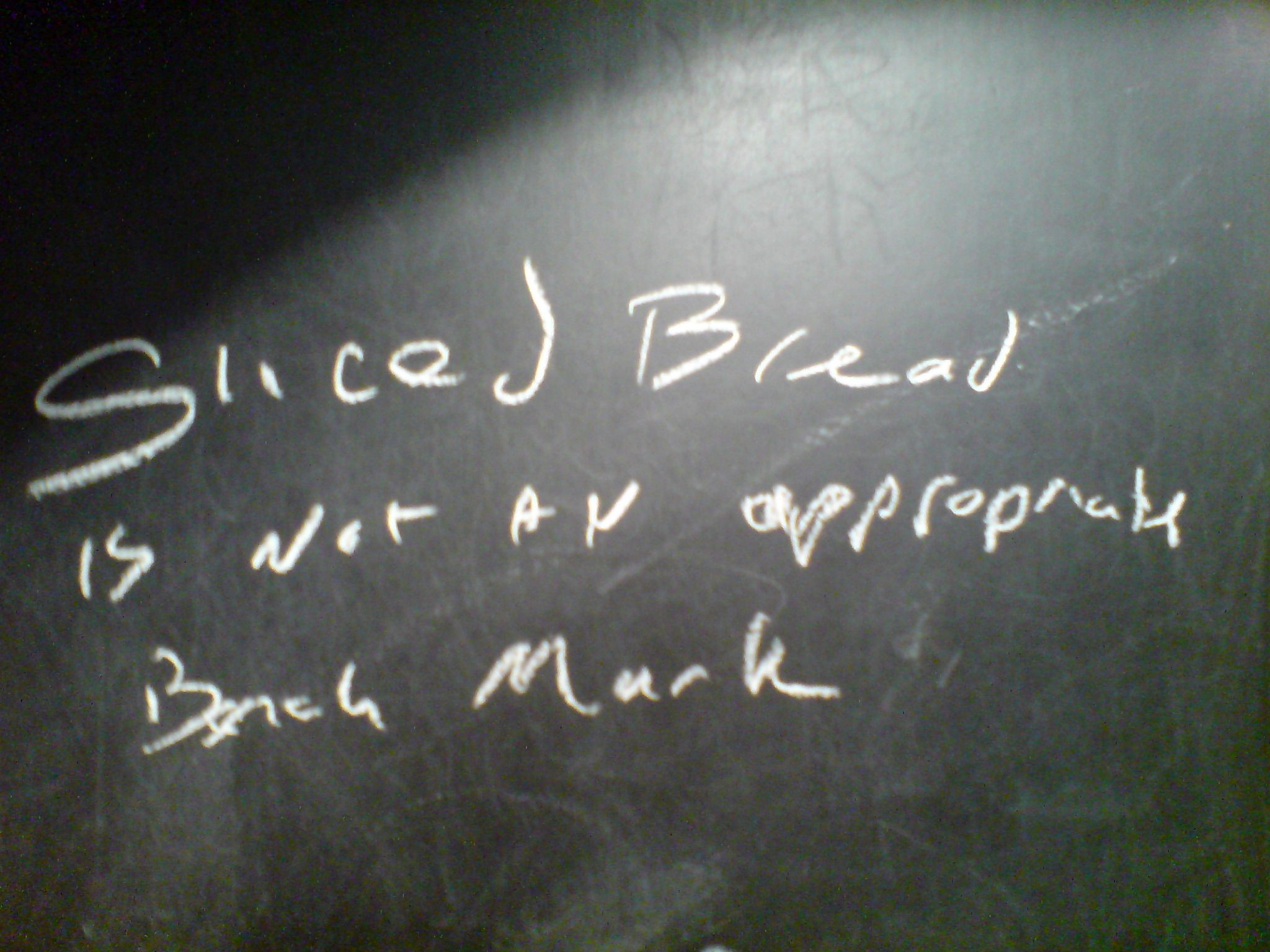
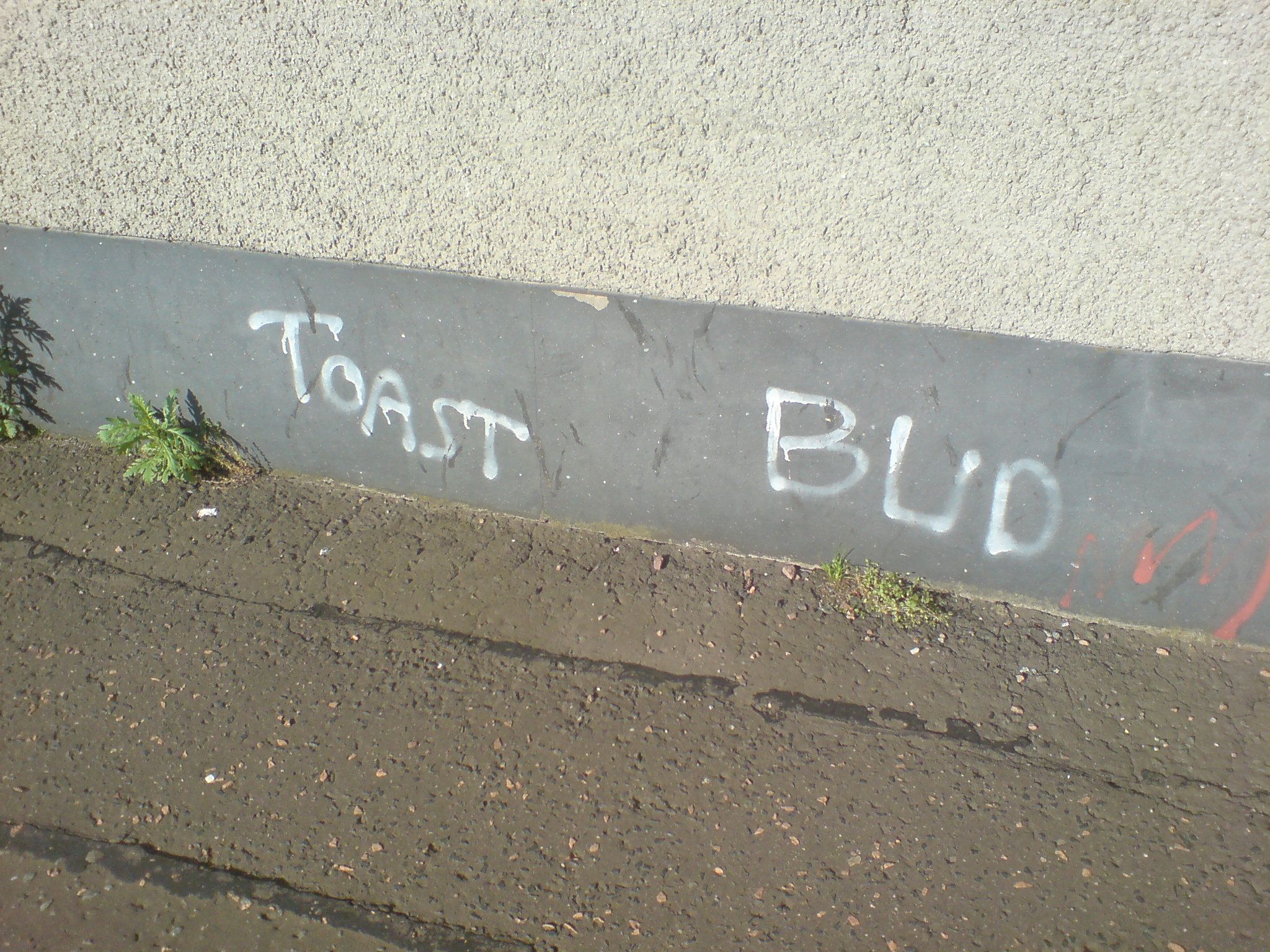
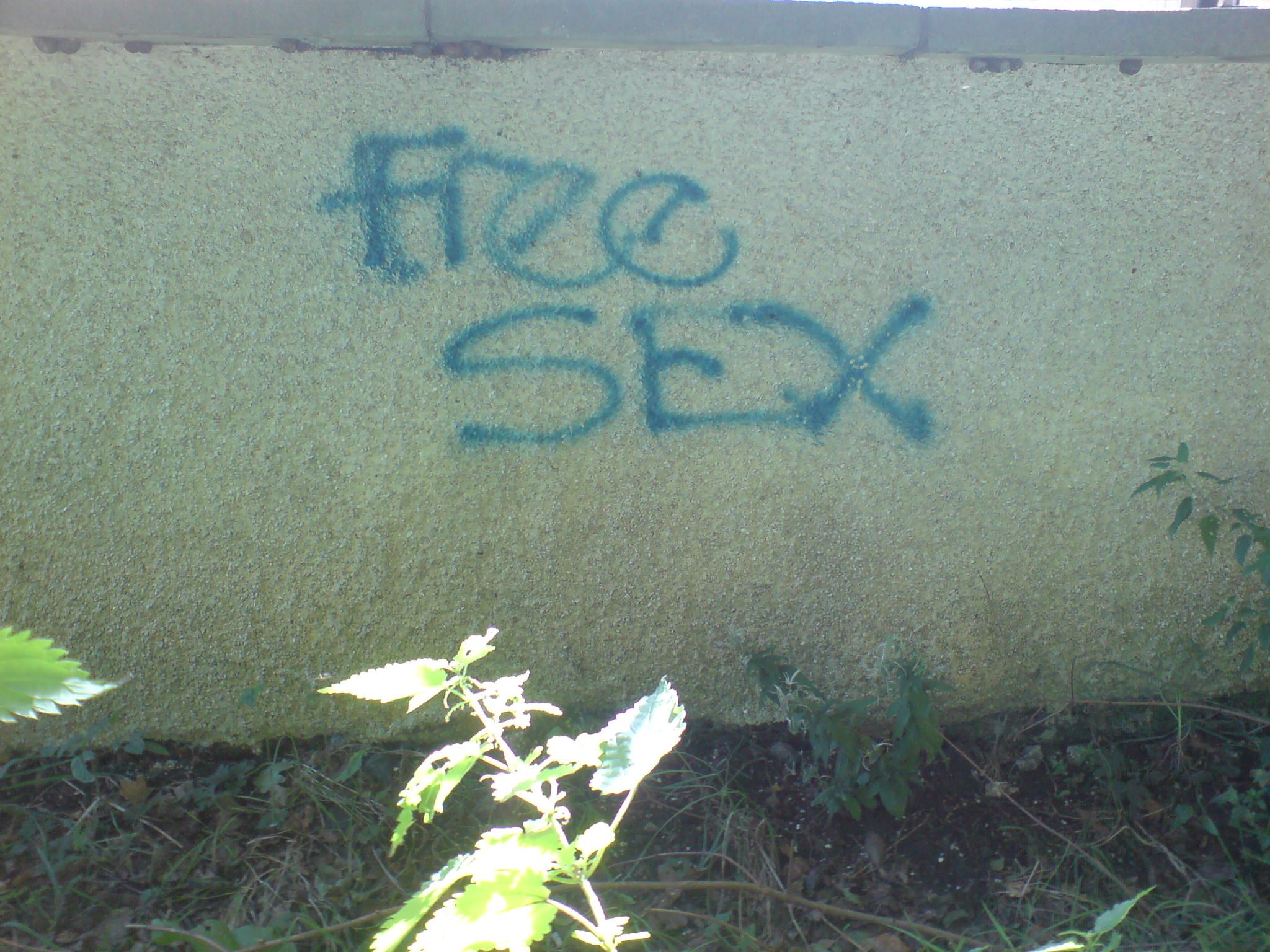
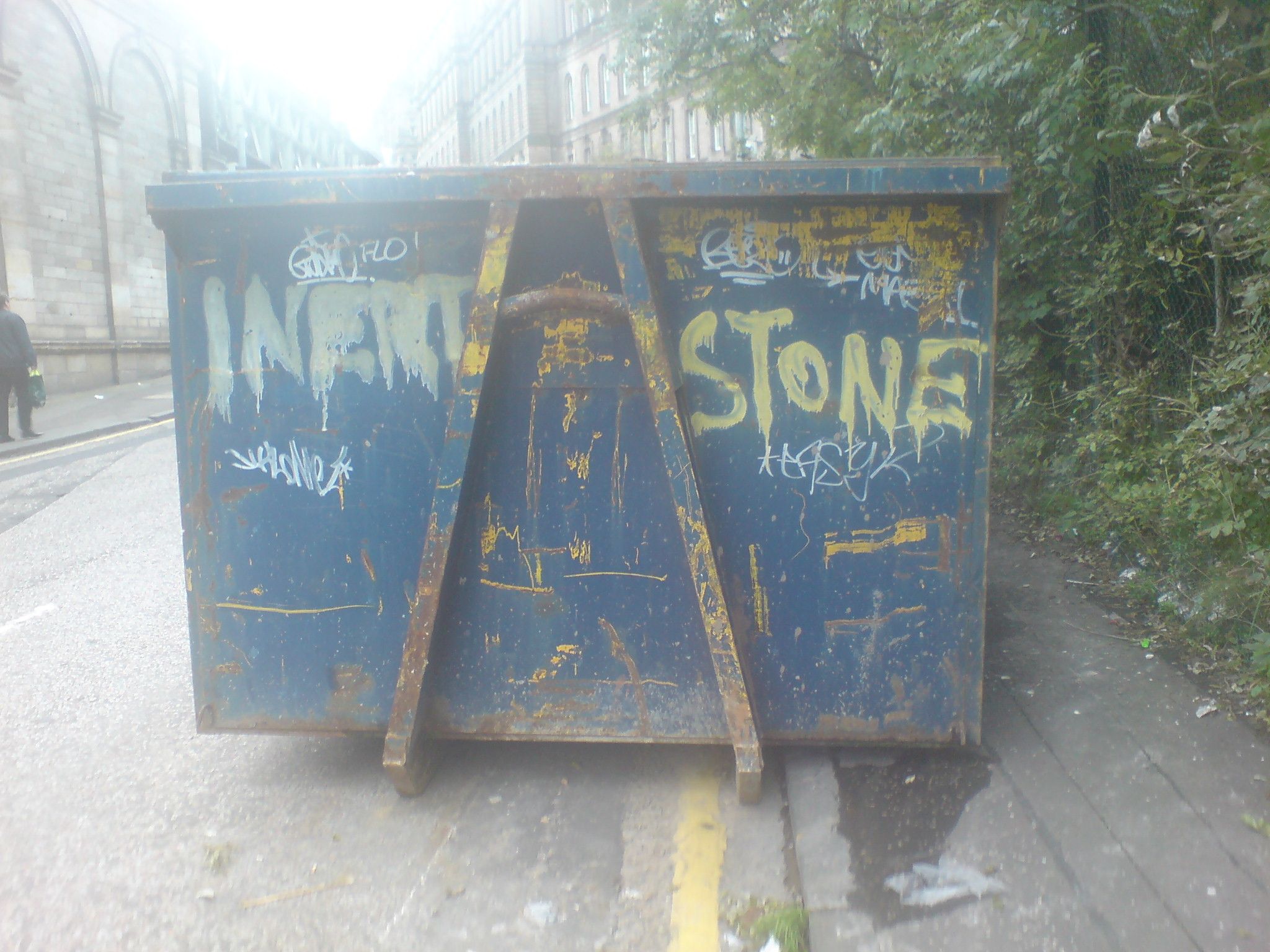
“The poems were found as graffiti, signage, inscriptions, printed matters and utterances.”
Rather than equivocating about their status, debatable though it is, I decided to call all the texts simply ‘found poems’.
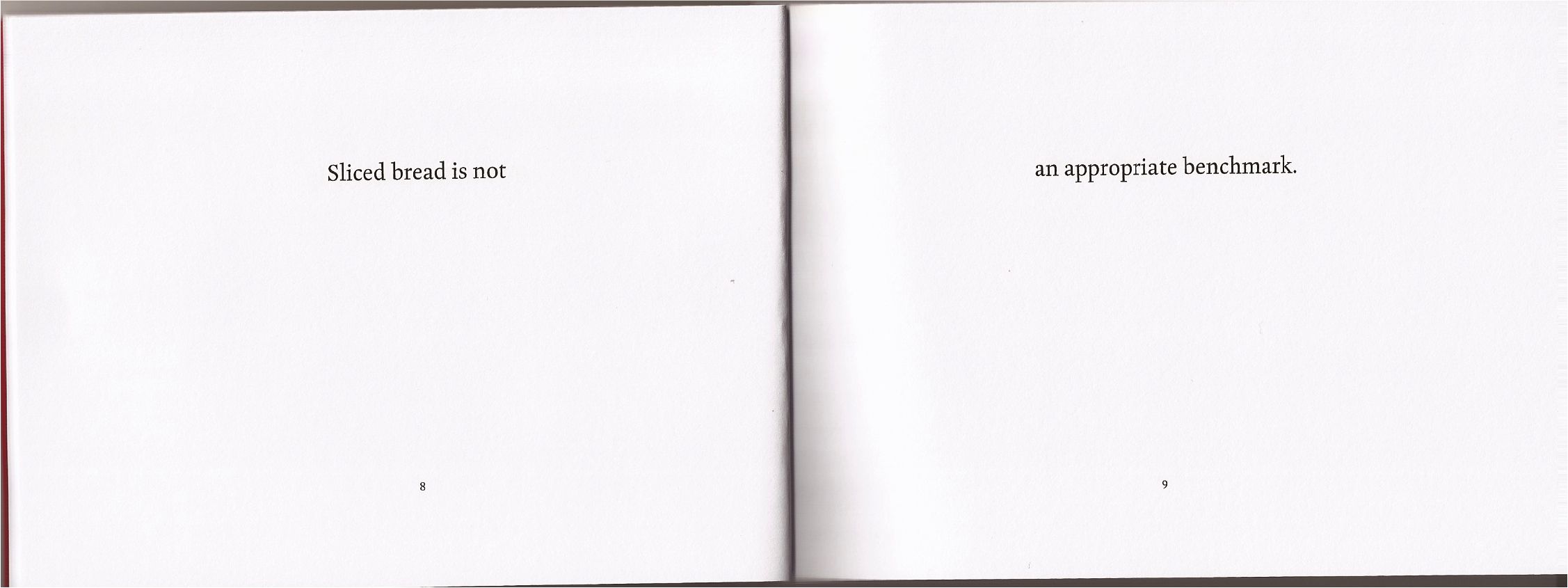
The book opens and closes with sentences (three at the start and three at the end), each given a double-page spread.
The main part of the book consists of short texts of between one and seven words long, each given its own page, and sequenced first by number of words, and then alphabetically.
There are some nicer photos of the book here; and some of the material in its original settings below.
I like the way the poems rub up against each other: formal signage and graffiti, newspaper headlines and children’s speech, aspiration and deflation. For me, each one of them has a particular context, calls up a memory, but I’ve tried to make these irrelevant to the reader, so the poems spark off against each other, and shine with whatever associative light switches on in the reader’s mind.
You can order the book for £2.50 (inc. P&P) from The Caseroom Press, or by e-mailing me via the ‘Contact’ page.
Lorna listening, White Gallery
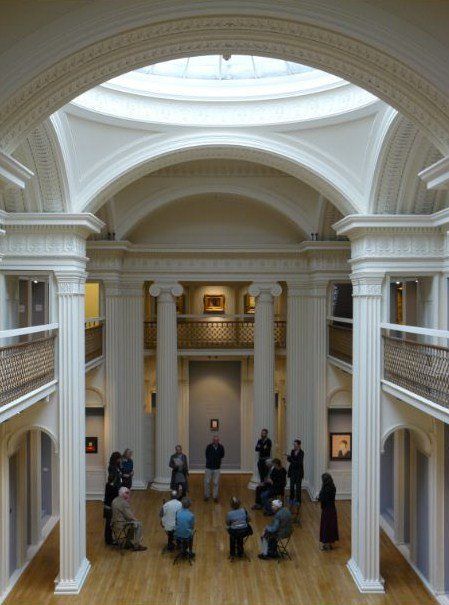
Pandora’s Light Box is a collaborative project I worked on for over a year, from June 2010 through to September 2011. My brief, from Artlink, was to write a descriptive poem about the University of Edinburgh’s Talbot Rice Gallery, to be recorded and presented in the gallery as an audio work for visitors both visually impaired and sighted. Georgian Gallery, reading
Access to visual art for individuals with a visual impairment relies on verbal description, and Pandora’s Light Box takes that ‘practical’ form and extends it into an artwork in its own right. Listening post, Round Room
I wrote the poem for two voices, and a recording of myself and Lorna Irvine reading it has been installed in the gallery at three specially designed listening stations, downstairs in the contemporary White Gallery and the historical Georgian Gallery, and upstairs in the Round Room. You can listen to the poem here.
A friend of a friend sent these photos of some lines from the poem which seem to have escaped from the gallery; based on this blog, we think it was Dora, one of the project volunteers, but she’s not owned up yet! And this blog describes the project from the perspective of one of the visually impaired participants.
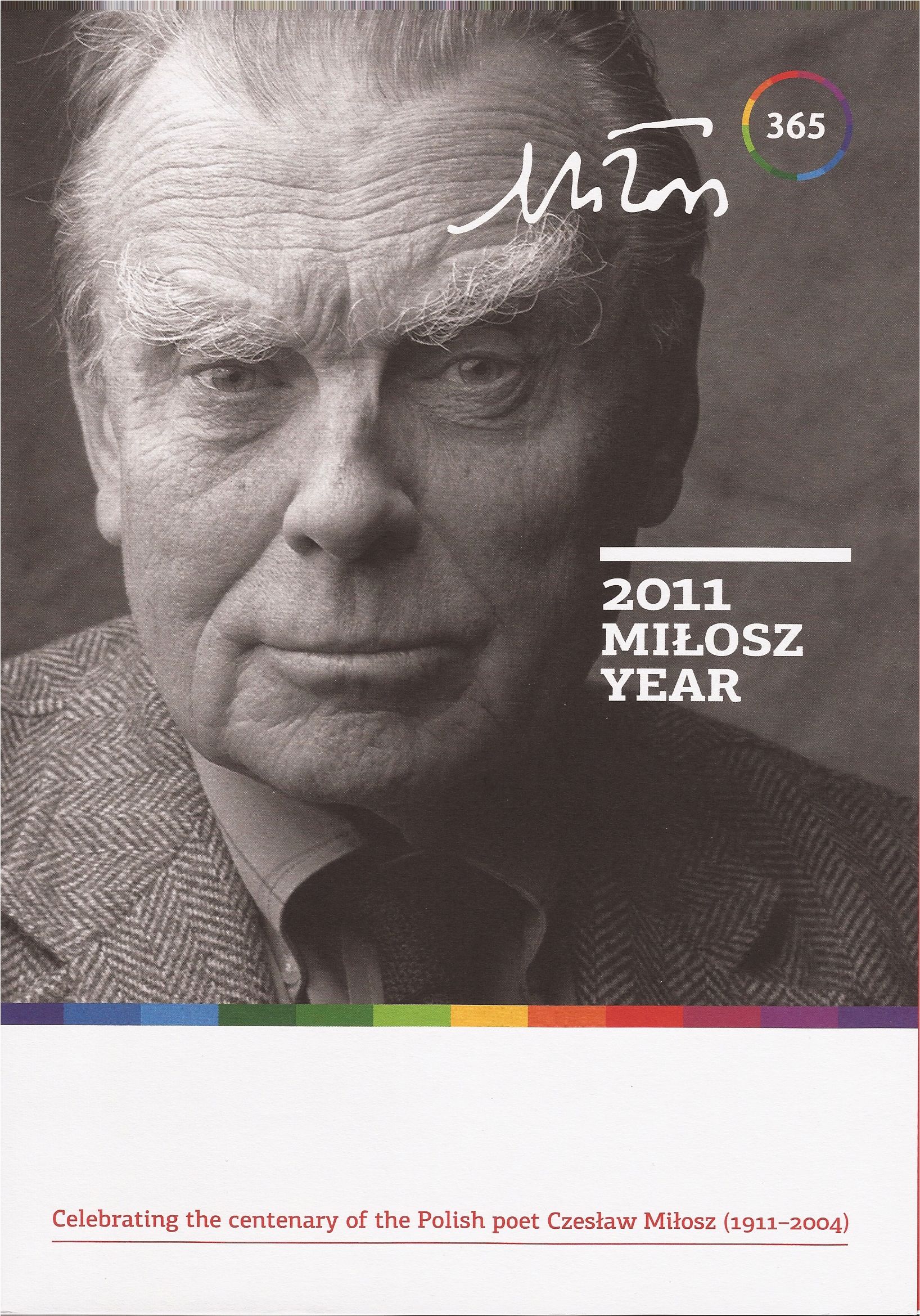
30 June 2011 was the centenary of the birth of Czesław Miłosz. He’s a poet I’ve begun to read just in the past year, after the Krakow visit. I returned with a copy of his New & Collected Poems, bought on the last morning of the trip with the spare zlotys, and begun on the bus out to the airport.
Thumbing its pages, I made a couple of immediate connections: his appreciation of the Japanese haiku masters – Issa, rather than Basho, perhaps simply because he liked the coincidental link with the Issa Valley in his native Lithuania – and his ‘Notes’, a series of single sentences each under a short heading (‘The Perfect Republic’, ‘Epitaph’, ‘Mountains’), which are reminiscent of Ian Hamilton Finlay’s one-word-poems and monostichs, and Günter Eich’s (even briefer) ’17 Formeln’. Neither ‘Reading the Japanese Poet Issa (1762-1826)’ nor ‘Notes’ are entirely typical of his work, but they were useful landmarks I could start to navigate by.
I read him over the winter (in English, having no Polish). I read him aloud while sitting for my portrait, when Angus and I enjoyed enjoyed the discursive prose of ‘La Belle Epoque’, especially its closing section, ‘The Titanic’. When I proposed running sessions on his work for secondary schools, it became one of those rare and serendipitous projects everyone says ‘yes’ to.
In the summer term I visited schools in Edinburgh, East Lothian, Fife, Highland and South Lanarkshire, and will visit several more schools over the coming weeks. The poem I’ve come to focus on most is ‘The Dining Room’ (‘Jadalnia’) from the sequence ‘The World’ (‘Świat’), a seemingly straightforward description of an interior whose place and date of composition – Warsaw 1943 – soon open up deeper, darker layers of resonance.
The Scottish Poetry Library has produced a Miłosz 2011 poster, featuring the poem ‘Song on the End of the World’ (‘Piosenka o Końcu Świata’) in English and Polish, along with background information, weblinks, and a couple of photos of the poet in later life, craggy and bushy-eyebrowed.
There is also a series of Polish Poems on the Underground at the moment, including Miłosz’s ‘And Yet the Books’ and ‘Blacksmith Shop’, as well as poems by Zbiginiew Herbert, Wisława Symborska and Adam Zagajeweski.
I’m also running an event on Saturday 10 September at Macdonald Road Library, Edinburgh, for the Polish book group Zielony Balonik, focussing on Miłosz’s poems.
Friday 5 August – Saturday 3 September
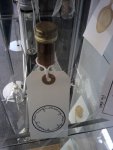
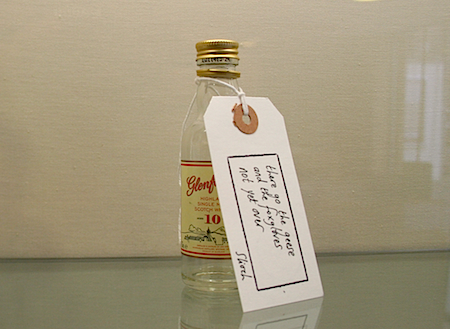
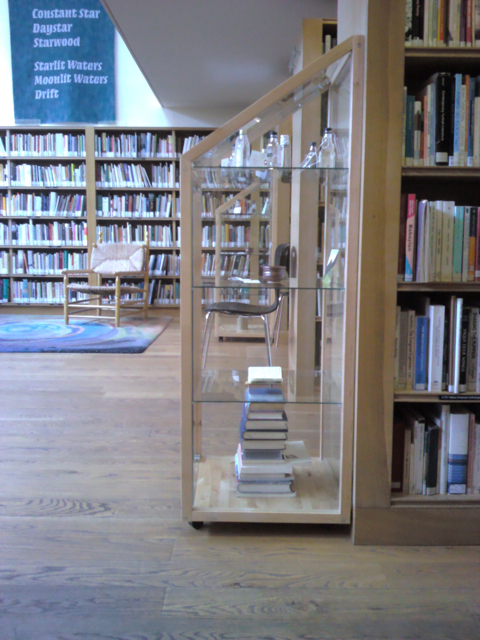
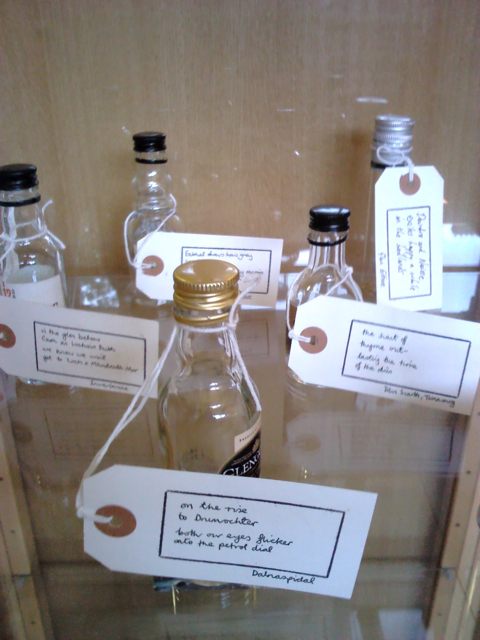
Below are photos of our ‘sampler’ of The Road North at the Scottish Poetry Library in Edinburgh in until 3 September – a display of poems written on the road, written on labels attached to whisky miniatures which we sampled while we travelled. And below the photos is a description of the project and the show. There’s also an article about The Road North in the current issue (no. 9) of Poetry Matters, the biannual newletter sent to all Friends of the SPL.
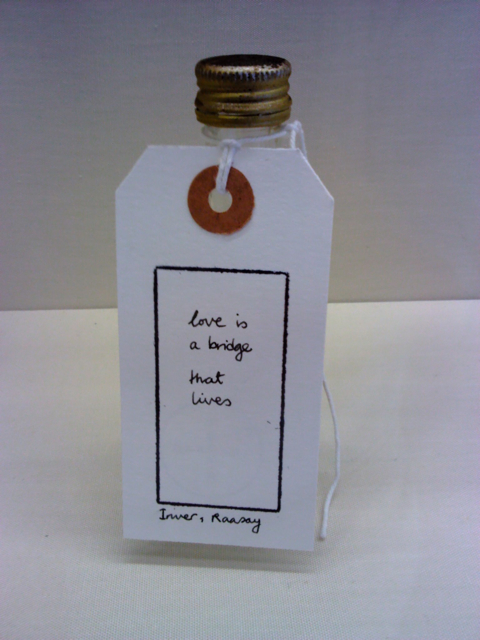
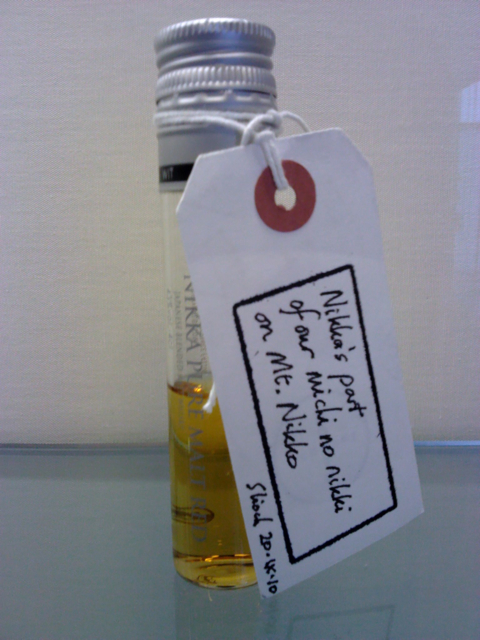
Bottles & hokku-labels love is / a bridge // that / lives (Inver, Raasay) Alec Finlay swallows skim ripples / on mirror-pond stillness / cup-and-ring marked rocks (Luing) Ken Cockburn Nikka’s part / of our michi no nikki / on Mt. Nikko (Slioch) Ken Cockburn pulling mussels / from a shell // parting the paired / tea-cups (the hidden gardens) Alec Finlay
The Road North is a word-map of Scotland, composed by Alec Finlay & Ken Cockburn as they travelled through their homeland in 2010 and 2011. They were guided on this journey by the Japanese poet Basho, whose Oku-no-hosomichi (Narrow Road to the Deep North) is one of the masterpieces of travel literature.
Following Basho and his travelling companion Sora, their journey took in 53 ‘stations’, from Pilrig to Pollokshields via Berneray, Glen Lyon, Achnabreck and Kirkmaiden. At each place they wrote and left poems in situ, as well as drinking a tea and a whisky, and leaving a paper wish. At several they met and wrote with other poets, including Meg Bateman, Gerry Loose and Angus Dunn.
This ‘sampler’ features the 53 (miniature) whisky bottles, each with a poem-label attached. These are complemented by a selection of books, word-drawings, texts and objects gathered and made on The Road North.
Ben Rinnes from Clunymore
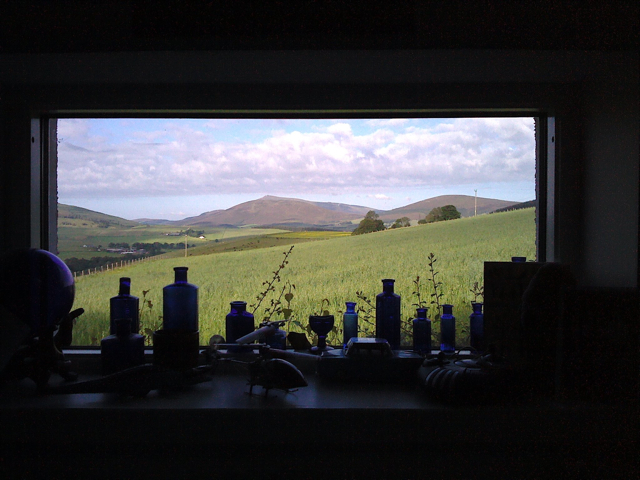
I recently spent a week in Moray with Angus Reid, writing and walking. We stayed above the River Fiddich in the house of Mary Bourne, the sculptor who co-ordinated the Mortlach Storywalks project. The house has views west towards Ben Rinnes, the highest top in the area. Auchindoun Castle
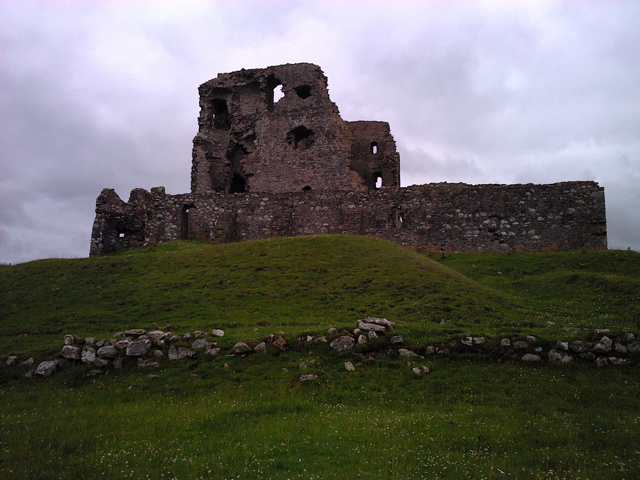
It also looks across the glen to the ruins of Auchindoun Castle, set on a low hillock above the River Fiddich. It was from Auchindoun that Adam Gordon rode out to Corgraff Castle; his burning of the latter is told in the ballad ‘Edom o’ Gordon’. The revenge attack is told in the shorter and less well-known ballad, ‘Burning of Auchindoun’ (Child #183).
As I cam’ in by Fiddichside, on a May morning
I spied Willie MacIntosh an hour before the dawning
Turn agin, turn agin, turn agin, I bid ye
If ye burn Auchindoun, Huntly he will heid ye
Heid me or hang me, that shall never fear me
I’ll burn Auchindoun though the life leaves me
As I cam’ in by Auchindoun, on a May morning
Auchindoun was in a bleeze, an hour before the dawning
Crawing, crawing, for a’ your crouse crawin’
Ye brunt your crop an’ tint your wings an hour before the dawning.
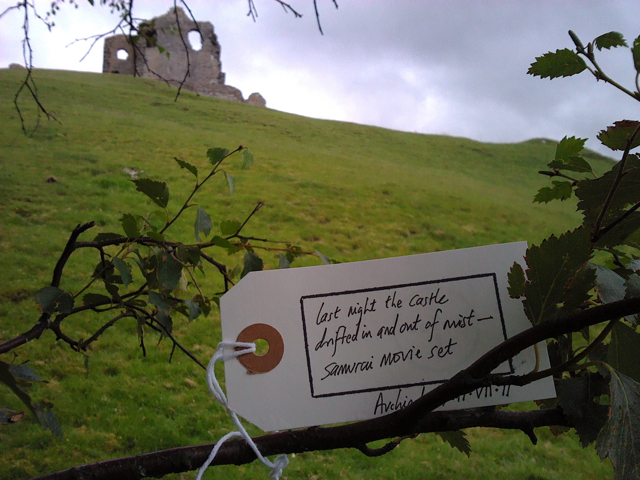
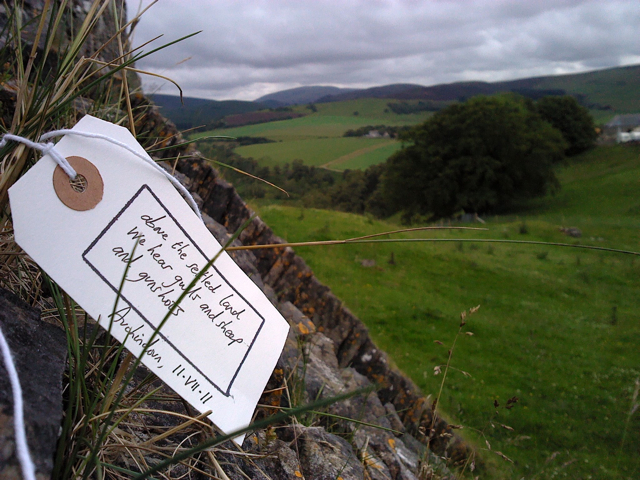
I made a few label-poems there. last night the castle / drifted in and out of mist / samurai movie-set above the settled land / we hear gulls and sheep / and gunshot high summer / the thistles still await / their purple
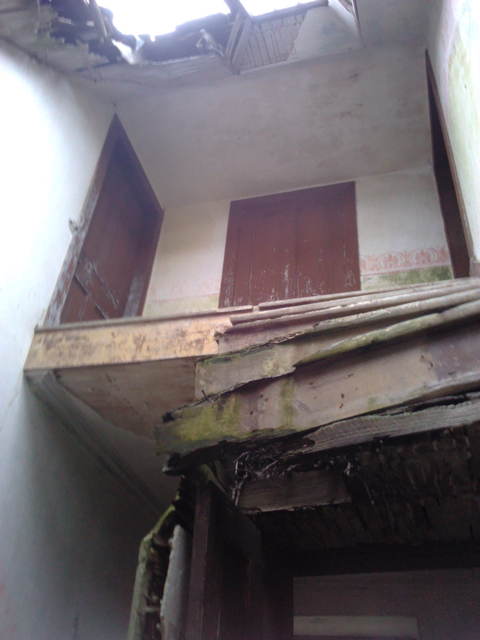
Near the castle there are some ruined farm buildings – some are being renovated, but we looked round a particularly delapidated house. delapidated downstairs delapidated upstairs
We drove a few miles into the Cabrach to Rhinturk Farmhouse, still standing, still productive. Rhinturk closed Rhinturk open

















 Poems on the page and in the world
