Gavin Douglas in London

“And, seand Virgill on ane lettrune stand,
To writ anone I hynt ane pene in hand”
2013-06-04 17.01.33

I was in London earlier this month, running a workshop for the Translators’ Association called “Translating the Translator: Gavin Douglas’s Eneados“, when five of us attempted versions of Gavin Douglas into contemporary English.

Gavin Douglas (1474–1522) was the Provost of St Giles Cathedral in Edinburgh when, exactly five hundred years ago, in June 1513, he completed Eneados, his translation of Virgil’s Aeneid into Middle Scots. He also wrote an original Prologue for each of Virgil’s twelve books – and for an additional thirteenth book, written by Mapheus Vegius in 1428. The prologues describe with immediacy Scottish landscapes and weather – a May morning, a June evening, a chill winter.

Below is a several-handed translation, of an extract (lines 51–77, & 85–88) from ‘The Proloug of the Threttene Buik of Eneados Ekit to Virgill be Mapheus Vegius’; on a bucolic June evening, Douglas encounters Mapheus. The translators are Felicity McNab (FM), Nicky Harman (NH), Susan Mackervoy (SM), and myself (KC); the original follows.

And soon every creature that came into the bay or field, flood, forest, earth or air or in the scrubland or wooded copse, lakes, marshes or their pools, lies settled down still, to sleep and rest in darkness. Also the small birds sat on their nests, with little midges and irksome fleas, hard-working moths and busy bees, both wild and tame beasts and every other great and small thing, except the merry nightingale Philomene who sat on the thorn tree singing from the spleen. (FMcN)

How I longed to hear those notes cascade
And wandered till I found a tree-filled glade
I take a seat beneath a glossy bay
So my thoughts too can wander as they may. (NH)

I could see bright stars – the Pole Star, the Bear –
a crescent moon (quite dim in the summer skies)
and Venus and Jupiter (what a pair!)
beaming down. So, lying there – what with the
calm night, what with the birdsong – pretty soon
I nodded off.
                        And saw an old man standing there,
under my tree. I asked him why he’d come,
and if he harboured ill intent towards me. (SM)

His figure-hugging outfit, trim and neat,
was long enough to cover up his feet
while on his brow the laurel-wreath he wore
put me in mind of ye olde bards of yore. (KC)
2013-06-04 16.41.01

And schortlie, every thing that dois repare
In firth or feyld, flude, forest, erth or ayr,
Or in the scroggis or the buskis ronk,
Lakis, marrasis, or thir pulis donk,
Astabillit liggis still to slepe and restis;
Be the small birdis syttand on thar nestis,
The litill midgeis, and the urusum fleyis,
Laboryus emmotis, and the byssy beyis ;
Als weill the wild as the taym bestiall,
And every othir thingis gret and small,
Owtak the mery nychtgaill Philomene,
That on the thorn sat syngand fra the splene.

Quhais myrthfull notis langing for to heyr,
Ontill a garth vndir a greyn lawrer
I walk onon, and in a sege down sat,
Now musand apon this and now on that.

I se the Poill, and eik the Ursis brycht,
And hornyt Lucyne castand bot dym lycht,
Becaus the symmyr skyis schayn sa cleyr ;
Goldin Venus, the mastres of the yeir,
And gentill Jove, with hir participate,
Thar bewtuus bemis sched in blyth estayt :
That schortly, thar as I was lenyt doun,
For nychtis silens, and this byrdis sovn,
On sleip I slaid ; quhar sone I saw appeyr
Ane agit man, and said: quhat dois thou heyr
Undir my tre, and willist me na gude ?
(…)
Syde was his habyt, round, and closing meyt,
That strekit to the grund doun our his feyt ;
And on his hed of lawrer tre a croune,
Lyke to sum poet of the auld fassoune.

2013-04-08 15.02.07

And here are a few lines describing a storm at sea in the words of Virgil, Douglas and (based on Douglas’s second stanza) Robert Chandler.

Talia iactanti stridens Aquilone procella
velum adversa ferit, fluctusque ad sidera tollit.
Franguntur remi; tum prora avertit, et undis
dat latus; insequitur cumulo praeruptus aquae mons.
Hi summo in fluctu pendent; his unda dehiscens
terram inter fluctus aperit; furit aestus harenis.

Virgil Aeneis, I, ll.102–7

Ane blusterand bub, out fra the northt braying,
Cane our the foirschip in the bak sail dyng
And to the sternys up the fluide can cast;
The ayris, hachis, and the takillis brast,
The schippis stevyn frawart hir went can writhe
And turnit hir braid syide to the wallis swithe.

Heich as ane hill the jaw of watter brak
And in ane help come on thame with ane swak.
Sum hesit hoverand on the wallis hycht
And sum the sownschand see so law gart lycht
Thame semit the erd oppinnit amyd the flude;
The stowr wp bullerit sand as it war wuid.

Gavin Douglas, Eneados, I.iii, ll.14–25

Hill high hung the well of water,
then dropped down on the ships with one swift blow.
Wave-winged, one boat stood hovering in the sky
while other boats were drawn down to such depths
it seemed earth’s jaws had sucked all sea away
and left just one wild swirl of sand and spray. (RC)

According to Ezra Pound, “Gavin Douglas was a great poet… I am inclined to think that he gets more poetry out of Virgil than any other translator”.

The 1874 edition of Douglas’s Eneados is available online here. This link is to volume 2 of a 4-volume edition of his ‘Poetical Works’ published in 1874, which contains Books I–V of Eneados – if you click on the ‘Author’ text – ‘Gawin Douglas , Maffeo Vegio, Virgil’ you can find volumes 3 and 4, which contain the rest of the work.

A new edition was published recently: The Aeneid (1513), Volumes I-II / Gavin Douglas ; edited by Gordon Kendal (London : Modern Humanities Research Association, 2011).

2013-06-04 16.43.40

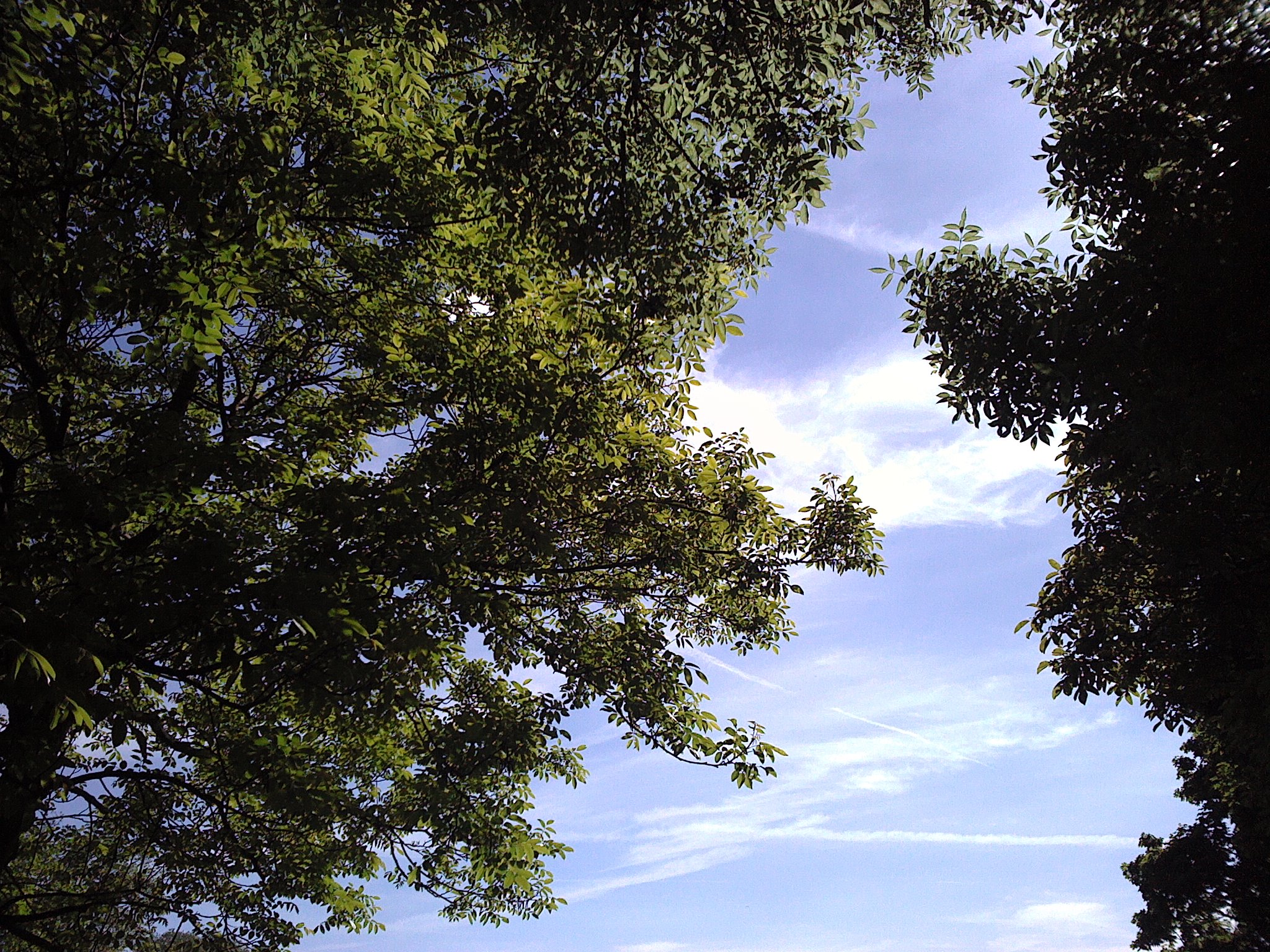
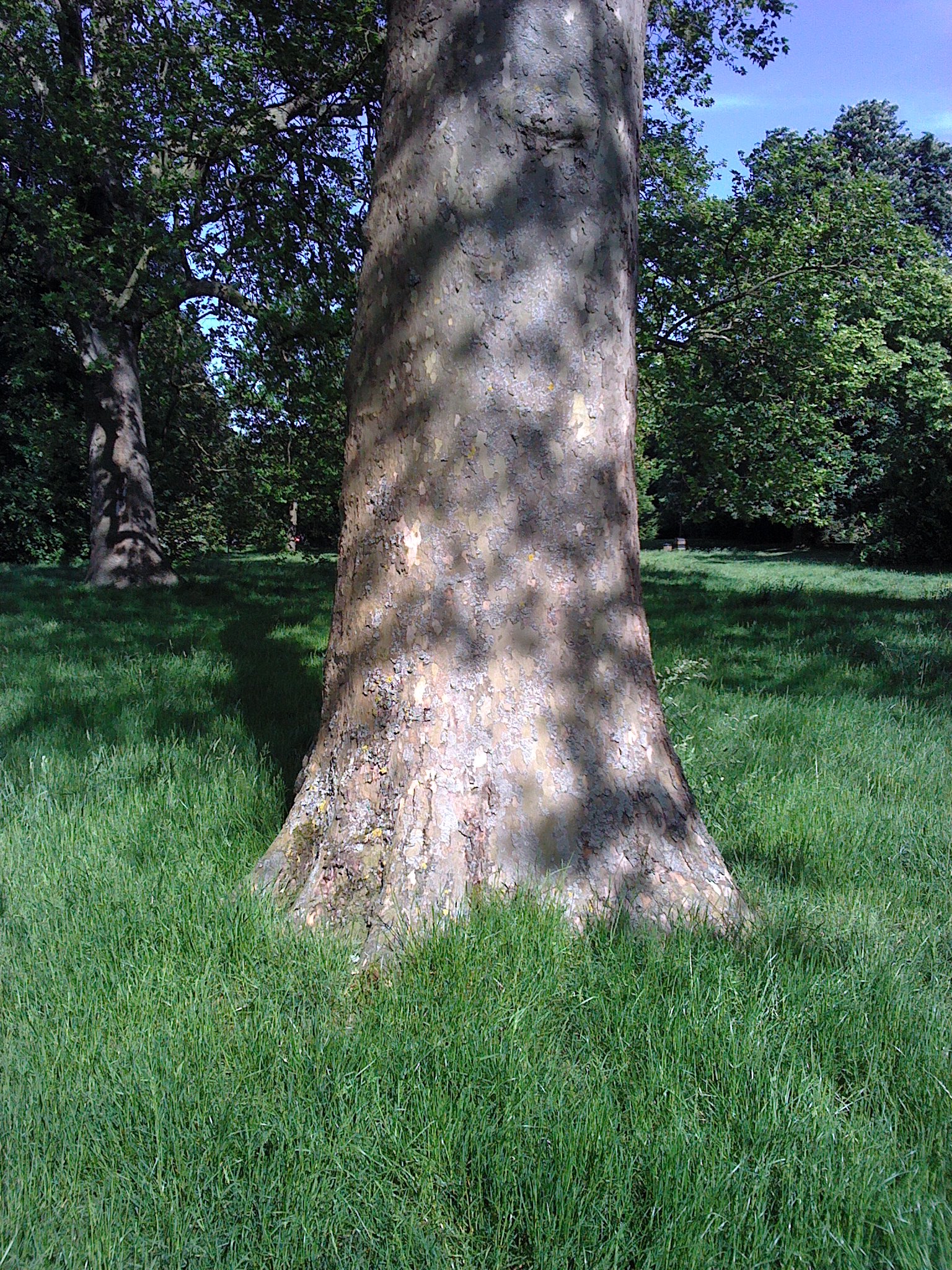
The photographs were taken on 4 June in Kensington Gardens, except the seascape which shows the Firth of Forth from Kinghorn, last April.

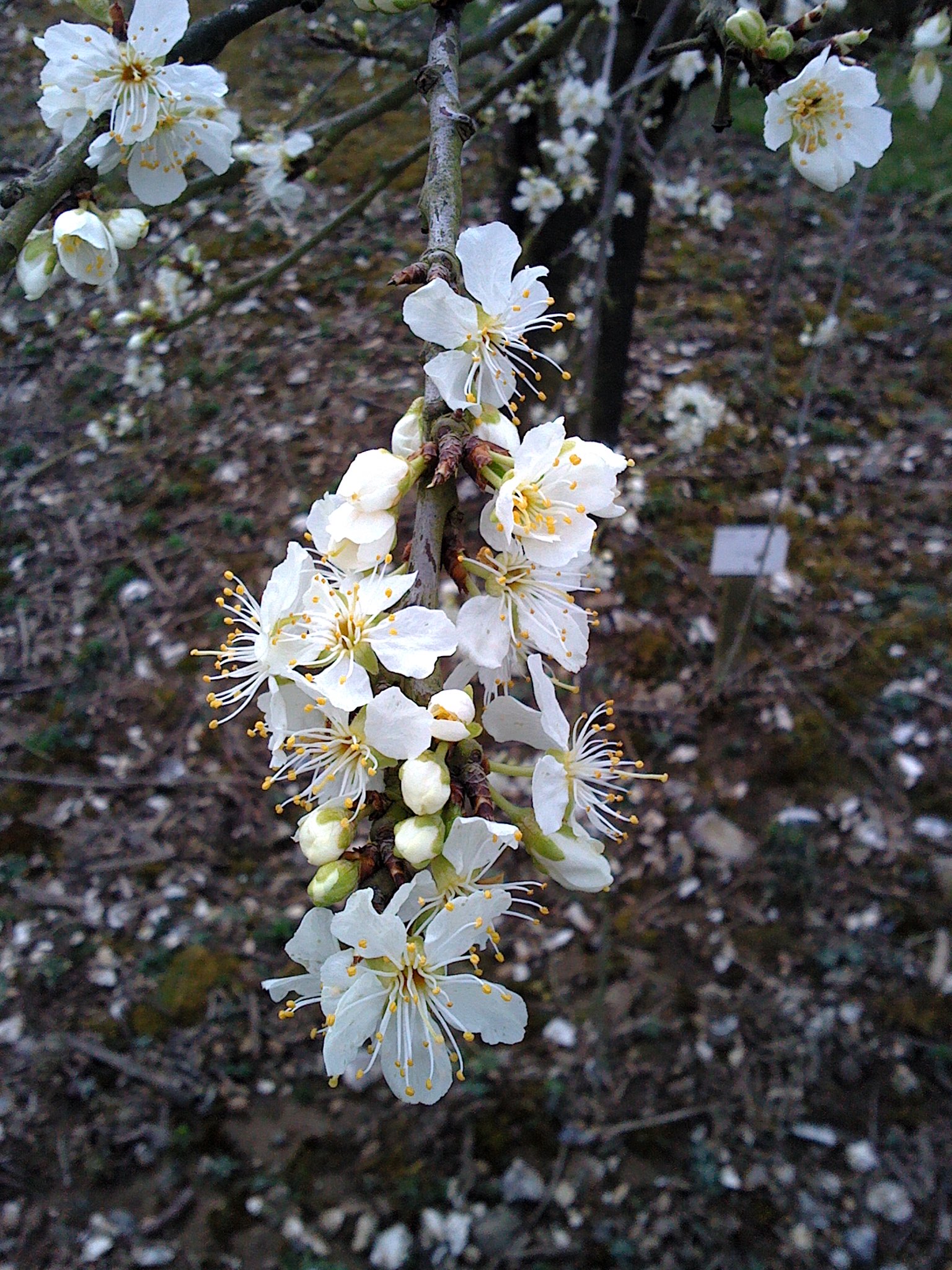
Blossom

2013-04-16 09.39.45

Last month I spent an overcast spring day at the National Fruit Collection, Brogdale Farm, near Faversham in Kent. It was supposed to be the height of the blossom season, but most of the trees were holding on to their winter bareness until the weather improved.

I was there to lead a couple of haiku walks – the idea was that we’d write poems about the abundant blossom, but what we actually wrote about was the late arrival of spring.

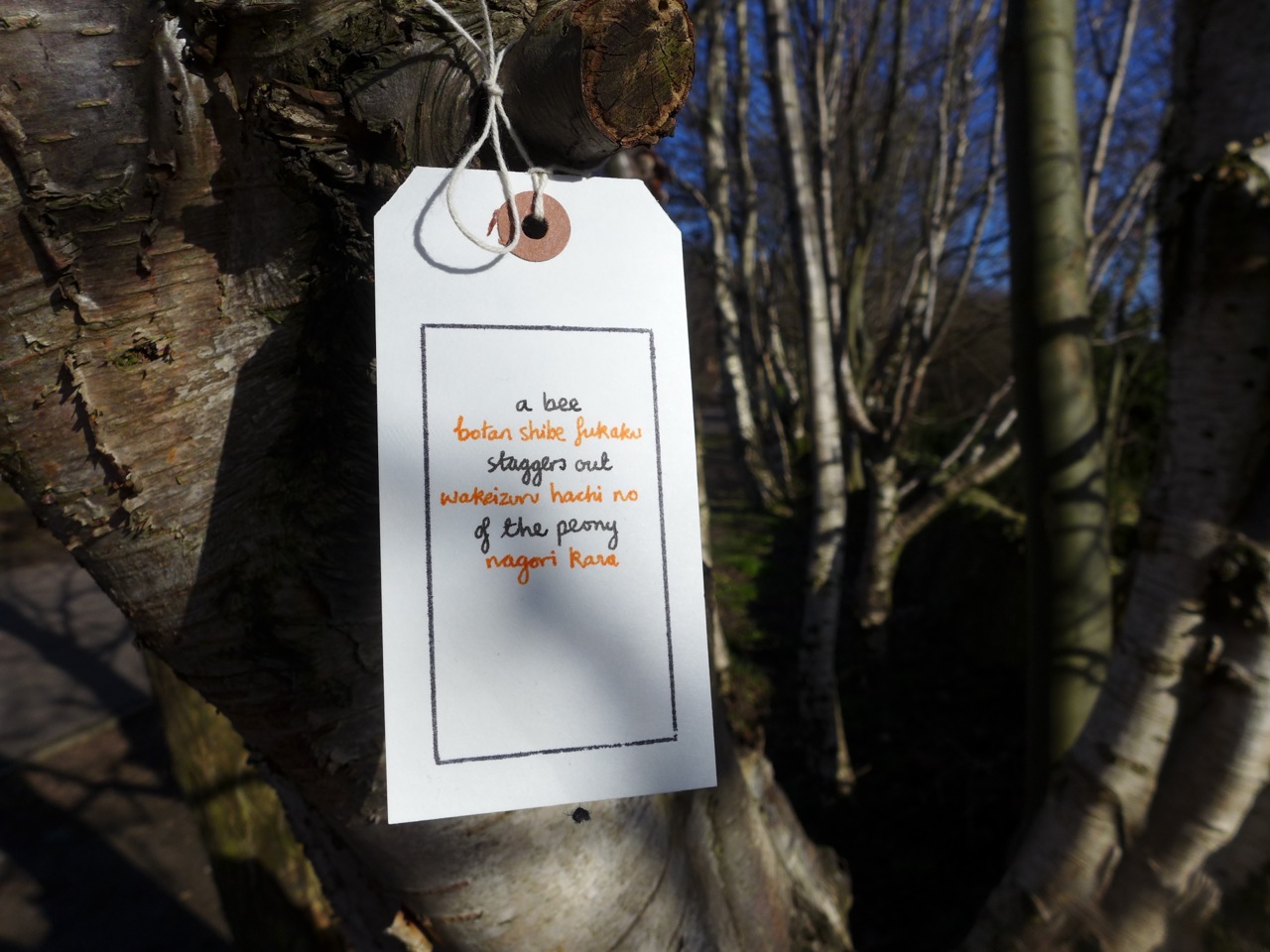
I was there with Luke Allan, who works as Alec Finlay’s studio manager. Luke was there to install and photograph poem-labels for a project of Alec’s called The Bee Bole, and here all the poems were variants on Basho’s famous haiku about a bee leaving a peony-flower.

P1000279-1

You can see all the poems here.

Below is a sequence of haiku, featuring some of the names we came across (four trees and a beer).

chilly April
an Early Bird
at the Sun Inn

chilly April
Pyrus Chanticleer
has yet to crow

chilly April
the Blue Prolific
is anything but

chilly April
Zwemmers Fruehzwetsche
and one bee

chilly April
Prunus Stella
unconstellated

chilly April
one magpie
in a fallow field

2013-04-16 14.35.23

The Ash Grove

2013-05-24 16.31.13

The Ash Grove

a springtime ash, whose leaves emerge from black
an unlocked ash, so profligate with keys
a mourning ash, its branches heaped on pyres
a lettered ash, in the alphabet of trees
a hedgerow ash, which twists among the briars
a spreading ash, in summer’s heat a bield
a sporting ash, to take the shinty field

a warlike ash, for arrows and for spears
a lightning ash, and flame that flash provides
a hanging ash, a shade of dule and tears
a timeless ash, the horse which Odin rides
a steam-bent ash, which hoops the barrel staves
a buoyant ash, a charm against the waves
a blighted ash, whose crown is dying back

I wrote this poem recently and it now forms part of an exhibition, ‘Moving Forward from Ash Dieback’, which will tour to venues across Scotland – it is currently on display at both the Royal Botanic Garden Edinburgh and The Botanic Gardens, Glasgow. Find out more here.

2013-05-24 16.30.50

florist flowris schene

Gavin Douglas wrote the lines below about a May morning 500 years ago, as part of his Prologue to Book XI of Eneados, his translation of Virgil’s Aeneid.

I read it beneath a cedar in Edinburgh’s Botanic Gardens at the weekend, as part of the ‘Spring Blossoms’ walks.

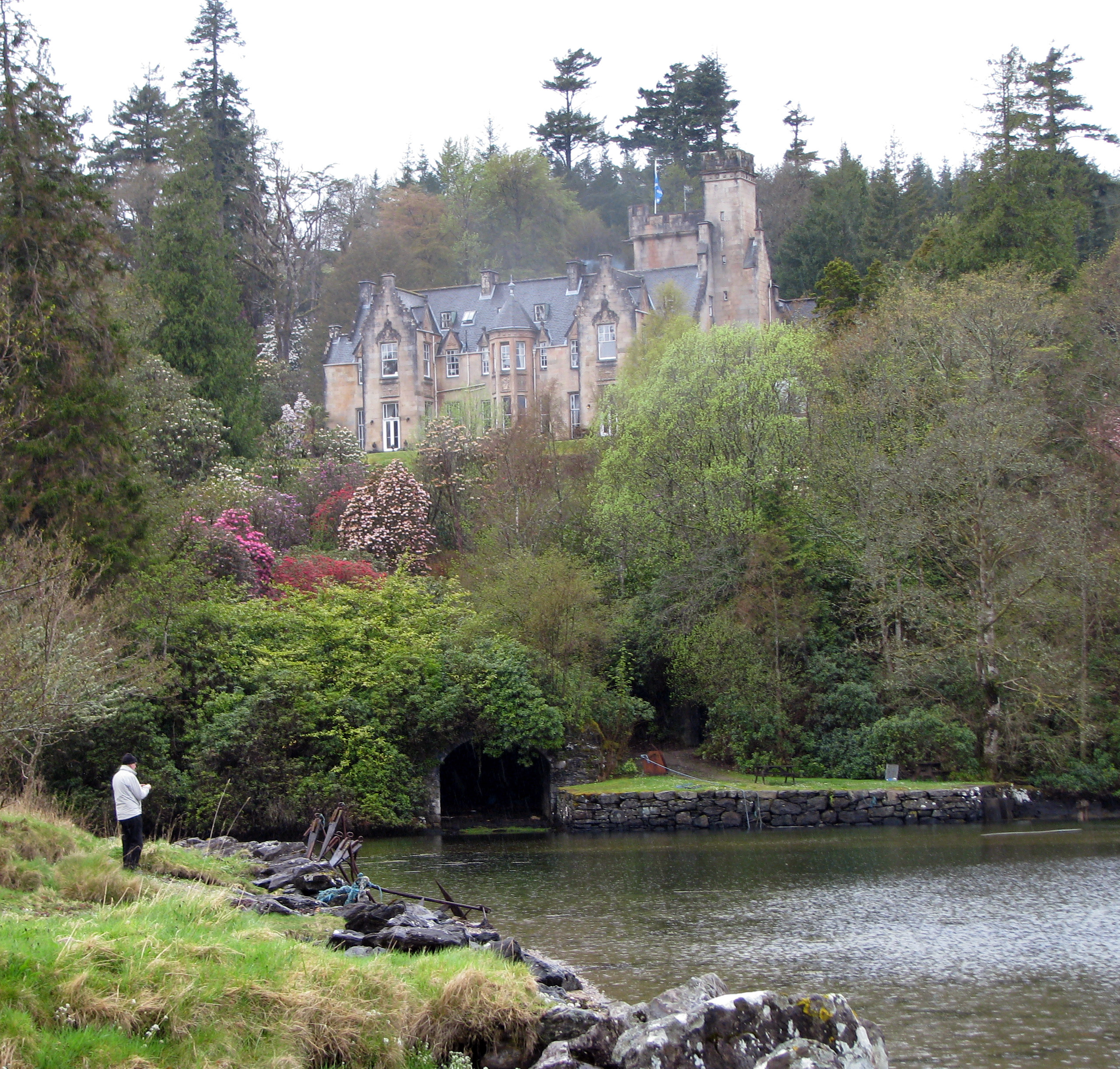
But it also seems a good match to this picture of me at Stonefield Castle, near Tarbert in Kintyre, taken by ~in the fields while I was visiting them there last week (even if rhododendrons hadn’t yet reached Scotland in 1513).

ken_stonefieldcastle

Dame naturis menstralis, on that other part,
Thayr blyssfull bay entonyng euery art,
To beyt thar amouris of thar nychtis baill,
The merll, the mavys, and the nychtingale,
[…]
And al small fowlys singis on the spray :
Welcum the lord of lycht, and lamp of day,
Welcum fostyr of tendir herbys grene,
Welcum quyknar of florist flowris schene,
Welcum support of euery rute and vane,
Welcum confort of alkynd fruyt and grane,
Welcum the byrdis beyld apon the breyr,
Welcum maister and rewlar of the yeyr,
Welcum weilfar of husbandis at the plewis,
Welcum reparar of woddis, treis, and bewis,
Welcum depayntar of the blomyt medis,
Welcum the lyfe of euery thing that spredis,
Welcum stourour of alkynd bestiall,
Welcum be thi brycht bemys, glading all,
Welcum celestiall myrrour and aspy,
Attechyng all that hantis sluggardy!

Arne Rautenberg

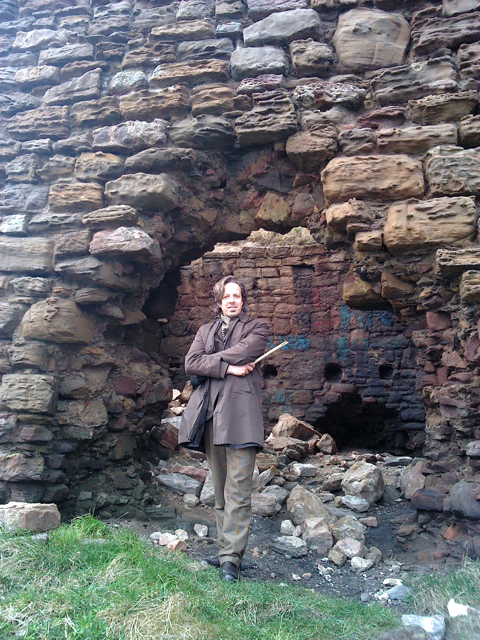
Arne at Seafield Tower, Kirkcaldy

The German poet and artist Arne Rautenberg visited me in Edinburgh recently. We read together at the Goethe Institut Glasgow, and at the Edinburgh Bookshop – along with Peter Manson, presenting his fine Mallarmé translations – so thanks to everyone who came on those evenings.

I made some new translations for the readings, of poems from Arne’s most recent book, Mundfauler Staub (Taciturn Dust). This is a translation of ‘abspann’.

Credits

the man: my grandfather
the woman: my grandmother
the child: my mother
war

the man: my father
the woman: my mother
the child: me
reconstruction

the man: me
the woman: my wife
the child: my daughter
happiness

Angus & Arne
Angus & Arne

Arne and I, accompanied by Angus Reid, also walked part of the Fife Coastal Path, between Kirkcaldy and Aberdour.

2013-04-25 12.562013-04-25 14.292013-04-25 17.15

Spring Shoots – Readings in April & May

After a long hibernation, the days are getting longer and several events in the diary are getting closer.

B&J approach Rasaay

First up is a launch event for Out of Books, with Alec Finlay, on Thursday 11 April at 6.30pm, at the Scottish Poetry Library, and a second event as part of the Boswell Book Festival at Auchinleck, Ayrshire, on Sunday 19 May. Out of Books is collaborative project inspired by Boswell and Johnson’s 1773 journey across the Scottish Highlands and Islands. Taking their texts as their guides, we’ll set out to revisit particular landscapes and recover particular views. Over the summer and along the route we will host a series of events inspired by their antecedents’ famous journey, with further events in and around Inverness, on the Isles of Skye, Coll and Mull, and in Inveraray.

snapdragon11-1

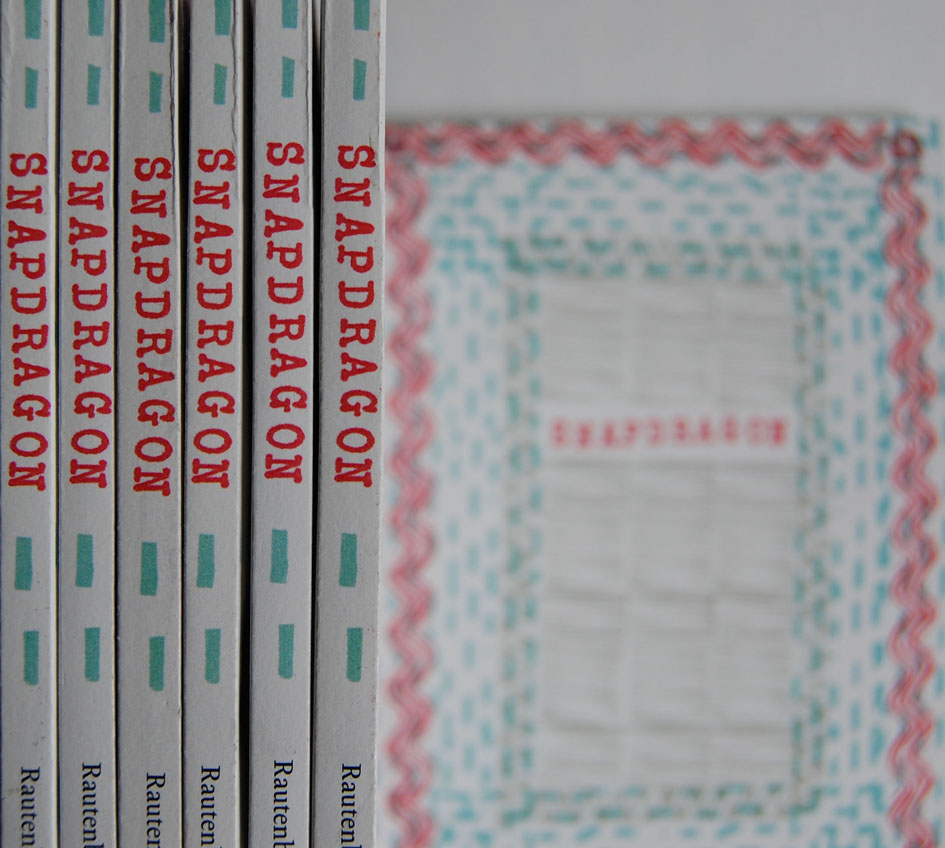
Barrie ‘Caseroom’ Tullett is visiting Edinburgh for the Fruitmarket Gallery Book Fair on Saturday 20 April. I’ll do a stint on the table as well, and read something from Snapdragon about 12.30.

Arne Rautenberg

Arne Rautenberg is visiting Scotland later in the month, and we’re doing two readings together – at the Goethe Institut in Glasgow on Tuesday 23 April at 6.30pm, and at the Edinburgh Bookshop the following day at 7.30pm (this is the Facebook page about it).

cherry blossom 2

In May, I’m leading two poetry walks in the Royal Botanic Garden Edinburgh, on Saturday 11 and Sunday 12, both at 2.00pm. Content still to be decided, but certainly some Chinese classics, haiku, maybe Burns in rural-floral mode, something from The Road North

Apollo shadows

And finally, a reading with Pierre Joris and Lila Matsumoto at Little Sparta on Sunday 26 May at 5.00pm, linked to the University of Glasgow’s Assembling Identities conference. Tickets are available here.

Perhaps the snow will have melted from the Pentlands by then.

Snowy Pentlands, April

Autumn leaves

Autumn seems to be the time translations appear – a smaller crop than last year’s, but there are two publications to mention. No Man’s Land, the online journal for German writing in English, has published my translations of Arne Rautenberg – several haiku, and ‘gingko leaf fairy tale’, about coming across a pressed leaf in a copy of Grimm’s Fairy Tales. Those poems, and many more, are included in Snapdragon.

The recent issue (3:18) of Modern Poetry in Translation is on the theme of Transitions. It’s the last to be edited by David and Helen Constantine, who share this issue with their successor, Sasha Dugdale. I’ll be sad to see them go – they have consistently published work of interest from a generous range of poets and translators, and have been very supportive of my work, taking versions of Thomas Brasch, Thomas Rosenlöcher and Heiner Müller. This issue features translations of three poems by Heinz Czechowski (1935–2009), a writer I’ve just discovered this year, and who skillfully interweaves his private and public selves, the historical and the contemporary, the literary and the mundane. You can read one of the poems here.

Beside them are other translations of Czechowski by Ian Hilton, a former professor of Germany at Bangor University, who has known his work for much longer than I have, and who many years ago met the poet on the eastern side of the Berlin Wall.

Letterpress & Typewriters

I spent Saturday at the Scottish Poetry Library in Edinburgh. They were running their annual bookfair, By Leaves We Live, and it must have been one of the best attended ever. I was mostly at The Caseroom Press table with Barrie Tullett, who brought a small selection from his typewriter collection to display, and be used. They were joined by Edwin Morgan’s Blue Bell (part of his archive held by the SPL), and a red Olivetti Valentine, which Angus Reid had bought for his daughter in a Stockbridge charity shop for a tenner, but which drew admiring and even covetous looks from those that know about typewriters.

Barrie recently drew on the old Pepsi advert to write a text about LETTERPRESSIN’, which he letterpressed as a poster, and asked if I’d contribute something similar about POETRY. I obliged, and the result is above. It’s in an edition of 25, at £25.00 each, and copies are still available from the SPL.

A good day of conversations, rounded off with a party for Hamish Whyte’s Mariscat Press, now thirty years young and still going strong.

Ken Cockburn's website & blog