Category Archives: Walks

Falkland Labyrinth

Labyrinth symbol

In 2014 I was asked to write a poem for the orchard at Falkland Palace in Fife. Sonia, the palace’s head gardener, had just planted a willow labyrinth, with a circular area at its centre. There she planned to install a circular bench, with on it a poem.

Over the summer I ran various events in and around the palace, working with local residents, pupils from the village primary school and from Falkland School, as well as kids from the nursery just up the road. We explored the orchard in blossom time, and again when the branches were heavy with fruit; and a group of us did a circuit up Maspie Den, following the “Yad’s single thread” upstream. I climbed East Lomond, or Falkland Hill, which I’d last done as a teenager, and also West Lomond, a bit further out from the village, which I’d last done more recently as part of The Road North.

Pictish bull stone NMS

I read about the village’s history: the obscure origin of the name ‘Falkland’; the Pictish stone featuring the image of a bull, “spirited and naturalistically rendered”; the development of the palace as a hunting lodge with an enclosed park around it for the ‘sport’ of the Scottish royals; the locally grown flax which was woven into linen; the now ruined Temple of Decision; and the local flora and fauna, from white ramping fumitory to the soprano pipistrelle.

I was also thinking about the ‘release – receive – return’ principle of the labyrinth: you release what’s you’re carrying with you on the way in; at the centre, the point of stillness, you receive what’s there for you to receive; and as you return, you think how what you’ve received will impact on your life in the future. I knew readers would encounter the poem at the mid-point of their experience of the labyrinth, and at what feels like a central point within Falkland, from that part of the orchard you can see the palace, the town hall, the church and East Lomond.

And I’d to fit all that into a poem which, given the dimensions of the bench and the need to have legible letters, was limited to 185 characters – slightly longer than a single tweet.

Now your steps to here have led
sit within the woven shade

Just outside this pliant wall
crowstep clocktower steeple hill

In the future bear in mind
the twists of labyrinthine time

Willow leaves

On Raasay

11401101_920675431288859_1939139233689863194_n

I was on the Isle of Raasay in early June, for the launch of Patterns of Flora | Mapping Seven Raasay Habitats. ATLAS Arts, based on nearby Skye, had commissioned Edinburgh-based ceramicist, Frances Priest to develop a series of handmade, ceramic artworks for permanent installation in Raasay House.

The form and design of the artworks – vases, door knobs, door pushes and pieces for sills – are based on Raasay’s plant life, and in particular seven different habitats that host unique and varying plant species: Bog, Coast, Fresh Water, Limestone, Moor, Mountains and Woodland. Alongside these Frances designed a map, featuring the habitats with associated walks. She collaborated with Raasay-based botanist Stephen Bungard.

(I had worked with Frances several years ago, on Pandora’s Light Box at the Talbot Rice Gallery in Edinburgh, and it was good to catch up with her work in a very different setting.)

10676329_921396287883440_1629111481114513217_n

I was there to lead a ‘haiku walk’ on the Saturday afternoon, again working with Stephen. We went to the salt marsh at Oskaig, arriving at a particularly wind- and rain-swept moment, but the weather cleared and there was much to enjoy immediately around us, and looking across the sound to Skye and the Cuillins. I was struck by Stephen’s remark that the four aspen trees we saw were in fact all one, the trunks all sharing a single root.

Back at Raasay House all was notebooks and concentration.

On Sunday, once the morning rain had cleared, I managed a walk with Frances and others on the east coast from Fearns to Hallaig, below the cliffs and into the birchwood the burn runs through. In his poem ‘Hallaig’ Sorley Maclean repeoples the now empty places:

na h-igheanan ’nan coille bheithe, / dìreach an druim, crom an ceann.

the girls a wood of birches, / straight their backs, bent their heads.

there were our own there were the others

Killerton REMEMBRANCE

I spent much of summer 2014 driving the motorways and country lanes of England and Wales with Luke Allan for there were our own there were the others, a project by Alec Finlay for the National Trust to mark the centenary of the outbreak of the First World War. Luke & I visited 23 properties, all of which had some connection to the war – a family member who served and was perhaps killed; a house used as a hospital, grounds used as a training camp; gardens planted as memorials to the carnage. At each I led a silent memorial walk, bookended by a pair of poems from the past century on the theme of conflict. At most properties we set up a pair of lecterns, on which the poems were presented, and at some the lecterns were placed either end of a sandbag wall, reminiscent of the trenches. At a few we flew a red flag featuring a circular version of project’s title. That phrase is taken from Hamish Henderson’s Elegies for the Dead in Cyrenaica, about his experiences in the North African desert in the Second World War, but it seemed an apt way of memorialising all the victims of conflict, rather than just those ‘on our side’, as did the large-scale ceramic poppies installation at the Tower of London.

This gallery above shows some photos from the tour (all are by me, except Killerton Chapel by Hannah Devereux, and Liverpool, by Luke Allan). The full itinerary is on the website.

After the English and Welsh tours I was able to visit Belgium at the end of September to visit some of the First World War sites near Ypres: graveyards, battlefields, memorials. I also saw the excellent exhibition In Flanders Fields in the Lakenhalle in the centre of Ypres itself, which shows the war from the perspective of the four armies who were fighting there: Belgian, French, British and German. We stayed at Talbot House in Poperinge, a small town which, for most of the war was just far enough behind the front line for it to be fairly safe. Talbot House became a social club for off-duty soldiers, and retains many features of that time.

book of the same title documents and reflects on the project. It includes poems and prose by myself about the walks and the poems, as well as the poem ‘Cloqueliclot’ about my experiences in Belgium. It also features fine photos by Luke and Hannah.

our own the others front cover

Wordsworth & Basho: Walking Poets

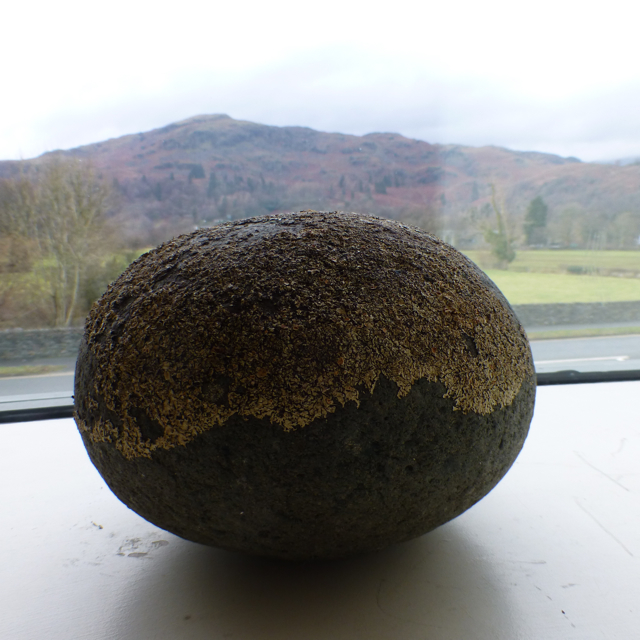
Sill Stone

I was in the Lake District last week for a symposium on ‘Wordsworth and Basho: Walking Poets’. A group of us were there to meet and discuss what we might make for a forthcoming exhibition at Dove Cottage, Grasmere, home to the Wordsworths from 1799 to 1808, now a museum and home of the Wordsworth Trust.

The Prelude mss

Curator Jeff Cawton shared his enthusiasm for ‘The Prelude’ and its various manuscripts. Most are written in the hand either of Mary, the poet’s wife, or Dorothy, his sister, with amendments by William; apparently he found writing physically painful, so composed in his mind while out walking, dictating the results when he came home.

Wordsworth ms

The pages above show a draft of Book 10, with William’s revisions on the left hand page:

… As a light
And pliant harebell, swinging in the breeze
On some grey rock, its birth-place, so had I
Wantoned, fast rooted on the ancient tower
Of my beloved country, wishing not
A happier fortune than to wither there
And now was from that pleasant station plucked
And tossed about in whirlwind. I rejoiced…

Wayfinder

A group of us managed a walk in Easedale, up Sour Milk Gill (a fast-flowing stream) to Easedale Tarn (a placid lake). At the foot I read ‘Emma’s Dell’, one of the ‘Poems on the Naming of Places’ – right place, wrong season, as the poem is set on “an April morning, fresh and clear”, whereas we had damp January.

Easedale Sour Milk Gill

Though with all the recent rain, it was still true that

The Rivulet, delighting in its strength,
Ran with a young man’s speed…

The white waters reminded me the Inverianvie, of one of our stations on The Road North, so I adapted a line from Basho to fit the new location.

Poem-label gillEasedale label rapidsEasdale 1

Blossom

2013-04-16 09.39.45

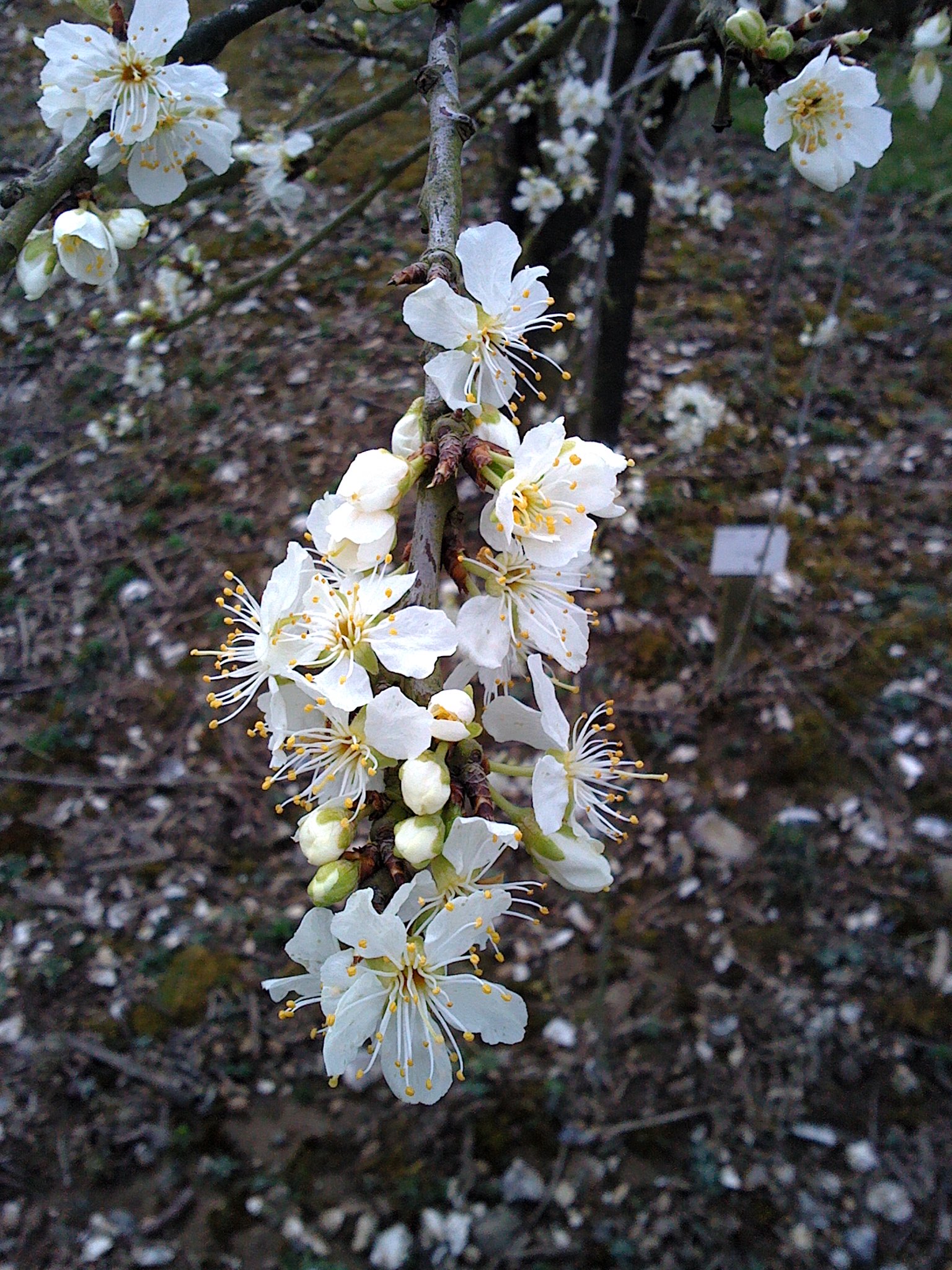
Last month I spent an overcast spring day at the National Fruit Collection, Brogdale Farm, near Faversham in Kent. It was supposed to be the height of the blossom season, but most of the trees were holding on to their winter bareness until the weather improved.

I was there to lead a couple of haiku walks – the idea was that we’d write poems about the abundant blossom, but what we actually wrote about was the late arrival of spring.

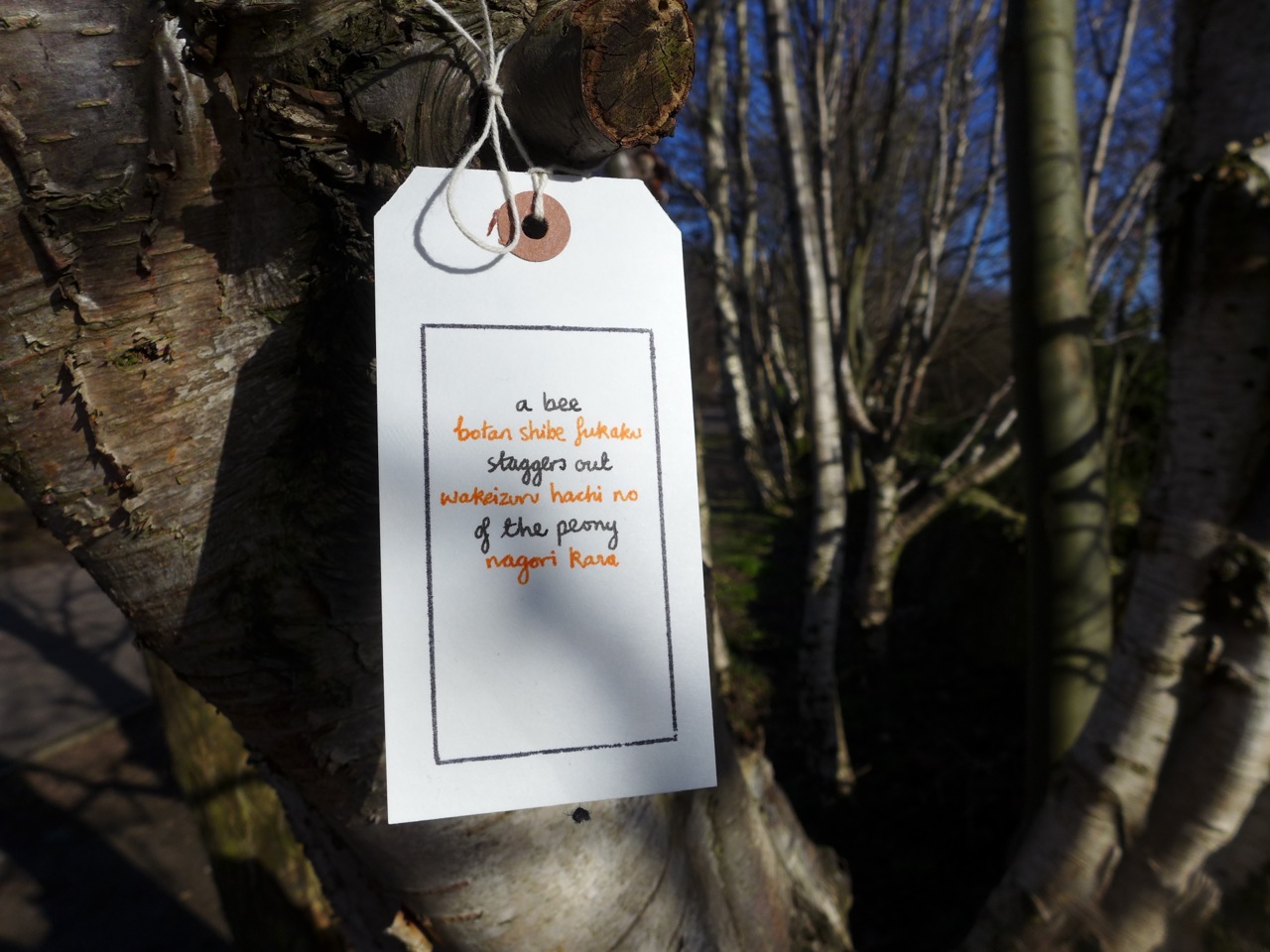
I was there with Luke Allan, who works as Alec Finlay’s studio manager. Luke was there to install and photograph poem-labels for a project of Alec’s called The Bee Bole, and here all the poems were variants on Basho’s famous haiku about a bee leaving a peony-flower.

P1000279-1

You can see all the poems here.

Below is a sequence of haiku, featuring some of the names we came across (four trees and a beer).

chilly April
an Early Bird
at the Sun Inn

chilly April
Pyrus Chanticleer
has yet to crow

chilly April
the Blue Prolific
is anything but

chilly April
Zwemmers Fruehzwetsche
and one bee

chilly April
Prunus Stella
unconstellated

chilly April
one magpie
in a fallow field

2013-04-16 14.35.23

florist flowris schene

Gavin Douglas wrote the lines below about a May morning 500 years ago, as part of his Prologue to Book XI of Eneados, his translation of Virgil’s Aeneid.

I read it beneath a cedar in Edinburgh’s Botanic Gardens at the weekend, as part of the ‘Spring Blossoms’ walks.

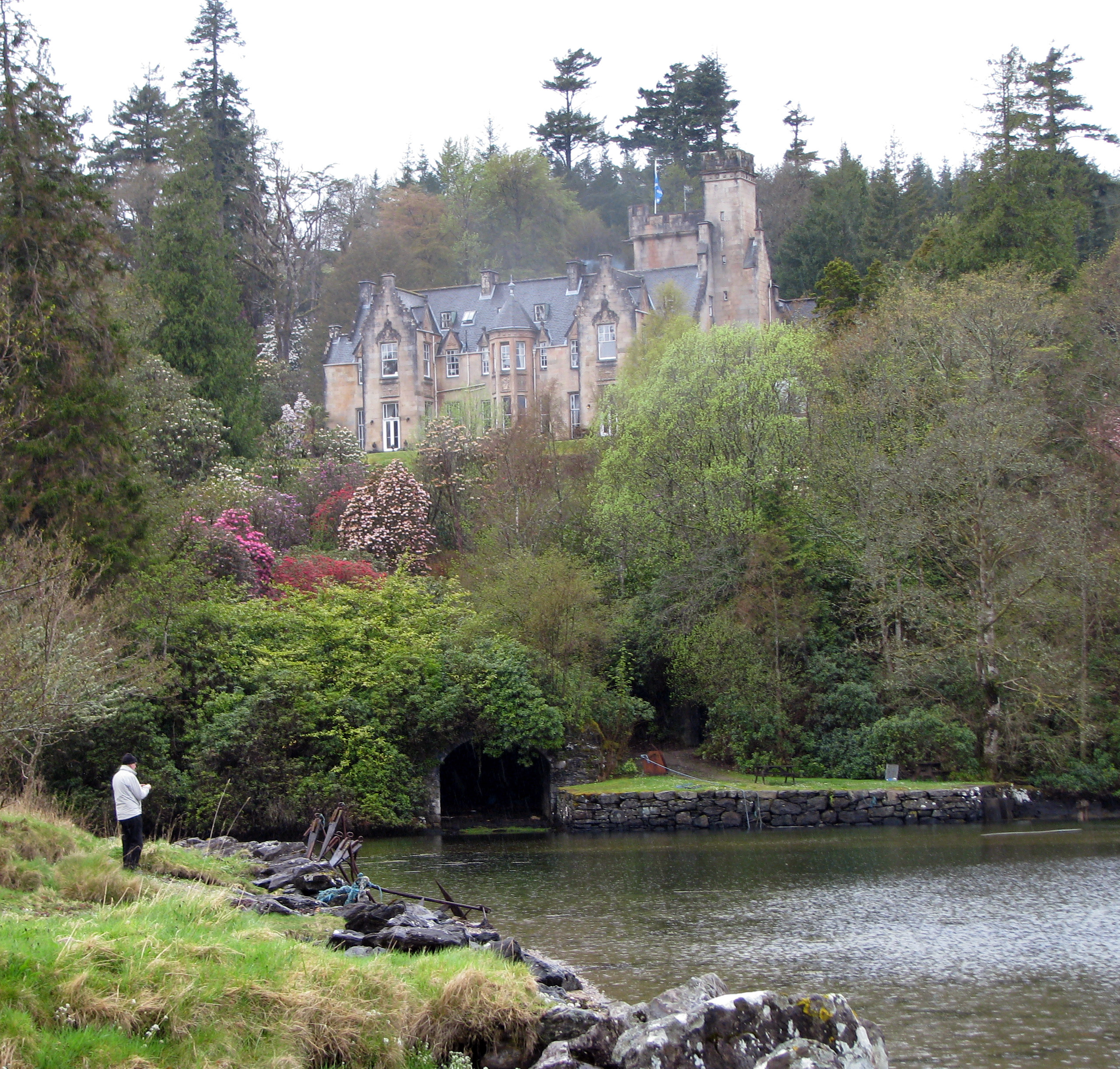
But it also seems a good match to this picture of me at Stonefield Castle, near Tarbert in Kintyre, taken by ~in the fields while I was visiting them there last week (even if rhododendrons hadn’t yet reached Scotland in 1513).

ken_stonefieldcastle

Dame naturis menstralis, on that other part,
Thayr blyssfull bay entonyng euery art,
To beyt thar amouris of thar nychtis baill,
The merll, the mavys, and the nychtingale,
[…]
And al small fowlys singis on the spray :
Welcum the lord of lycht, and lamp of day,
Welcum fostyr of tendir herbys grene,
Welcum quyknar of florist flowris schene,
Welcum support of euery rute and vane,
Welcum confort of alkynd fruyt and grane,
Welcum the byrdis beyld apon the breyr,
Welcum maister and rewlar of the yeyr,
Welcum weilfar of husbandis at the plewis,
Welcum reparar of woddis, treis, and bewis,
Welcum depayntar of the blomyt medis,
Welcum the lyfe of euery thing that spredis,
Welcum stourour of alkynd bestiall,
Welcum be thi brycht bemys, glading all,
Welcum celestiall myrrour and aspy,
Attechyng all that hantis sluggardy!

Arne Rautenberg

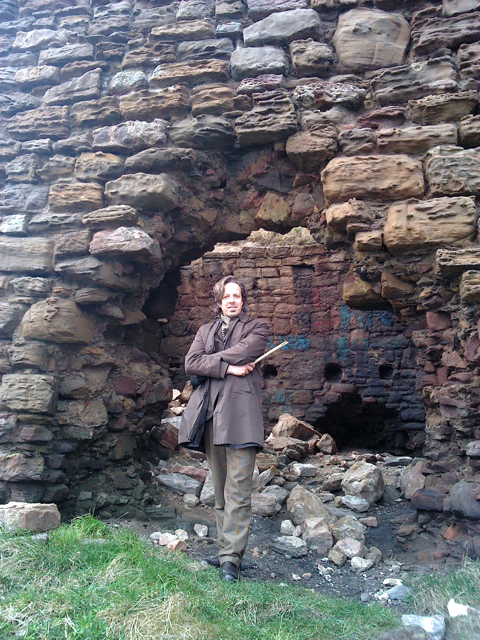
Arne at Seafield Tower, Kirkcaldy

The German poet and artist Arne Rautenberg visited me in Edinburgh recently. We read together at the Goethe Institut Glasgow, and at the Edinburgh Bookshop – along with Peter Manson, presenting his fine Mallarmé translations – so thanks to everyone who came on those evenings.

I made some new translations for the readings, of poems from Arne’s most recent book, Mundfauler Staub (Taciturn Dust). This is a translation of ‘abspann’.

Credits

the man: my grandfather
the woman: my grandmother
the child: my mother
war

the man: my father
the woman: my mother
the child: me
reconstruction

the man: me
the woman: my wife
the child: my daughter
happiness

Angus & Arne
Angus & Arne

Arne and I, accompanied by Angus Reid, also walked part of the Fife Coastal Path, between Kirkcaldy and Aberdour.

2013-04-25 12.562013-04-25 14.292013-04-25 17.15

Spring Shoots – Readings in April & May

After a long hibernation, the days are getting longer and several events in the diary are getting closer.

B&J approach Rasaay

First up is a launch event for Out of Books, with Alec Finlay, on Thursday 11 April at 6.30pm, at the Scottish Poetry Library, and a second event as part of the Boswell Book Festival at Auchinleck, Ayrshire, on Sunday 19 May. Out of Books is collaborative project inspired by Boswell and Johnson’s 1773 journey across the Scottish Highlands and Islands. Taking their texts as their guides, we’ll set out to revisit particular landscapes and recover particular views. Over the summer and along the route we will host a series of events inspired by their antecedents’ famous journey, with further events in and around Inverness, on the Isles of Skye, Coll and Mull, and in Inveraray.

snapdragon11-1

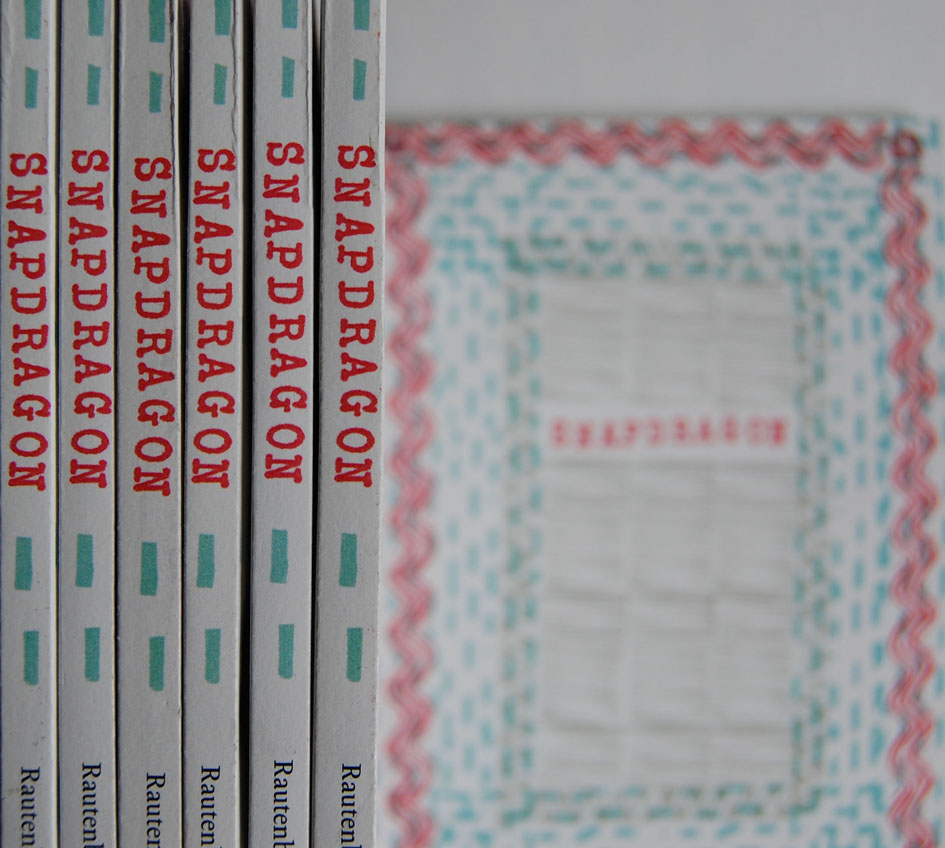
Barrie ‘Caseroom’ Tullett is visiting Edinburgh for the Fruitmarket Gallery Book Fair on Saturday 20 April. I’ll do a stint on the table as well, and read something from Snapdragon about 12.30.

Arne Rautenberg

Arne Rautenberg is visiting Scotland later in the month, and we’re doing two readings together – at the Goethe Institut in Glasgow on Tuesday 23 April at 6.30pm, and at the Edinburgh Bookshop the following day at 7.30pm (this is the Facebook page about it).

cherry blossom 2

In May, I’m leading two poetry walks in the Royal Botanic Garden Edinburgh, on Saturday 11 and Sunday 12, both at 2.00pm. Content still to be decided, but certainly some Chinese classics, haiku, maybe Burns in rural-floral mode, something from The Road North

Apollo shadows

And finally, a reading with Pierre Joris and Lila Matsumoto at Little Sparta on Sunday 26 May at 5.00pm, linked to the University of Glasgow’s Assembling Identities conference. Tickets are available here.

Perhaps the snow will have melted from the Pentlands by then.

Snowy Pentlands, April

Sixteens

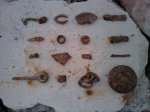
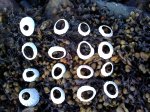
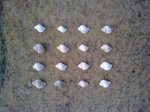
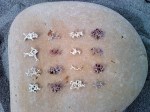
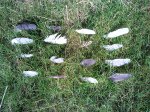
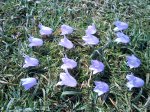
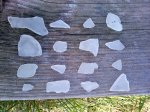
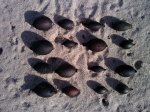
Sixteens: for Isobel is a project featuring simple, formal arrangements of related found objects, made for Northlight Dunbar 2012, and presented at the Beach Hut, Dunbar Harbour.

I developed the practice of making Fourteens in summer 2010 as part of The Road North. On my daughter’s fourteenth birthday I was on Skye while she was in Edinburgh, so to mark the occasion I picked, arranged and photographed fourteen yellow ragwort heads, and e-mailed her the image. This soon became a way of enabling Alec Finlay and myself to focus on things we came across – including berries, flowers and mushrooms.

Two years on, and I’ll be with my daughter on her birthday. But I’ve been making Sixteens anyway, sixteen related found objects arranged as a four by four grid, and photographed in situ. I’ve made sixteen such arrangements and photographs, retaining one item from each, which is displayed in the beach hut alongside the photos. The items compose a seventeenth Sixteen, derived from its predecessors (just as in a ‘crown of sonnets’ the fifteenth sonnet is composed of one line from each of the previous fourteen).

I made eleven Sixteens before my week in Dunbar, on recent trips to Moray and Orkney, and the remaining five were made on a walk along the John Muir Way east from Dunbar towards Torness power station.

With thanks to Angus Reid and Lorna Irvine for their contributions.