Category Archives: Travels

More Instagram Posts 2024

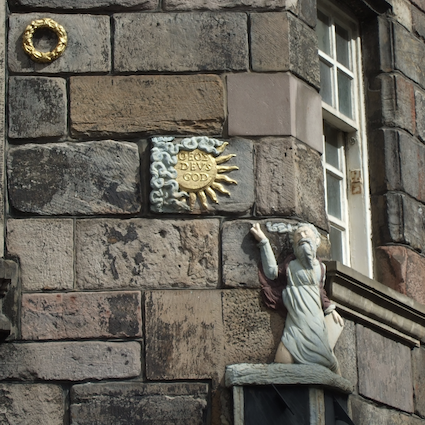
I’ve been posting regularly on instagram this year, with a different theme each month.

The first three months are covered by this post; the themes since then have been Paris and Edinburgh…

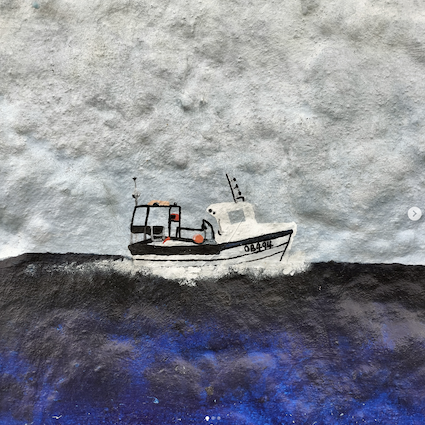
the Hebrides and Gael Turnbull…

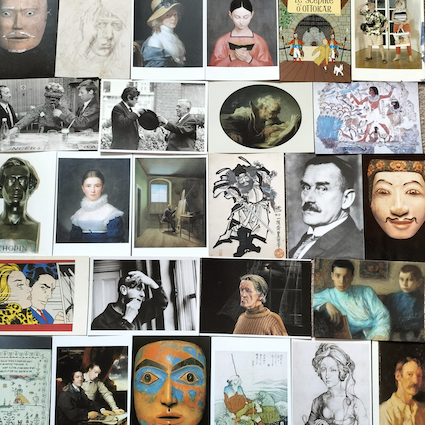
postcard portraits…

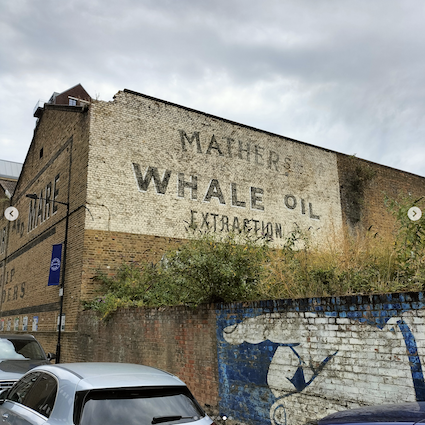
then London and poem postcards.

Still two months to come…

kencockburnedinburgh

Gaelic Birdsong (1)

As Spring Fling x Wigtown Book Festival Writer-in-Residence for 2019, I’ve been creating new work exploring the links between birds, art and the landscape, inspired by my experiences during Spring Fling. The new work will be revealed at Wigtown Book Festival (27 September – 6 October) but in the meantime here are some insights and sneak peeks…

I’ve been researching place-names in Dumfries and Galloway which relate to birds. There are many, covering all sorts of ground, from coastal rocks to inland moors and up into the high hills. Many of these place-names are derived from Gaelic, spoken in Galloway until the 18th century.

Here are three, given with their English meanings, together with a description of the place taken from the Ordnance Survey place-name books compiled in the 1840s and 1850s. The map extracts are taken from OS maps published around the same time.

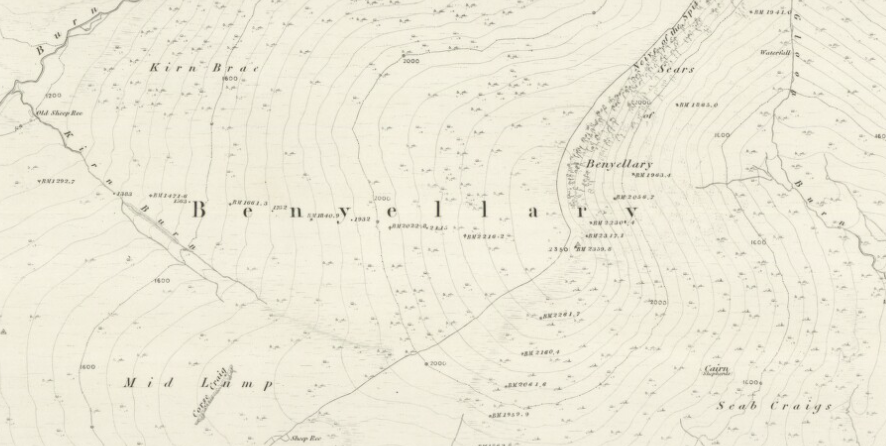
Benyellary OS Sheet 13

Benyellarie (N of Glentrool)

“A large lofty rocky heathy hill on the farms of Palgown… on its eastern side is a large precipice called “Scars of Benyellary.”
Benyellarie, from beinn iolaire, the eagle’s hill

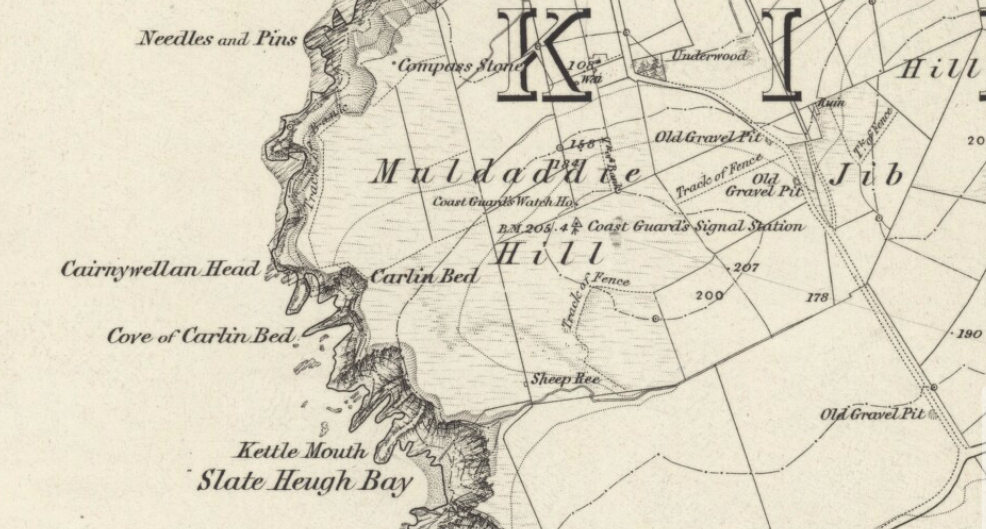
Cairnywellan Head OS Sheet 31

Cairnywellan Head (by Port Logan, S of Portpatrick)
“A head land which terminates Port Nessock Bay on the South side. It is a Conspicuous object & well known to mariners.”
Cairnywellan, from cárn na bhfaoileann, cairn of the seagulls

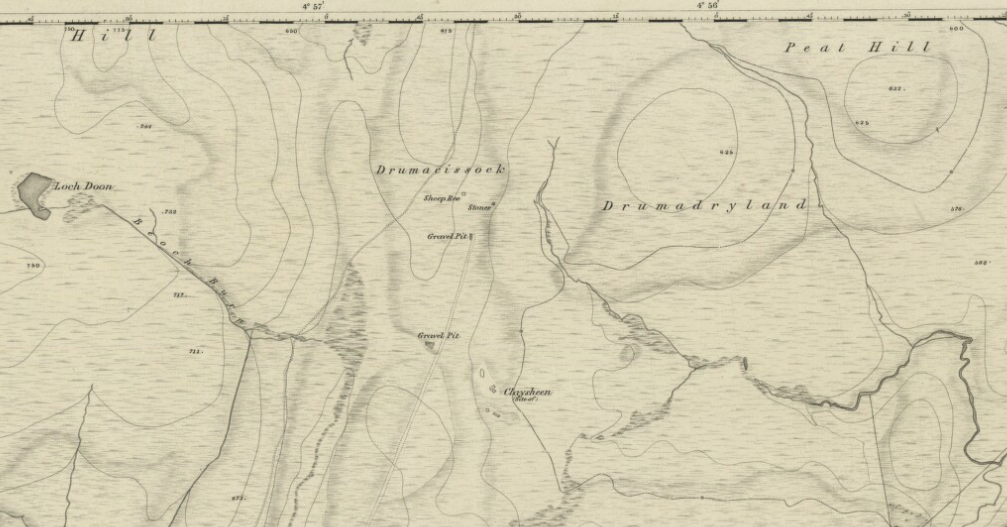
Drumadryland OS Sheet 11

Drumadryland (E of Cairnryan)
“A Broad heathy hill on the North side of a large Moor or marsh, and on the farm of Delhabach”
Drumadryland, from druim na’ dreolan, ridge of the wrens

The OS information can be found at https://scotlandsplaces.gov.uk

Spring Fling x Wigtown Book Festival

Sellars birds
Urpu Sellars, Birds

I’m working as the Spring Fling x Wigtown Book Festival writer-in-residence 2019. My chosen theme for the residency is birds.

Gallant wrens
Jo Gallant, Wrens

Over the Spring Fling weekend (25–27 May) I visited artist studios across Dumfries and Galloway, from Gatelawbridge to Port William, speaking to artists and visitors. As well as seeing a fantastic range of bird-themed artworks, I spoke to lots of folk who shared their sightings and memories of birds.

Hooper Friends from the North
Lisa Hooper, Friends from the North

Over the next few weeks and I’ll be reflecting on my Spring Fling experiences, and writing a new piece of work to be presented at the Wigtown Book Festival in the autumn.

Sammons Arctic Terns
Amanda Simmons, Arctic Terns

In the meantime here’s a selection of birds from the weekend – some spotted during conversations and workshops, some glimpsed as I travelled, and some contemplated in  studios and galleries. My thanks to everyone involved.

Stewart origami bird
Sarah Stewart, origami birds

Conversations
I heard of an oystercatcher nesting on a roundabout, a crow that kept banging into the window, and jays burying acorns. I was told there are no magpies around Kirkcudbright and Wigtown – some say they were exterminated, others that they can’t co-exist beside carrion crows. I heard of swallow fledglings standing in a line on a beam, sometimes for three or four days, before they launch themselves, of thrushes littering the garden with broken snail-shells, and of a buzzard swooping to lift a frog from a pond, like an osprey takes fish. I was told of stock doves nesting in owl-boxes, and that there are more egrets now, but fewer lapwings and swallows. I heard from a member of a rowing club who enjoys seeing gulls, sandpipers and herons up close, and a member of a golf club who sees mostly magpies. I was told of a sound like someone in distress, which turned out to be a barn owl, and of green woodpeckers, red kites, small owls and bittern in Cambridgeshire. I heard of a heron which stands in the pond that’s not full of newts, and of a raptor which, falling on chaffinches gathered at the bird-feeder, misjudged its flight and crashed into the fence, before picking itself up and flying away embarrassed. I was told of a thrush singing at Carstairs Station, of blackbirds flying out from the bay tree, and of a hen pheasant which planned to nest in the field behind a house until the neighbour’s cat disturbed it. I heard of the bell in the County Buildings remaining silent when the ospreys didn’t return, and of sedge warblers which sound like techno and hiphop.

KG Goldfinch
Goldfinch, on a chair by Bill Johnston (1893–1974), in Kirkcudbright Galleries

Observations
From the car I notice a woodpecker land on the verge, its distinctive black-and-white striped head, while a large puddle in a lay-by that loops off the road has attracted a duck and several ducklings. The looping flight of siskins around a flowering laburnum tree, oystercatchers heard through an open door, the songs of a Galloway hedgerow in late May. At the Cairnholy stones, a blackbird flies from the nearby house to the far side of the valley in seconds. From within an evergreen a thrush emerges, stands speckled on the threshold a moment as if deciding where to, then off. A buzzard circles above the green slope at Port Castle Bay, now seen, now hidden.

Buzzard Port Castle Bay

Zbigniew Herbert in Scotland, 1963

Herbert Collected Holy Iona

In Zbigniew Herbert’s Collected Poems 1956–1998 I came across a single reference to Scotland, in the poem ‘The Prayer of the Traveler Mr. Cogito’ or, to give it its Polish title, ‘Modlitwa Pana Cogito – podróżnika’. Here is the relevant section in the Polish original, followed by Alissa Valles’s translation from Collected Poems.

a także Miss Helen z mglistej wysepki Mull na Hebrydach za to że przyjęła mnie po grecku i prosiła żeby w nocy zostawić w oknie wychodzącym na Holy Iona zapaloną lampę aby światła ziemi pozdrawiały się

and Miss Helen of the foggy island of Mull in the Hebrides for offering Greek hospitality and asking me to leave a lamp lit at night in the window facing Holy Iona so that the lights of earth would greet each other

The poem is taken from Herbert’s 1983 collection Raport z oblężonego Miasta / Report from a Besieged City. I was curious to know more about the time he spent in Scotland, which was in fact twenty years before this collection appeared, in autumn 1963. According to Andrzej Franaszek’s 2018 biography of Herbert, using public transport Herbert travelled north from London, stopping in Leeds, York and Durham before arriving in Scotland, where he visited Edinburgh, Aberdeen, Inverness, Oban, Mull and Glasgow, before returning via Carlisle to London.

Franaszek quotes from a postcard Herbert sent from Edinburgh on 18 October:

Wdrapałem się na górę koło Edynburga i oczywiście spadłem trochę (niegroźnie). Tak trzeba. Ziemio ty moja szkocka ukochana! Jutro jadę, ale dobrze nie wiem dokąd. Dziś w nocy narada sztabu z mapą. Jestem bardzo szczęśliwy, żeście mnie wypchnęli w świat. (…) Przede mną góry i skały, kozice i georginie. Naprzód! Hej!!!

I scrambled my way onto a mountain near Edinburgh and I fell down a little (not dangerously). Maybe a good thing. My beloved Scottish earth! I am leaving tomorrow, even though I’m not sure where I’m going. Tonight there will be a conference of the High Command over the map. I’m very glad that you pushed me out into the world. (…) Ahead of me mountains and cliffs, mountain goats and dahlias. Onwards! Hey!!!

In another postcard, sent from Inverness, he described his mixed feelings about the country: he was ‘exhausted but happy, head over heels in love with Scotland; its beauty exhilarates the tourist. But life without sex… one has to go back.’

He returned via the west coast and, finding himself in Oban, decided to cross to the nearby Isle of Mull and from cross there to Iona or, as he consistently called it, using the English adjective, Holy Iona. ‘Holy Iona, czyli kartka z podróży’ (‘Holy Iona, or a page of travel’) was written in 1966 for the West German radio station WDR, and published posthumously in the collection Mistrz z Delft (2008). Of his perspective of islands, he wrote:

Wyspy nie należą do krajobrazu mego dzieciństwa. Urodziłem się w środkowej Europie, w połowie drogi między Morzem Bałtyckim a Czarnym. Pejzaż mojej młodości to podlwowskie okolice: jary i łagodne pagórki porośnięte sosną, na której najpiękniej kwitnie pierwszy sypki śnieg. Morze było tam czymś niewyobrażalnym, a wyspy miały posmak baśni.

Islands were not part of the landscape of my childhood. I was born in Central Europe, halfway between the Baltic and the Black Sea. The landscape of my youth was the area near Lwów, crevices and gentles hills covered in pine on which the first dry snow bloomed beautifully. The sea was something unimaginable there, and islands had a scent of fairytales.

The crossing to Iona had something otherwordly about it. It was 29 October, his birthday, and the ferry was no longer sailing. The landlady of his B&B at Fionnphort phoned a local fisherman, who agreed to take Herbert on the short crossing. In his radio talk he described their meeting-place:

Zimny, wilgotny, siwy ranek. Stoję w pobliżu jetty, która jest po prostu betonową ścieżką wchodzącą w morze. Ocean jest wzburzony, wysokie fale rozbijają się na skałach urwistego brzegu. Nagle z mgły wyłania się mała łódka rybacka płynąca w moim kierunku. Było to jak podanie ręki marzeniu.

A cold, damp, gray morning. I am standing near a jetty, which is just a concrete path going into the sea… which was stormy, high waves crashing against a rocky coast. A small open boat appeared from out of the mist; it was like extending your hand to a dream.

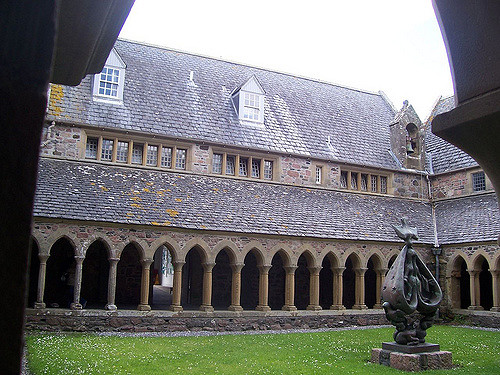
Once on Iona, Herbert explored the recently rebuilt abbey complex. He was particularly struck by his encounter with a sculpture, Descent of the Spirit’, by the Lithuanian-born Jewish sculptor Jacques (Jacob) Lipschitz (1891–1973), who fled France for the USA in 1940.
williammarnochionaabbey2008
Photo: William Marnoch, Iona Abbey, 2008

Its inscription, in French, reads:

Jacob Lipchitz juif fidéle à la fonde ses ancêtres a fait cette vierge pour la bonne entente des hommes sur la terre afin que l’esprit régne

Jacob Lipschitz a Jew faithful to the heritage of his ancestors made this virgin for the accord of men on earth so the spirit might reign

Herbert, who had witnessed the destruction of Polish Jewry during the Second World War, appreciated the paradox of recovering signs of community in this, to him, remote place. He expressed gratitude to ‘the Jewish artist who had heard so many words of hatred and responded by reaching for the words of reconciliation’.

Herbert returned to Mull, and the Fionnphort B&B, that same day. The evening brought him the image of light which he later incorporated into the ‘Prayer’:

Po kolacji gospodyni prosiła mnie, abym postawił małą lampkę w oknie wychodzącym na Holy Iona. Taki jest zwyczaj. Nocą światła obu wysp rozmawiają ze sobą. (…) Nie wiadomo, co przyniesie przyszłość i jak długo trwać będzie rozdarcie świata. Ale dopóki w jedną bodaj noc roku światła tej ziemi będą się pozdrawiały, niecała chyba nadzieja jest pogrzebana.

After supper the landlady asked me to put a small lamp in the window overlooking Holy Iona. That is the custom. At night the lights of both islands talk to each other. (…) It is not known what the future will bring and how long it might be until the world is torn apart, but as long as one night of the year, the lights of this land will offer greetings, hope is not buried.’


My thanks to Robin Connelly, Grażyna Fremi, Michał Kuźmiński, Basia Macmillan and Robert Macmillan for their help in sourcing and translating material on Herbert’s trip. As well as the books mentioned above, online there is, in Polish, a useful article from 2007 by Piotr Toczynski about Herbert and Iona, and a recording of Herbert talking about Scotland (scroll down to the heading ‘Szkocja’).

Poets in Rome

I visited Rome for a few days earlier this year. These are some of the many poets, ancient and modern, I encountered there.

Homer Musei Vaticani

A herm of Homer in the Vatican Museums

Two versions of Sappho –
a herm in the Capitoline Museum, and a statue in the Vatican Museums

Goethe, with his feet up at home in the Via del Corso, c.1787; and his expenses book for his Roman stay, with regular entries for ‘ciocolatta’

Keats’ grave and memorial in the Cimitero Acattolico. The inscription on his grave reads,

This Grave
contains all that was Mortal,
of a
YOUNG ENGLISH POET,
Who,
on his Death Bed,
in the Bitterness of his Heart,
at the Malicious Power of his Enemies,
Desired
these Words to be Engraven on his Tomb Stone

Here lies One
Whose Name was Writ in Water.
Feb 24th 1821

Shelley’s grave in the Cimitero Acattolico, with lines from The Tempest

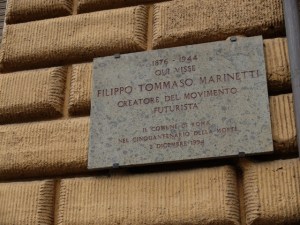
Marinetti

Marinetti’s house on the Piazza Adriana

Corso Cimitero Acattolico 02

Gregory Corso’s grave in the Cimitero Acattolico

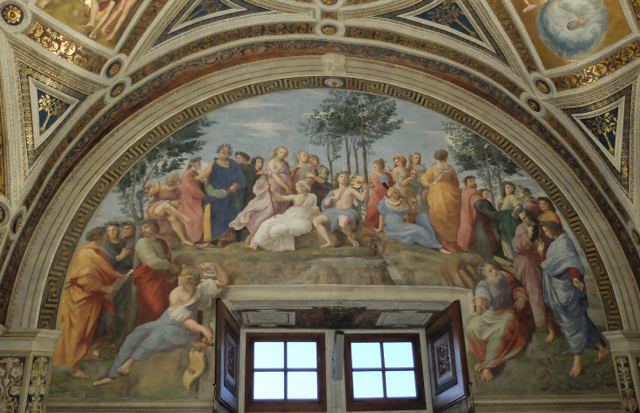
Finally, Raphael’s ‘Parnassus’, in the Room of the Segnatura in the Vatican museums,  painted between 1508 and 1511. Its central figure is the Apollo (playing the violin rather than the more traditional lyre), surrounded by the nine Muses. To the left, Homer is flanked by Dante and Virgil, while Sappho sits beneath them; to the right stand Ariosto and Boccaccio.

Sale di Raffaele Poets


The Stuarts’ Memorial in Rome


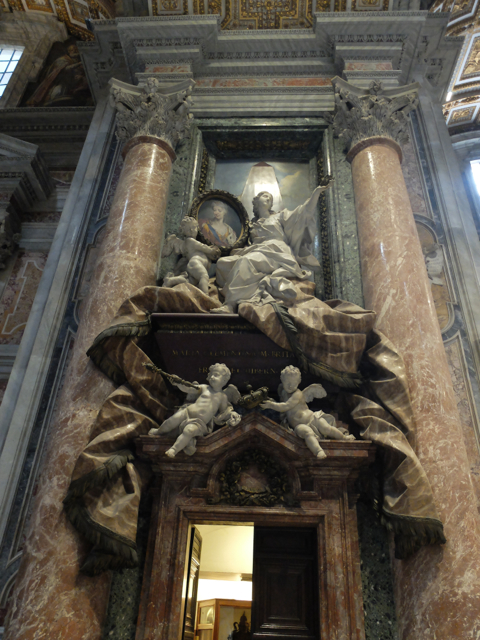
As a follow-up to two earlier posts about the Jacobites in Edinburgh (here and here), these photos from St Peter’s Basilica in Rome show the memorial created in 1819 to three Stuarts: James, and his sons Charles (aka Bonnie Prince Charlie, the only one of the three who set foot in Edinburgh) and Henry.

St Peter's Stuarts 06

On it James is styled James III (of Great Britain), and while he was recognised as such by many European states he never actually sat on the throne. After his death in 1766 some contemporary Jacobite diehards liked to refer his sons as Charles III and, following Charles’ death, Henry IX, but diplomatically and realistically the Roman memorial foregoes such  numerical aspirations.

St Peter's Stuarts 01

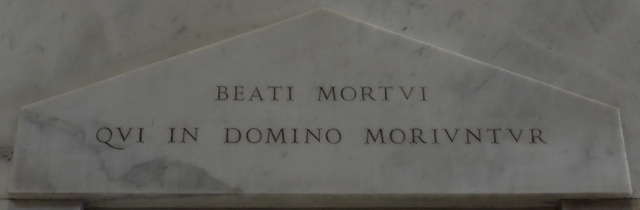
The text above the door between the angels attempts to offer some consolation for their exile and failure to ascend a throne they believed was rightly theirs: it translates roughly as ‘blessed are the dead who die in the Lord’.St Peter's Stuarts 04

Immediately opposite it, above a doorway, sits an elaborate memorial to Maria Clementina Sobieska, daughter of the Polish king Jan III, who was unhappily married to James, was the mother of Charles and Henry. She died aged 32 in 1735.

St Peter's Maria Clementina


Festival International de la Poésie, Trois-Rivières, Québec

I recently attended the 33rd Festival International de la Poésie at Trois-Rivières, Québec, Canada – my first time in that country. There were poets from countries around the world, including Mexico, Argentina, USA, France, Belgium, Russia, Morocco, Mauritania and China, as well as from Québec and other parts of Canada. Below are just a few of those I met and heard read; I felt a real sense of community among us.

As for myself, I read in restaurants, cafés, bars, a cinema, a church, a museum and the Maison de la Culture. All the readings were limited to 3 minutes for French-language poems, and 5 minutes for  poem in French translation plus the original; then another poet would do the same, either right away or after a pause of 5 or 10 minutes for conversation and eating. A new format for me, but one I came to appreciate – no-one outstayed their welcome, and there was time to talk and think about what you’d just heard. I liked the equality of the festival too; each reading featured several poets (between three and seven), who’d each read for the same amount of time (usually two ‘rounds’, with sometimes a quick-fire third one at the end, without pauses between the poems).

Trois-Rivières itself is a town about the size of Dundee on the banks of the St Lawrence and St Maurice Rivers, and lies about half-way between Montreal and Québec City. (There are in fact only two rivers; the three rivers of the town’s name come from the ways islands in the St Maurice River mean it has three mouths as it joins the St Lawrence.) It was pleasantly warm throughout the festival – unusually so, I was told – but by the time we left autumn was colouring the trees.

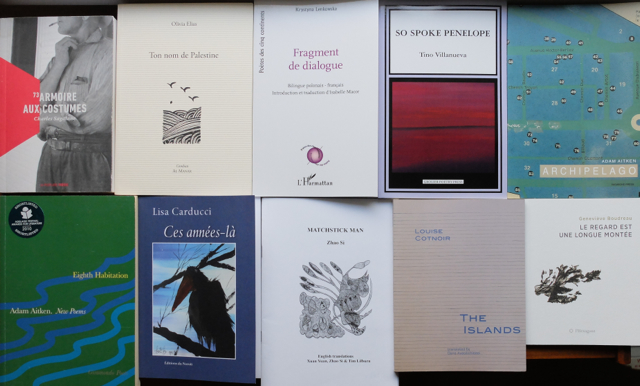
I came back with a selection of books, so this is what I’ll be reading over the next few weeks.

FIPTR_Books

My thanks to Philippe Démeron making French translations of my poems; to the Festival organisers Gaston Bellemare and Maryse Baribeau for the invitation and hospitality, and to them and everyone involved in the festival for making my stay such a pleasant and rewarding one.

there were our own there were the others

Killerton REMEMBRANCE

I spent much of summer 2014 driving the motorways and country lanes of England and Wales with Luke Allan for there were our own there were the others, a project by Alec Finlay for the National Trust to mark the centenary of the outbreak of the First World War. Luke & I visited 23 properties, all of which had some connection to the war – a family member who served and was perhaps killed; a house used as a hospital, grounds used as a training camp; gardens planted as memorials to the carnage. At each I led a silent memorial walk, bookended by a pair of poems from the past century on the theme of conflict. At most properties we set up a pair of lecterns, on which the poems were presented, and at some the lecterns were placed either end of a sandbag wall, reminiscent of the trenches. At a few we flew a red flag featuring a circular version of project’s title. That phrase is taken from Hamish Henderson’s Elegies for the Dead in Cyrenaica, about his experiences in the North African desert in the Second World War, but it seemed an apt way of memorialising all the victims of conflict, rather than just those ‘on our side’, as did the large-scale ceramic poppies installation at the Tower of London.

This gallery above shows some photos from the tour (all are by me, except Killerton Chapel by Hannah Devereux, and Liverpool, by Luke Allan). The full itinerary is on the website.

After the English and Welsh tours I was able to visit Belgium at the end of September to visit some of the First World War sites near Ypres: graveyards, battlefields, memorials. I also saw the excellent exhibition In Flanders Fields in the Lakenhalle in the centre of Ypres itself, which shows the war from the perspective of the four armies who were fighting there: Belgian, French, British and German. We stayed at Talbot House in Poperinge, a small town which, for most of the war was just far enough behind the front line for it to be fairly safe. Talbot House became a social club for off-duty soldiers, and retains many features of that time.

book of the same title documents and reflects on the project. It includes poems and prose by myself about the walks and the poems, as well as the poem ‘Cloqueliclot’ about my experiences in Belgium. It also features fine photos by Luke and Hannah.

our own the others front cover

Revisiting Outlandia

2014-08-08 13.41.57

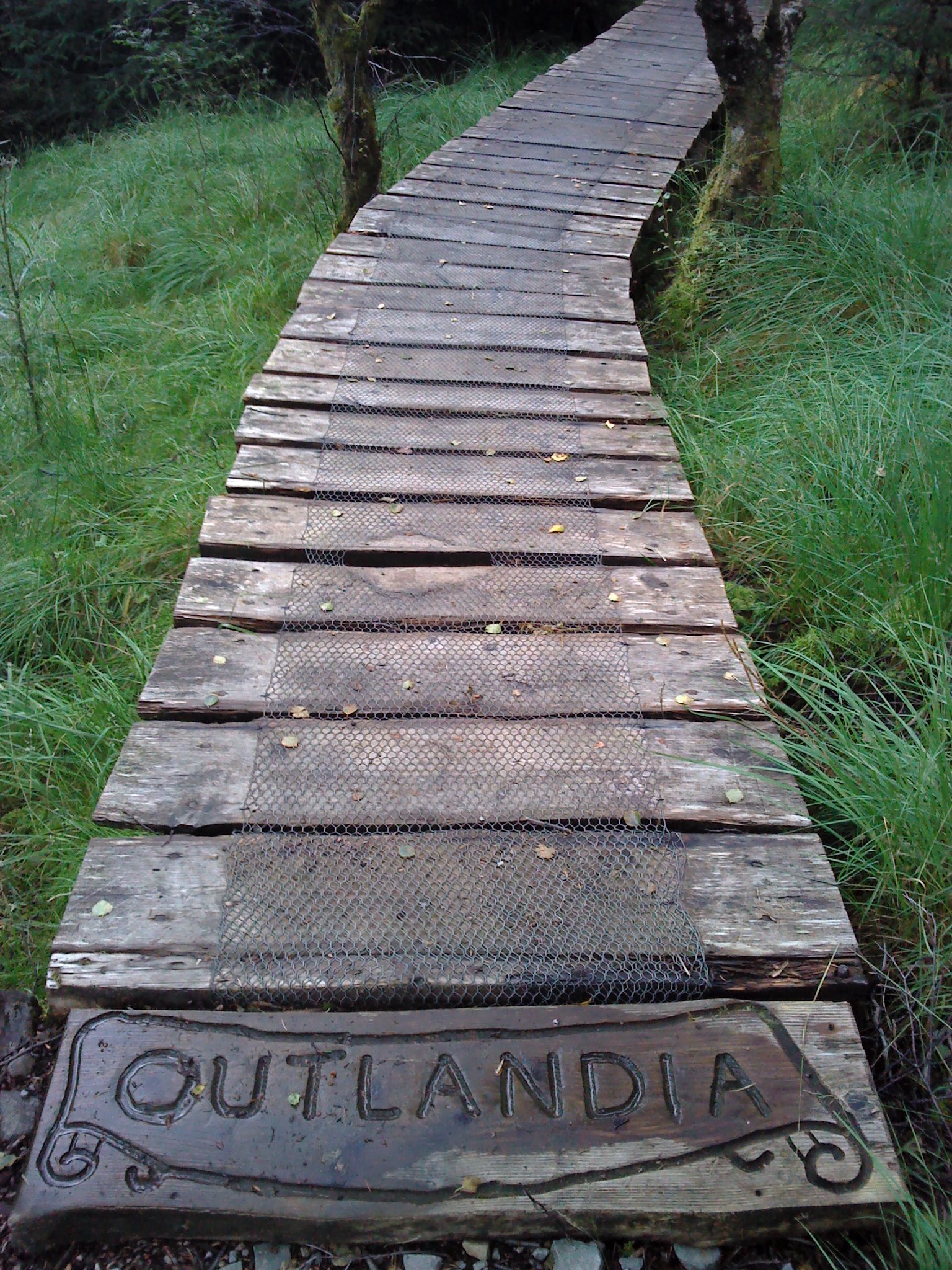
In August 2010 Alec Finlay and I visited Lochaber as part of The Road North. Our destination was Outlandia, a newly-built mountain hut, or artists’ field-station, commissioned by London Fieldworks (Bruce Gilchrist and Jo Joelson), designed by Malcolm Fraser, built by Norman Clark. Located a short, steep walk up from Fort William’s Braveheart car-park, it looks across the glen to the western slopes of Ben Nevis. You can read the account of our visit back then here.

Four years on and we’re returning to take part in Remote Performances, a collaboration between London Fieldworks and Resonance104.4fm. Over the course of a week, a series of specially commissioned artist performances and programmes created with local residents were broadcast live from Outlandia.

Driving north we stop and test the waters of Loch Eilt, a fondly remembered station from 2010, and we’re staying with Bruce and Jo, and many of the participating artists, at Frisealach in Lochailort, the house of Malcolm Fraser and Helen Lucas, where we also stayed a couple of nights in 2010. On the track up to Outlandia, Alec picks and I eat an angel’s-wing mushroom, prompting a Proustian memory of our previous visit; eating them raw in the hut with oatcakes, and cooked for breakfast at Annie Brigg’s the next morning, with fresh eggs from her chickens.

Our contribution to Remote Performances is a reading of the long poem The Road North, which developed after and to some extent out of the blog we kept over the year we were travelling. In the hut we sit with our backs to the window at a table supporting a large sound-desk. There is no electricity supply to the hut, and Bruce tells me all the equipment is powered by a hydrogen generator, which runs off hydrogen drawn from the atmosphere.

When I look up I see tree-tops and rain patterning the high roof-window. After a introduction from Tam Dean Burn, we’re on… back in Outlandia, recalling B-roads and Passing Places, and speaking to people… here, there and everywhere. We read the whole poem apart from the two Epilogues, which we don’t quite have time for.

That reading is available on Sound Cloud, as are all the other Remote Performances broadcast from Outlandia; and the poem will be published in book form by Shearsman Books this autumn.

With thanks to Bruce and Jo for the invitation to take part, and to everyone who made Remote Performances possible.

2014-08-08 15.22.44

Husum

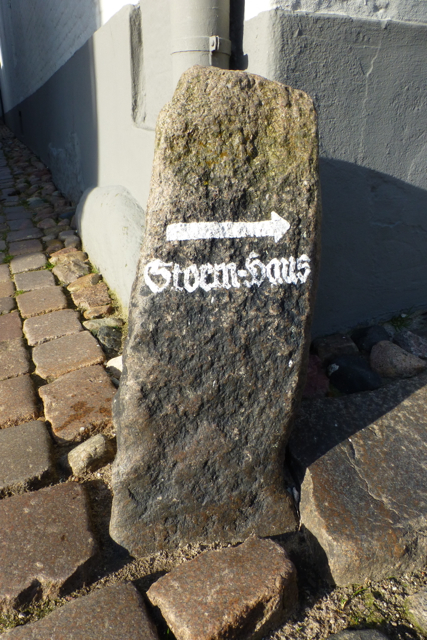
Storm sign 1
I was in Germany in March, visiting friends in Kiel, and had the chance to visit Husum, on the west coast of Holstein. It was here that the 19th century writer Theodor Storm lived for many years, and I happened to be reading his novella Der Schimmelreiter (The Rider on the White Horse), so I looked into his old house, now a museum.

The copy of Der Schimmelreiter which I was reading had been given to me by a friend, who’d meant to buy an English translation but had got a German edition instead. I thought I should take some photos of the book in situ, having as it were found its way home.

Later I enjoyed a reading by the poets Arne Rautenberg and Hendrik Rost at Der Speicher, an old warehouse on the quay. I spoke to Hendrik afterwards. He has three children, and said he wrote a whole book of poems on the commute between Lübeck and Hamburg, and could even quantify the time thus spent – 560 hours.

Storm’s heavy wooden writing desk – a gift for this 70th birthday – offers a rather different writing environment.