Tag Archives: Ian Hamilton Finlay

News & updates, May 2025

I’m aware I haven’t posted here for quite a while, the main reason being that I’ve got into the habit of putting out my news in other ways, mainly regular posts on instagram, and an occasional newsletter sent out via Mailchimp.

You can find the last newsletter, which I sent out at the start of May, here. This is the introduction:

I’ll be leading poetry walks on the Edinburgh Fringe again this year, for the first time since 2019. – Along with Rod Burns and Becky Dwyer, I’ve become co-editor of Presence Haiku Journal, established by the late Martin Lucas and edited since 2014 by Ian Storr. – I have work in a forthcoming exhibition at MOCA Dunoon, paying tribute to Ian Hamilton Finlay whose centenary falls this year. – I’m leading a walking renga at Glasgow Botanic Gardens on Sunday 25th May, i.m Gerry Loose. – Plus a short poem published recently in Poetry Scotland.

If you want to read more about any of these, you can find the mailing here.

And if you want to sign up to receive future mailings, you can do so below.

If instagram is your thing, there I’m @kencockburnedinburgh Last year I took a different theme each month, which turned out to be a lot of work, and this year I’m posting on a more ad hoc basis.

Processing…
Success! You're on the list.

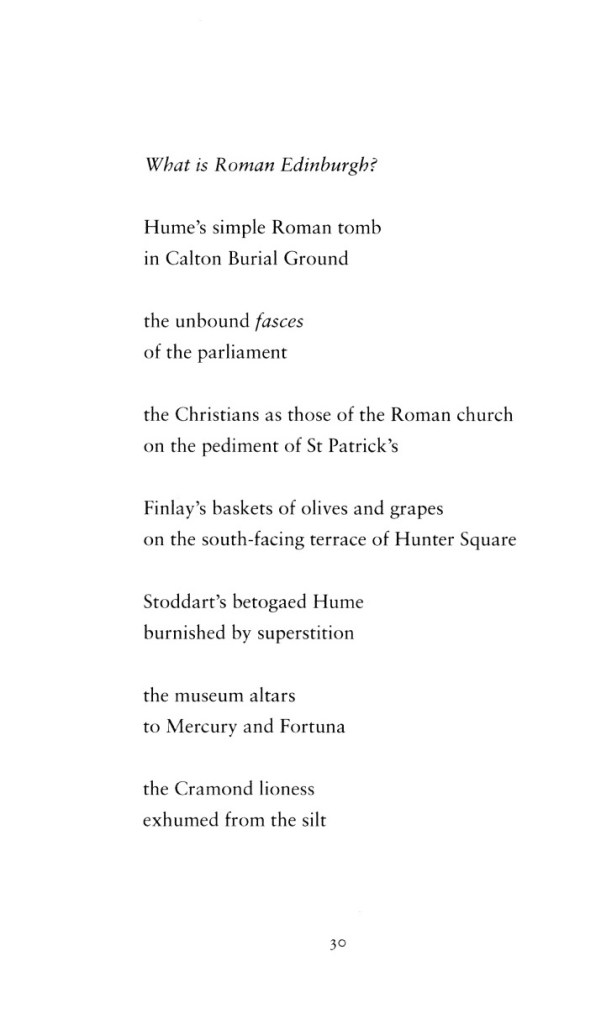
What is Roman Edinburgh?

EPT KC FtW Roman Edinburgh

Like Rome, Edinburgh is a city built on seven hills.

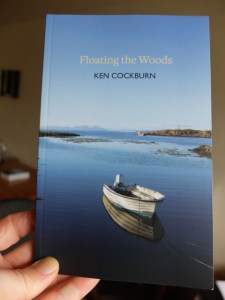
My new collection, Floating the Woods, published by Luath Press, includes ‘Seven Questions’, which considers Edinburgh’s links with Ancient Rome – there’s an extract above.

The book also includes ‘Pandora’s Light Box’, which describes the University of Edinburgh’s Talbot Rice Gallery, which today shows contemporary art but which began life as natural history museum.

Other poems move further afield, to Loch Ness, Orkney, Flanders and Rome itself, where in the 1750s a young Scottish architect, Robert Adam, is beginning to find his way.

Floating the Woods 03


An Edinburgh Alphabet, A–G

An Edinburgh AlphabetThis Edinburgh Alphabet features poems (and some prose) about the city; I’m posting it on Facebook in July and August. I’ve taken the idea partly from J.F. Birrell’s book  from 1980, which I came across by chance recently in an Oxfam bookshop; and partly from the exhibition currently running at the City Art Centre.


A is for Auld Reikie

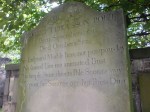
Auld_Reikie_RF  Burns Fergusson epitaph

Edinburgh’s cramped and densely populated Old Town was known as Auld Reikie (‘Old Smoky’). The poet of its bustle and vapours was Robert Fergusson, who wrote in both Scots and English, but it’s for the Scots work that he is best remembered; his longest poem ‘Auld Reikie’, captures the sights, sounds and smells of the city he lived in.

He died in 1774, tragically young, and was buried in the Canongate Kirkyard. beneath a stone commissioned by Robert Burns. Today on the Canongate, David Annand’s bronze statue of the poet, book in hand, walks beneath the cherry trees. At his feet are inscribed the opening lines of ‘Auld Reikie’.

Auld Reikie, wale o’ ilka toun
That Scotland kens beneath the moon;
Whare couthy chiels at e’ening meet
Their bizzing craigs and mous to weet;
And blythely gar auld Care gae by
wi blinkit and wi bleering eye…

(wale: best; ilka: each; mouthy: friendly; chiels: fellows; craigs: throats)

B is for Burns
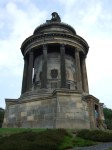
Burns Moument 1 Burns Moument 2 Burns Moument 3

Robert Burns (1759–1796) was born, grew up and farmed in Ayrshire. His Poems, Chiefly in the Scottish Dialect were published to acclaim in 1786, and he travelled to Edinburgh at the end of that year hoping to find a patron. He was welcomed and celebrated, but disappointed in his hopes; eventually he had to take a job as an exciseman to achieve a measure of financial security.

While in Edinburgh he arranged for a stone to be erected in the Canongate Kirkyard for the poet Robert Fergusson (1750–1774), who had been buried there in a pauper’s grave. Burns knew and admired his work, and wrote this epitaph for his stone:

No sculptur’d Marble here, nor pompous lay,
No storied Urn nor animated Bust;
This simple stone directs pale Scotia’s way
To pour her sorrows o’er the Poet’s dust.

Ironically, Burns himself was memorialised in ‘sculptur’d marble’ by the citizens of Edinburgh. In 1824 John Flaxman was commissioned to produce a life-size statue of Burns in white marble, and a monument was built to house it, designed by Thomas Hamilton. If Fergusson lived in Auld Reikie, after his death the city become known as the ‘Athens of the North’, thanks to such buildings as Hamilton’s neo-classical Royal High School. As his template for the nearby Burns’ monument, Hamilton chose the Choragic Monument of Lysicrates in Athens. Completed in 1831, in 1839 it was handed over to the care of the city council, when the statue was moved due to smoke from the gasworks below discolouring the marble; Auld Reikie was determined not to be forgotten. The statue is now in the Scottish National Portrait Gallery on Queen Street.


C is for Clarinda
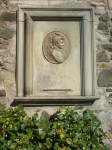
Clarinda

‘Clarinda’ was Agnes (Nancy) M’Lehose (1758–1841). She met Robert Burns in December 1787 when he was visiting Edinburgh for the second time, and they began a ‘passionate friendship’. Married with four children, she was estranged from her husband (who lived in Jamaica where he owned a plantation). She had moved from Glasgow to Edinburgh where she was supported by relatives including her cousin William Craig, a lawyer and judge.

It’s thought her and Burns’ relationship wasn’t sexual – as a married woman she had too much to lose. Burns managed to get one of her serving girls pregnant – perhaps a sign of his frustration at this state of affairs. When he left Edinburgh they wrote to each other, and it was her idea to use the ‘Arcadian’ names of Clarinda and Sylvander. He wrote several poems to her, which don’t rank amoing his finest.

They last met in December 1791. She was about to sail for the West Indies to attempt – vainly, as it turned out – a reconcilation with her husband. By then he was married, and living in Dumfries where he worked for the Excise department. On the occasion of their last meeting he wrote for her ‘Ae Fond Kiss’.


D is for Dùn Eideann

DùnEideann_DBMgrave

Dùn Eideann is the Gaelic name for Edinburgh. A Gaelic speaker who lived in the city was the poet Donnchadh Bàn Mac an t-Saoir, whose name is anglicised as Duncan Ban MacIntyre (1724–1812). From Glen Orchy in Argyll, he worked there and in Perthshire before settling in Edinburgh in 1767 where he served with the City Guard. He is buried in Greyfriars Kirkyard.

Among his poems is ‘Oran Dhùn Eideann’ (Song to Edinburgh), which praises many aspects of the city: soldiers, ladies, and judges; lamps, bells and coaches; the castle, palace and infirmary. Below is the opening verse in Gaelic and English (translated by Angus Macleod, in The songs of Duncan Ban Macintyre, 1978), and I’ll add a link to a now digitised earlier edition of his work published in France.

‘S e baile mór Dhùn Eideann
A b’ éibhinn leam bhith ann,
Aite fialaidh farsaing
A bha tlachdmhor anns gach ball;
Gearasdain is batraidh
Is rampairean gu teann,
Taighean móra ‘s caisteal
Anns an tric an d’ stad an camp.

‘Tis in Edinburgh city
I would rejoice to be—
a bountiful and spacious place
that pleased in all respects:
garrison and battery
and ramparts all compact;
great buildings and a castle

where oft the camp has stayed.

E is for Eneados

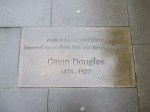
Eneados_GavinDouglas Eneados_GavinDouglas_MakarsCourt Eneados_SicIturAdAstra

When Gavin Douglas (1474–1522) translated Virgil’s Aeneid into Scots – ‘our awyn langage’, as he put it – in 1512–13, he was Provost of St Giles in Edinburgh. Soon after it was completed came the disastrous Scottish defeat at the Battle of Flodden, and Douglas spent the rest of his life involved in political intrigues. He died in London, where his Eneados was published thirty years after his death. It was the first complete translation of Virgil’s work into a northern European language, and was extended by Douglas’s own prologues; Ezra Pound reckoned it “better than the original, as Douglas had heard the sea”.

From its founding in 1128 until its amalgamation with Edinburgh in 1856, the Canongate was an independent burgh. Its Latin motto, SIC ITUR AD ASTRA – ‘thus one travels to the stars’ – was taken from the Aeneid. Virgil’s epic tells the story of Aeneas, a Trojan who is destined to found the imperial city of Rome. The phrase comes in a section which describes the God Apollo descending to praise Aeneas’ son Iulus, who has distinguished himself in battle. Douglas’s version runs

Down from the regioun of the hevin tho
The brycht curland haryt Appollo,
Apon a clowd syttand quhayr he wald,
The ostis of Italianis can behald,
And eyk new Troyis cite, with cheyr glayd
Till lulus the victor thus he sayd :
Eik and continew thy new vailyeand deidis,
Thou yong child ; for that is the way the ledis
Up to the sternis and the hevynnis hie,
Thou verray Goddis ofspring, quod he,
That sal engendir Goddis of thy seyd.

F is for Finlay
Finlay Coble SP 1 Finlay Green Waters SPL Finlay Hunter Square 1 Finlay RLS A Man of Letters 2

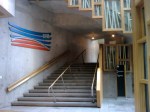
Ian Hamilton Finlay (1925–2006) is a poet best known for his garden, Little Sparta, south of Edinburgh in the Pentland Hills, made with his wife Sue. It is a small piece of the world dense with resonances and echoes, especially of the absent worlds of the sea and classical antiquity. Finlay made several works for sites in Edinburgh. A tapestry of the poem ‘Green Waters’, made of fishing boat names, hangs in the Scottish Poetry Library, while ‘Coble’ can be found in the The Scottish Parliament; bronze baskets of northern and southern fruits with accompanying quotations can be found in Hunter Square, by the Tron Kirk on the High Street; and his memorial to Robert Louis Stevenson, ‘A Man of Letters’, is in Princes Street Gardens.

G is for Golden
Golden City 1 Golden City 2 Golden City 3

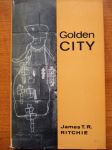
In 1965 James T.R. Ritchie published Golden City, a follow-up to his earlier collection (and film) of Edinburgh children’s rhymes, songs and sayings, The Singing Street. He writes in the Prologue to Golden City that “I made it a rule never to take any rhymes out of any book, only to note down what I heard by word of mouth, and from the pupils of this one school.” (The school was Norton Park School, just off Easter Road.)

 

Some flowers among the ruins

Callendar House
Callendar House

In summer 2013 the Park Gallery in Callendar House, Falkirk, exhibited Ian Hamilton Finlay’s Nature Over Again (After Poussin), part of the Artist Rooms collection.

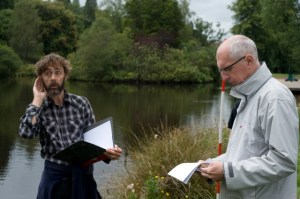
The gallery asked Alec Finlay to make a new work for Callendar Park, and invited him to work with the gallery’s Youth Ambassadors (YAs), teenagers drawn from local secondary schools who are involved in different ways with the gallery’s programme. Alec asked me, along with other poets and artists, to work with the YAs over the summer to develop his ideas, centered on creating viewpoints within the park, and linking these to plants brought here by the Romans (the line of the Antonine Wall runs just to the north of Callendar House).

WALLFLOWERS | FLORES MURI – a series of plantings in Callendar Park marked by archaeological poles – was finalised and installed by Alec in spring 2014.

Sadly it was vandalised immediately and thoroughly.

Some flowers among the ruins is a new booklet published by Callendar Park, Falkirk. It invites the reader to walk in their imagination through the park, and to view the plantings that were once there, albeit briefly, rather like the Antonine Wall itself.

If you’d like a copy, send an SAE to Studio Alec Finlay, 53 Prince Regent Street, Edinburgh EH6 4AR. (It measures c.14x11cm, so you don’t need a large envelope.)

You can read the YAs blogs about the project here, and Alec has written a blog about it here. Below are some notes I made about my involvement in the project in 2013.

Alec Finlay & Ken Cockburn

Alec and I had made a couple of preliminary visits in the spring, looking for views. As the gallery is showing Nature Over Again (After Poussin), his initial idea was to set up viewfinders to ‘frame’ certain landscapes in a painterly way; but given the woodland we found too few. What we did find were the golf-course with its flags, the Antonine Wall still casting its Roman shadow, and what we called the ‘declension tree’ (a red maple), whose trunk divided close to the ground.

Come summer the tall limes are flowering and abuzz with bees. Between showers I explore the grounds with the Youth Ambassadors, looking for sites that will work as viewpoints and a views; like a golf flag which draws you towards itself, then points you towards what comes next. Nine in all (like the golf-course); each marked by an flag-topped archaeological pole, and a plant first brought here by the Romans (some of which already grow here, others we’ll plant specially). We write about and sketch the views, compare one with another, contrast different views from the same viewpoint.

After researching our Roman flora, we write very short poems about them, playing with their features, their uses and the meaning of their Latin names. Then we plot a route through the grounds, from one pole to the next, realising they’ll be more visible in winter; the landscape now is like a series of discreet rooms. We finalise the pole locations by photographing them in situ, each with a poem-label for its matched flora. It’s a good way of seeing how the poles link up, and considering the work as a whole.

The last day is spent with photographer Robin Gillanders. At each location Robin takes three photos of each person in a t-shirt (happily there are nine of us, so no-one is left out) – head & torso, facing forwards; full length, ditto; full length, looking away at the view. And at each location Alec and I discuss the poems, already revised, revising some further on the spot (most interestingly the Whitmanesque ‘daffodil’).

Robin speaks about photographing other gardens –Ian Hamilton Finlay’s Little Sparta, and Ermenonville where Rousseau is buried. Later, walking round Nature Over Again (After Poussin), Alec talks us through the images, and his personal memories of their creation; there’s some discussion of why the photos are ‘folded’.

2013-06-12 12.54.48

Lewis horizons

Stornoway

Stornoway harbour

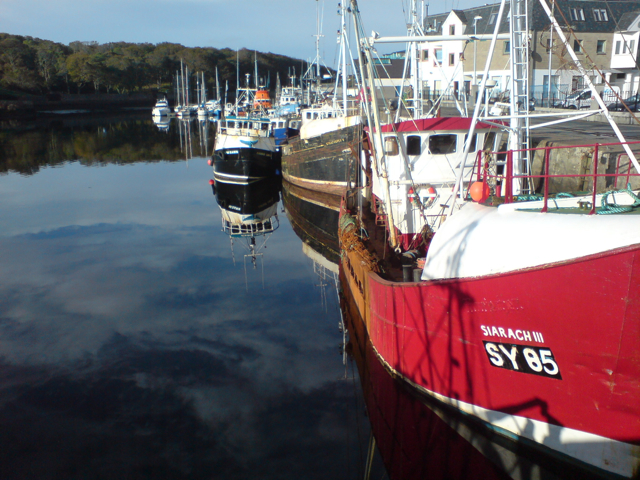
Last month I spent ten days on Lewis and Harris, running schools workshops around the Artist Rooms exhibition Ian Hamilton Finlay: Sailing Dinghy at An Lanntair in Stornoway. The centrepiece of the show was a real dinghy given to Finlay, but it was too big for the lochans at Little Sparta. So it was never sailed, and it’s also unamed.
Jon Macleod

I worked alongside artist Jon Macleod, and as well as working in the gallery, we were able to take some groups out to the beach. Most of the pupils we worked with were familiar with boats, having sailed themselves or, if not, seeing the array of boats in Stornoway harbour or at other moorings around the island.
Bon voyage / child of the sea

The Gliding Water

Horizon poem

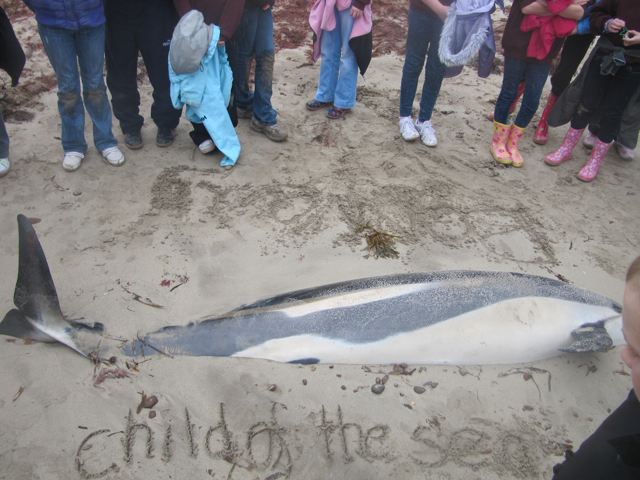
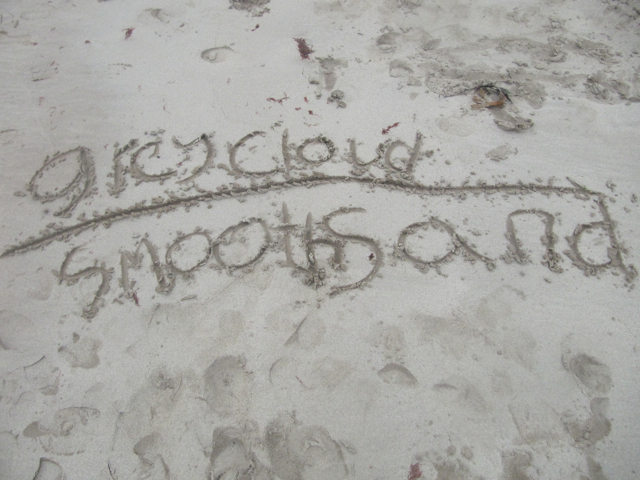
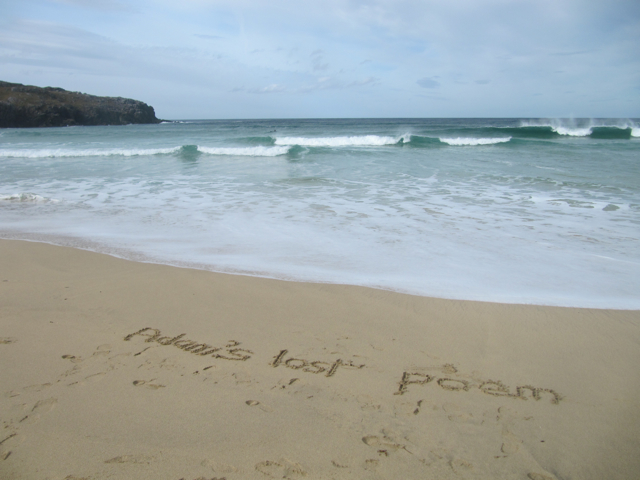
At the beach we said sad farewells to a dead dolphin beached after a high tide, named and drew boats, and wrote ‘horizon poems’ – the line in the middle is the horizon, and above it you write a few words describing what you see above the horizon; and below the line, what you see below.
Adam's lost poem

Sometimes the waves got the better of us. When I asked Adam what he written, he cried ‘I can’t remember!’ So he got on with writing a new poem.
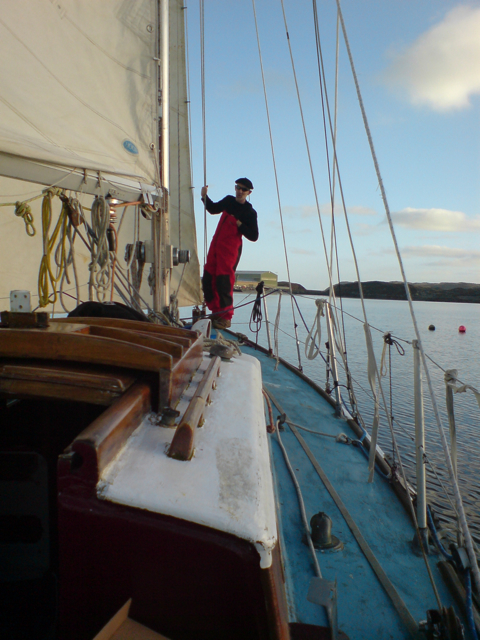
Ian Stephen on El Vigo

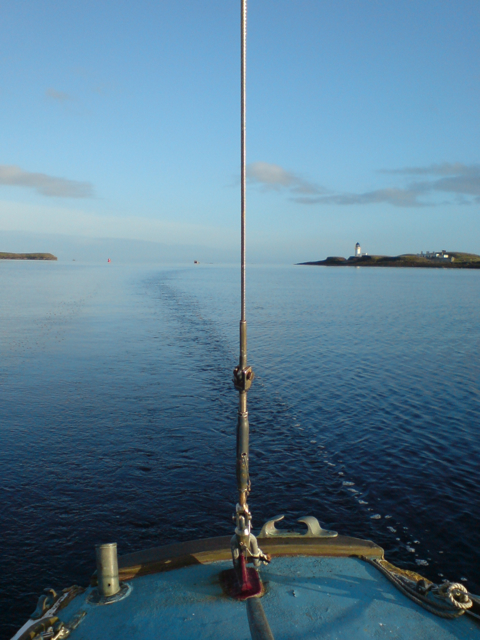
Wake

While there I met writer and sailor Ian Stephen, and one afternoon he took me out on El Vigo across a sunny and becalmed Stornoway Bay.
Carloway broch

Signpost on Harris

I also managed a couple of stations for The Road North, Dun Carloway on the west coast of Lewis, and Rhenigidale on Harris; the blogs about these will appear soon on the website.

Setting out


I recently spent a week in Perthshire with Alec Finlay, the first big trip of our project The Road North. We stayed in Acharn, on the south shore of Loch Tay, and Dunira, between Comrie and St Fillans. From Acharn, guided by Basho (and assisted by amongst others The Modern Antiquarian) we travelled to Aberfeldy, Weem, Fortingall, Glen Lyon and Schiehallion; from Dunira we went to Dalchonzie, Dundurn, Glen Lednock, Dunkeld and Birnam. Alec’s father lived at Dunira in the 1950s, and we found his shepherd’s cottage there, smartened up as a hunting-lodge; his poem ‘Dalchonzie’ features “the railway” and “the mill”, and we found both, and though neither now run, the mill-building has been renovated as a self-catering cottage.

The weather was very kind to us; there was sun and little wind at Schiehallion’s summit, we river-bathed a couple of times, and both came back more tanned than weather-beaten, though did suffer from the midges. My only soaking was at the top of Birnam Hill, after a steep, clammy and midgey climb through the woods, so the rain wasn’t so unwelcome. We’re currently writing up the trip for the blog, and in the longer term will write a renga / word-map / skyline poem for each location.

Next stop is Argyll in a fortnight – Crinan, Dunadd, Kilmartin, Luing, Dunstaffnage – mostly places new to me.