Tag Archives: Gavin Douglas

Poems around Edinburgh

I’ve been out taking photos of lines and stanzas from poems I read on the poetry walks, at the places where I read them.

I’ve been posting these on my Facebook and instagram pages, but thought I’d gather a few of them here.

S.T. Coleridge at the Black Bull, Grassmarket

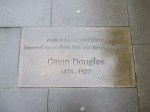
Gavin Douglas at Gladstone’s Land, Lawnmarket. The ‘soir gled’ is the red kite; the surname of the man after whom Gladstone’s Land refers to a ‘gled stane’, or kite’s stone, hence the golden raptor on the building’s front.

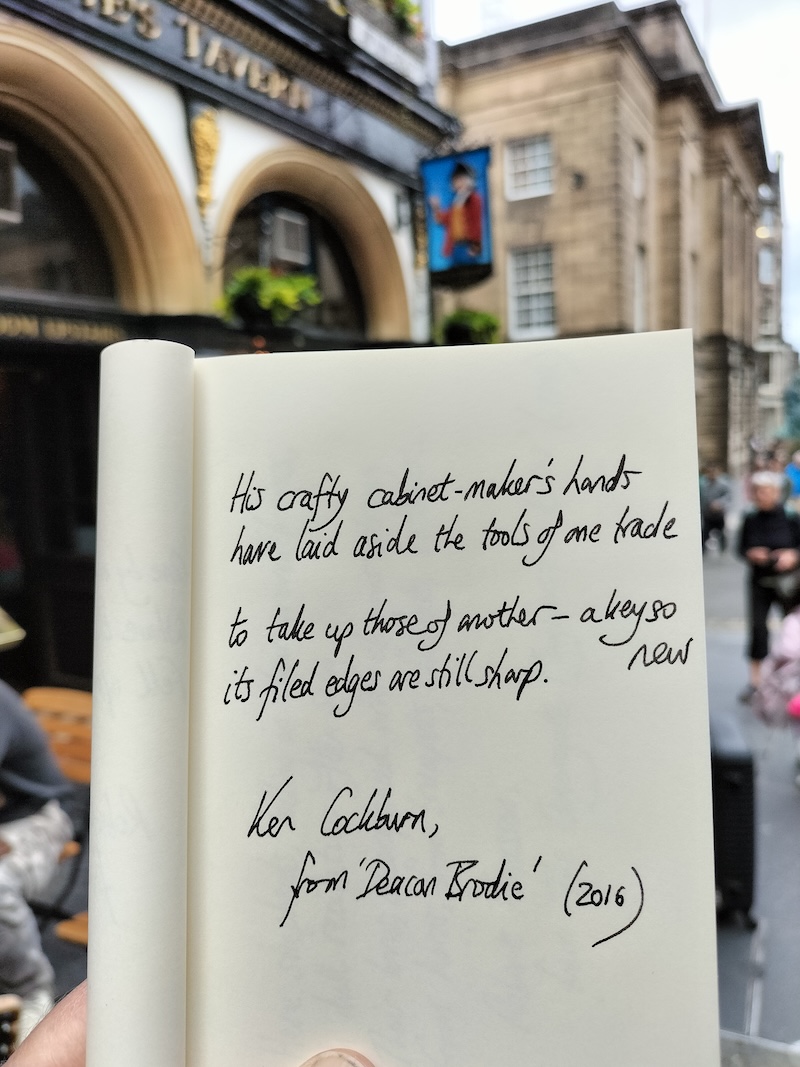
Ken Cockburn at Deacon Brodie’s pub, Lawnmarket

Angus Reid at The Scottish parliament building, Holyrood Road

Robert Fergusson at the Palace of Holyroodhouse

RLS at the High Kirk of St Giles, Parliament Square

John Taylor on Johnstone Terrace

An Edinburgh Alphabet, A–G

An Edinburgh AlphabetThis Edinburgh Alphabet features poems (and some prose) about the city; I’m posting it on Facebook in July and August. I’ve taken the idea partly from J.F. Birrell’s book  from 1980, which I came across by chance recently in an Oxfam bookshop; and partly from the exhibition currently running at the City Art Centre.


A is for Auld Reikie

Auld_Reikie_RF  Burns Fergusson epitaph

Edinburgh’s cramped and densely populated Old Town was known as Auld Reikie (‘Old Smoky’). The poet of its bustle and vapours was Robert Fergusson, who wrote in both Scots and English, but it’s for the Scots work that he is best remembered; his longest poem ‘Auld Reikie’, captures the sights, sounds and smells of the city he lived in.

He died in 1774, tragically young, and was buried in the Canongate Kirkyard. beneath a stone commissioned by Robert Burns. Today on the Canongate, David Annand’s bronze statue of the poet, book in hand, walks beneath the cherry trees. At his feet are inscribed the opening lines of ‘Auld Reikie’.

Auld Reikie, wale o’ ilka toun
That Scotland kens beneath the moon;
Whare couthy chiels at e’ening meet
Their bizzing craigs and mous to weet;
And blythely gar auld Care gae by
wi blinkit and wi bleering eye…

(wale: best; ilka: each; mouthy: friendly; chiels: fellows; craigs: throats)

B is for Burns

Burns Moument 1 Burns Moument 2 Burns Moument 3

Robert Burns (1759–1796) was born, grew up and farmed in Ayrshire. His Poems, Chiefly in the Scottish Dialect were published to acclaim in 1786, and he travelled to Edinburgh at the end of that year hoping to find a patron. He was welcomed and celebrated, but disappointed in his hopes; eventually he had to take a job as an exciseman to achieve a measure of financial security.

While in Edinburgh he arranged for a stone to be erected in the Canongate Kirkyard for the poet Robert Fergusson (1750–1774), who had been buried there in a pauper’s grave. Burns knew and admired his work, and wrote this epitaph for his stone:

No sculptur’d Marble here, nor pompous lay,
No storied Urn nor animated Bust;
This simple stone directs pale Scotia’s way
To pour her sorrows o’er the Poet’s dust.

Ironically, Burns himself was memorialised in ‘sculptur’d marble’ by the citizens of Edinburgh. In 1824 John Flaxman was commissioned to produce a life-size statue of Burns in white marble, and a monument was built to house it, designed by Thomas Hamilton. If Fergusson lived in Auld Reikie, after his death the city become known as the ‘Athens of the North’, thanks to such buildings as Hamilton’s neo-classical Royal High School. As his template for the nearby Burns’ monument, Hamilton chose the Choragic Monument of Lysicrates in Athens. Completed in 1831, in 1839 it was handed over to the care of the city council, when the statue was moved due to smoke from the gasworks below discolouring the marble; Auld Reikie was determined not to be forgotten. The statue is now in the Scottish National Portrait Gallery on Queen Street.


C is for Clarinda

Clarinda

‘Clarinda’ was Agnes (Nancy) M’Lehose (1758–1841). She met Robert Burns in December 1787 when he was visiting Edinburgh for the second time, and they began a ‘passionate friendship’. Married with four children, she was estranged from her husband (who lived in Jamaica where he owned a plantation). She had moved from Glasgow to Edinburgh where she was supported by relatives including her cousin William Craig, a lawyer and judge.

It’s thought her and Burns’ relationship wasn’t sexual – as a married woman she had too much to lose. Burns managed to get one of her serving girls pregnant – perhaps a sign of his frustration at this state of affairs. When he left Edinburgh they wrote to each other, and it was her idea to use the ‘Arcadian’ names of Clarinda and Sylvander. He wrote several poems to her, which don’t rank amoing his finest.

They last met in December 1791. She was about to sail for the West Indies to attempt – vainly, as it turned out – a reconcilation with her husband. By then he was married, and living in Dumfries where he worked for the Excise department. On the occasion of their last meeting he wrote for her ‘Ae Fond Kiss’.


D is for Dùn Eideann

DùnEideann_DBMgrave

Dùn Eideann is the Gaelic name for Edinburgh. A Gaelic speaker who lived in the city was the poet Donnchadh Bàn Mac an t-Saoir, whose name is anglicised as Duncan Ban MacIntyre (1724–1812). From Glen Orchy in Argyll, he worked there and in Perthshire before settling in Edinburgh in 1767 where he served with the City Guard. He is buried in Greyfriars Kirkyard.

Among his poems is ‘Oran Dhùn Eideann’ (Song to Edinburgh), which praises many aspects of the city: soldiers, ladies, and judges; lamps, bells and coaches; the castle, palace and infirmary. Below is the opening verse in Gaelic and English (translated by Angus Macleod, in The songs of Duncan Ban Macintyre, 1978), and I’ll add a link to a now digitised earlier edition of his work published in France.

‘S e baile mór Dhùn Eideann
A b’ éibhinn leam bhith ann,
Aite fialaidh farsaing
A bha tlachdmhor anns gach ball;
Gearasdain is batraidh
Is rampairean gu teann,
Taighean móra ‘s caisteal
Anns an tric an d’ stad an camp.

‘Tis in Edinburgh city
I would rejoice to be—
a bountiful and spacious place
that pleased in all respects:
garrison and battery
and ramparts all compact;
great buildings and a castle

where oft the camp has stayed.

E is for Eneados

Eneados_GavinDouglas Eneados_GavinDouglas_MakarsCourt Eneados_SicIturAdAstra

When Gavin Douglas (1474–1522) translated Virgil’s Aeneid into Scots – ‘our awyn langage’, as he put it – in 1512–13, he was Provost of St Giles in Edinburgh. Soon after it was completed came the disastrous Scottish defeat at the Battle of Flodden, and Douglas spent the rest of his life involved in political intrigues. He died in London, where his Eneados was published thirty years after his death. It was the first complete translation of Virgil’s work into a northern European language, and was extended by Douglas’s own prologues; Ezra Pound reckoned it “better than the original, as Douglas had heard the sea”.

From its founding in 1128 until its amalgamation with Edinburgh in 1856, the Canongate was an independent burgh. Its Latin motto, SIC ITUR AD ASTRA – ‘thus one travels to the stars’ – was taken from the Aeneid. Virgil’s epic tells the story of Aeneas, a Trojan who is destined to found the imperial city of Rome. The phrase comes in a section which describes the God Apollo descending to praise Aeneas’ son Iulus, who has distinguished himself in battle. Douglas’s version runs

Down from the regioun of the hevin tho
The brycht curland haryt Appollo,
Apon a clowd syttand quhayr he wald,
The ostis of Italianis can behald,
And eyk new Troyis cite, with cheyr glayd
Till lulus the victor thus he sayd :
Eik and continew thy new vailyeand deidis,
Thou yong child ; for that is the way the ledis
Up to the sternis and the hevynnis hie,
Thou verray Goddis ofspring, quod he,
That sal engendir Goddis of thy seyd.

F is for Finlay

Finlay Coble SP 1 Finlay Green Waters SPL Finlay Hunter Square 1 Finlay RLS A Man of Letters 2

Ian Hamilton Finlay (1925–2006) is a poet best known for his garden, Little Sparta, south of Edinburgh in the Pentland Hills, made with his wife Sue. It is a small piece of the world dense with resonances and echoes, especially of the absent worlds of the sea and classical antiquity. Finlay made several works for sites in Edinburgh. A tapestry of the poem ‘Green Waters’, made of fishing boat names, hangs in the Scottish Poetry Library, while ‘Coble’ can be found in the The Scottish Parliament; bronze baskets of northern and southern fruits with accompanying quotations can be found in Hunter Square, by the Tron Kirk on the High Street; and his memorial to Robert Louis Stevenson, ‘A Man of Letters’, is in Princes Street Gardens.

G is for Golden

Golden City 1 Golden City 2 Golden City 3

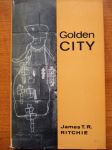
In 1965 James T.R. Ritchie published Golden City, a follow-up to his earlier collection (and film) of Edinburgh children’s rhymes, songs and sayings, The Singing Street. He writes in the Prologue to Golden City that “I made it a rule never to take any rhymes out of any book, only to note down what I heard by word of mouth, and from the pupils of this one school.” (The school was Norton Park School, just off Easter Road.)


Gavin Douglas in London

“And, seand Virgill on ane lettrune stand,
To writ anone I hynt ane pene in hand”
2013-06-04 17.01.33

I was in London earlier this month, running a workshop for the Translators’ Association called “Translating the Translator: Gavin Douglas’s Eneados“, when five of us attempted versions of Gavin Douglas into contemporary English.

Gavin Douglas (1474–1522) was the Provost of St Giles Cathedral in Edinburgh when, exactly five hundred years ago, in June 1513, he completed Eneados, his translation of Virgil’s Aeneid into Middle Scots. He also wrote an original Prologue for each of Virgil’s twelve books – and for an additional thirteenth book, written by Mapheus Vegius in 1428. The prologues describe with immediacy Scottish landscapes and weather – a May morning, a June evening, a chill winter.

Below is a several-handed translation, of an extract (lines 51–77, & 85–88) from ‘The Proloug of the Threttene Buik of Eneados Ekit to Virgill be Mapheus Vegius’; on a bucolic June evening, Douglas encounters Mapheus. The translators are Felicity McNab (FM), Nicky Harman (NH), Susan Mackervoy (SM), and myself (KC); the original follows.

And soon every creature that came into the bay or field, flood, forest, earth or air or in the scrubland or wooded copse, lakes, marshes or their pools, lies settled down still, to sleep and rest in darkness. Also the small birds sat on their nests, with little midges and irksome fleas, hard-working moths and busy bees, both wild and tame beasts and every other great and small thing, except the merry nightingale Philomene who sat on the thorn tree singing from the spleen. (FMcN)

How I longed to hear those notes cascade
And wandered till I found a tree-filled glade
I take a seat beneath a glossy bay
So my thoughts too can wander as they may. (NH)

I could see bright stars – the Pole Star, the Bear –
a crescent moon (quite dim in the summer skies)
and Venus and Jupiter (what a pair!)
beaming down. So, lying there – what with the
calm night, what with the birdsong – pretty soon
I nodded off.
                        And saw an old man standing there,
under my tree. I asked him why he’d come,
and if he harboured ill intent towards me. (SM)

His figure-hugging outfit, trim and neat,
was long enough to cover up his feet
while on his brow the laurel-wreath he wore
put me in mind of ye olde bards of yore. (KC)

2013-06-04 16.41.01

And schortlie, every thing that dois repare
In firth or feyld, flude, forest, erth or ayr,
Or in the scroggis or the buskis ronk,
Lakis, marrasis, or thir pulis donk,
Astabillit liggis still to slepe and restis;
Be the small birdis syttand on thar nestis,
The litill midgeis, and the urusum fleyis,
Laboryus emmotis, and the byssy beyis ;
Als weill the wild as the taym bestiall,
And every othir thingis gret and small,
Owtak the mery nychtgaill Philomene,
That on the thorn sat syngand fra the splene.

Quhais myrthfull notis langing for to heyr,
Ontill a garth vndir a greyn lawrer
I walk onon, and in a sege down sat,
Now musand apon this and now on that.

I se the Poill, and eik the Ursis brycht,
And hornyt Lucyne castand bot dym lycht,
Becaus the symmyr skyis schayn sa cleyr ;
Goldin Venus, the mastres of the yeir,
And gentill Jove, with hir participate,
Thar bewtuus bemis sched in blyth estayt :
That schortly, thar as I was lenyt doun,
For nychtis silens, and this byrdis sovn,
On sleip I slaid ; quhar sone I saw appeyr
Ane agit man, and said: quhat dois thou heyr
Undir my tre, and willist me na gude ?
(…)
Syde was his habyt, round, and closing meyt,
That strekit to the grund doun our his feyt ;
And on his hed of lawrer tre a croune,
Lyke to sum poet of the auld fassoune.

2013-04-08 15.02.07

And here are a few lines describing a storm at sea in the words of Virgil, Douglas and (based on Douglas’s second stanza) Robert Chandler.

Talia iactanti stridens Aquilone procella
velum adversa ferit, fluctusque ad sidera tollit.
Franguntur remi; tum prora avertit, et undis
dat latus; insequitur cumulo praeruptus aquae mons.
Hi summo in fluctu pendent; his unda dehiscens
terram inter fluctus aperit; furit aestus harenis.

Virgil Aeneis, I, ll.102–7

Ane blusterand bub, out fra the northt braying,
Cane our the foirschip in the bak sail dyng
And to the sternys up the fluide can cast;
The ayris, hachis, and the takillis brast,
The schippis stevyn frawart hir went can writhe
And turnit hir braid syide to the wallis swithe.

Heich as ane hill the jaw of watter brak
And in ane help come on thame with ane swak.
Sum hesit hoverand on the wallis hycht
And sum the sownschand see so law gart lycht
Thame semit the erd oppinnit amyd the flude;
The stowr wp bullerit sand as it war wuid.

Gavin Douglas, Eneados, I.iii, ll.14–25

Hill high hung the well of water,
then dropped down on the ships with one swift blow.
Wave-winged, one boat stood hovering in the sky
while other boats were drawn down to such depths
it seemed earth’s jaws had sucked all sea away
and left just one wild swirl of sand and spray. (RC)

According to Ezra Pound, “Gavin Douglas was a great poet… I am inclined to think that he gets more poetry out of Virgil than any other translator”.

The 1874 edition of Douglas’s Eneados is available online here. This link is to volume 2 of a 4-volume edition of his ‘Poetical Works’ published in 1874, which contains Books I–V of Eneados – if you click on the ‘Author’ text – ‘Gawin Douglas , Maffeo Vegio, Virgil’ you can find volumes 3 and 4, which contain the rest of the work.

A new edition was published recently: The Aeneid (1513), Volumes I-II / Gavin Douglas ; edited by Gordon Kendal (London : Modern Humanities Research Association, 2011).

2013-06-04 16.43.40

The photographs were taken on 4 June in Kensington Gardens, except the seascape which shows the Firth of Forth from Kinghorn, last April.

florist flowris schene

Gavin Douglas wrote the lines below about a May morning 500 years ago, as part of his Prologue to Book XI of Eneados, his translation of Virgil’s Aeneid.

I read it beneath a cedar in Edinburgh’s Botanic Gardens at the weekend, as part of the ‘Spring Blossoms’ walks.

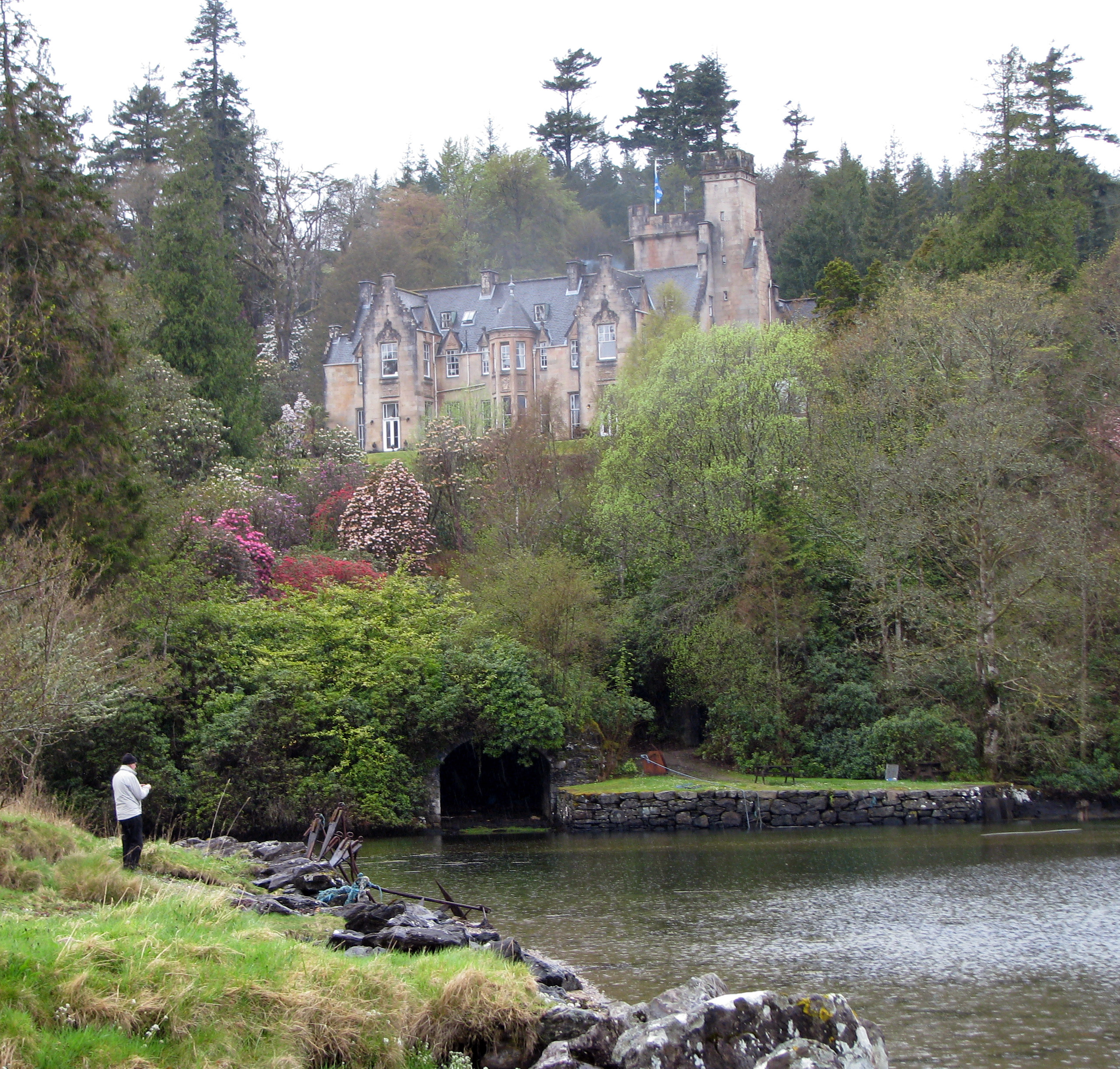
But it also seems a good match to this picture of me at Stonefield Castle, near Tarbert in Kintyre, taken by ~in the fields while I was visiting them there last week (even if rhododendrons hadn’t yet reached Scotland in 1513).

ken_stonefieldcastle

Dame naturis menstralis, on that other part,
Thayr blyssfull bay entonyng euery art,
To beyt thar amouris of thar nychtis baill,
The merll, the mavys, and the nychtingale,
[…]
And al small fowlys singis on the spray :
Welcum the lord of lycht, and lamp of day,
Welcum fostyr of tendir herbys grene,
Welcum quyknar of florist flowris schene,
Welcum support of euery rute and vane,
Welcum confort of alkynd fruyt and grane,
Welcum the byrdis beyld apon the breyr,
Welcum maister and rewlar of the yeyr,
Welcum weilfar of husbandis at the plewis,
Welcum reparar of woddis, treis, and bewis,
Welcum depayntar of the blomyt medis,
Welcum the lyfe of euery thing that spredis,
Welcum stourour of alkynd bestiall,
Welcum be thi brycht bemys, glading all,
Welcum celestiall myrrour and aspy,
Attechyng all that hantis sluggardy!