Tag Archives: Christine Marendon

Translation as Conversation

“I like the elements of ‘serious play’ in Arne’s work. ‘gingko leaf fairy tale’ links the Brothers Grimm and Hiroshima to suggest, touchingly, both a loss of innocence and a reconciliation with the past… ‘the forgotten dream’ makes succinct comedy from inarticulacy.”

“The conversation with Christine has been, like her readings, measured and occasional. Her work deals in nuance, glimpse, intuition, and part of its appeal for me is that I don’t always understand it entirely.”

Extending the Possibilities: Translation as Conversation is a piece I’ve written for the Year of Conversation website. It outlines my reflections on translating the work of Arne Rautenberg and Christine Marendon, over many years.
DSCF4965
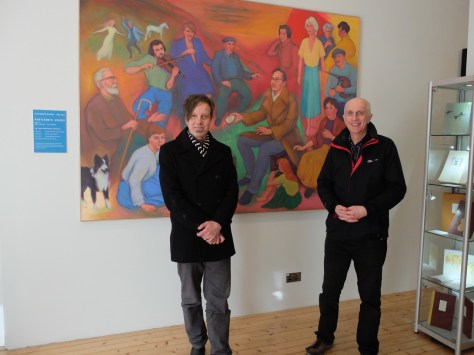
Arne Rautenberg & Ken Cockburn, St Andrews, 2019

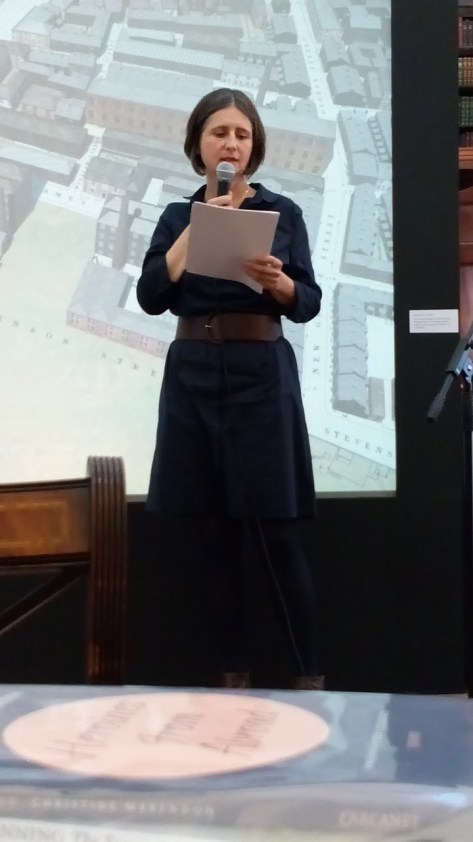
I was lucky enough to read with Arne at this year’s StAnza festival, and to hear Christine read at the Portico Library in Manchester.
Mail Attachment-1
Christine Marendon, Portico Library, May 2019

“A Year of Conversation 2019 is about us all celebrating, initiating and exploring conversation in our lives. There will be some events involving many people at places you might expect – festivals for example. But there will be many conversation events that are smaller and more intimate too. What is a ‘conversation event’? It’s simply something that’s been planned – that you might have planned – in which conversation plays a significant part or which gives rise to conversation. So it may be a performance of some kind or it may be a group of people (you have) chosen for a special reason to share a meal. There will be information about events on the website, but there will also be space for you to reflect on your own experiences of conversation.” Tom Pow, Creative Director, A Year of Conversation 2019
Oxford-Weidenfeld Prize

I’m delighted that Heroines from Abroad is one of 8 books on the shortlist for this year’s Oxford-Weidenfeld PrizeThe prize is for book-length literary translations into English from any living European language. The winner will be announced at the prizegiving and dinner at St Anne’s College, Oxford on Saturday 15 June 2019.

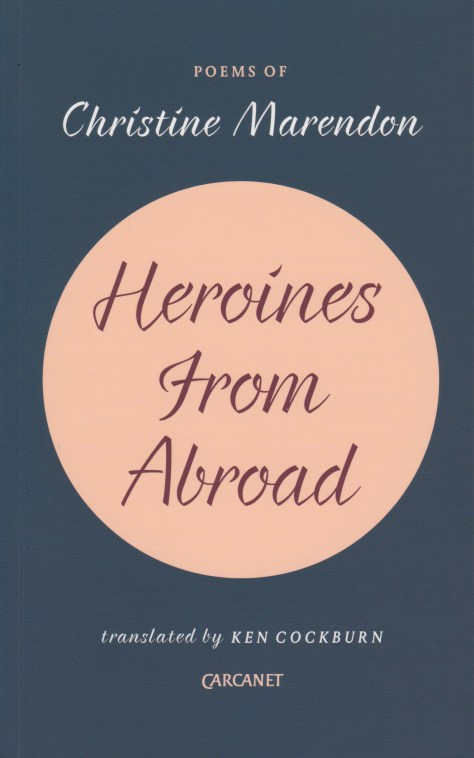
Heroines from Abroad was published last summer by Carcanet. It’s a first collection of poems by Christine Marendon, with her poems in the original German alongside my translations.

HfA front hires

Heroines from Abroad

HfA front hires   HfA back

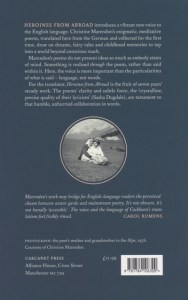
Heroines from Abroad, newly published by Carcanet, is a bilingual (German / English) edition of poems by Christine Marendon, alongside my translations.

Heroines-from-abroad

Christine will be in Scotland this summer, and we are launching the book on 13 July at 8pm at Lighthouse in Edinburgh.

I discovered Christine’s poems via a mutual friend, the poet Arne Rautenberg. Christine had been invited to a festival in Slovenia, and needed English versions of six poems – could I make the translations? I enjoyed their enigmatic imagery and shifts in tone, and made the translations, helped by a correspondence with her.

Several years elapsed, when I always had in the back of my mind that I’d like to return to her work. I came across poems online, and have been translating her slowly but steadily since 2011; translations have appeared in Shearsman, Modern Poetry in Translation, New Books in German, and online at www.no-mans-land.org.

We met for the first time in March 2014, in Hamburg where she lives; shortly afterwards we were invited to read together in London by Sasha Dugdale, then the editor of Modern Poetry in Translation, and it was a pleasure to hear her measured reading voice.

From Bavaria, she grew up speaking both German and Italian, and only began writing in her poetry in her thirties, after attending a reading by the poet Hilde Domin (1909–2006). In Germany her work is published online, and in magazines and anthologies, but she still awaits a first collection. As a translator, she has made German versions of poems by James Wright.

Marendon’s work may bridge for English-language readers the perceived chasm between avant-garde and mainstream poetry. It’s not obscure, it’s not banally ‘accessible’. The voice and the language of Cockburn’s translations feel freshly rinsed.’ Carol Rumens

From the German

I’ve had translations of German-language poems published in several magazines this autumn.


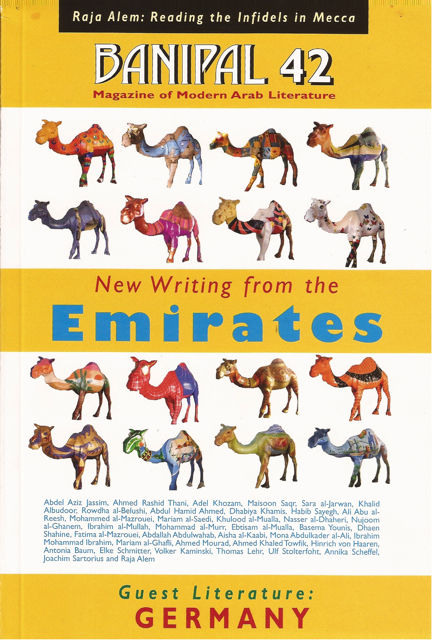
Banipal describes itself as a ‘magazine of modern Arabic literature’. Some years ago I translated for it poems by Adel Karasholi, a Syrian Kurd long exiled in Germany, who now writes in German. The magazine has now started to feature a ‘Guest Literature’ in each issue, and Banipal 42 features Germany. The editors asked me to translate six poems by Ulf Stolterfoht. He’s not an easy writer to translate – he himself has translated J.H. Prynne and Tom Raworth into German, and his work is similar to theirs in its slipperiness. I approached task with some trepidation, but was helped by Ulf’s patient responses to my questions, and I came to enjoy their unexpected twists and turns, their extravagant playfulness. There’s a good interview with him (in English) here.


Modern Poetry in Translation has published a poem each by Thomas Brasch, Thomas Rosenlöcher and Heiner Müller. It’s taken my translations of poems by Brasch and Rosenlöcher previously (issues 3/6 and 3/11 respectively). Heiner Müller I knew of as a playwright, until I discovered a volume of his poems when visiting Berlin in 2009. ’Napoleon at Wagram’ uses the dialectical method – like musical counterpoint – two very different narratives, about Napoleon and Lenin, are juxtaposed, and the reader is invited to make the connection.


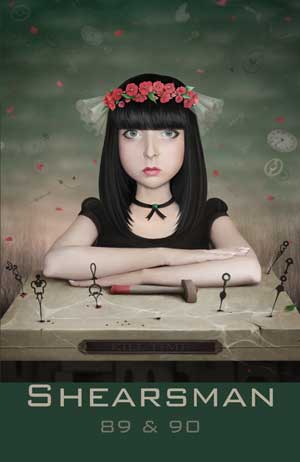
Poems by Christine Marendon are in Feathers & Lime (2007); earlier this year I began working on her poems again, and four have just been published in Shearsman 89/90, and another two in the on-line journal no man’s land. I like the enigmatic imagery of her work: tantalising hints and glimpses of characters, situations and narratives.