I’ve been working in East Lothian this week, at Dunbar. As part of the Northlight ‘creative season’, I have mini-residency at the beach hut by the harbour.
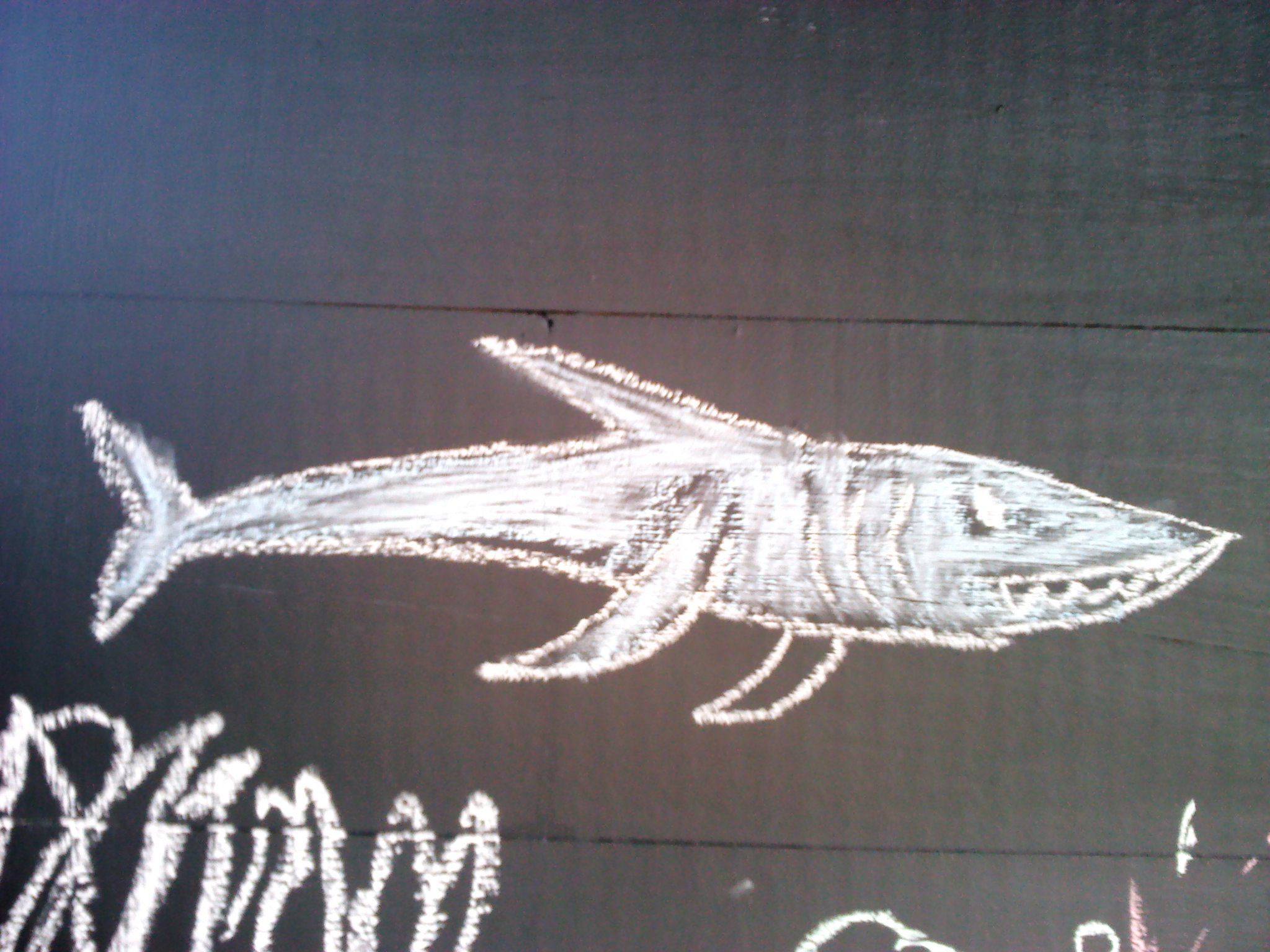
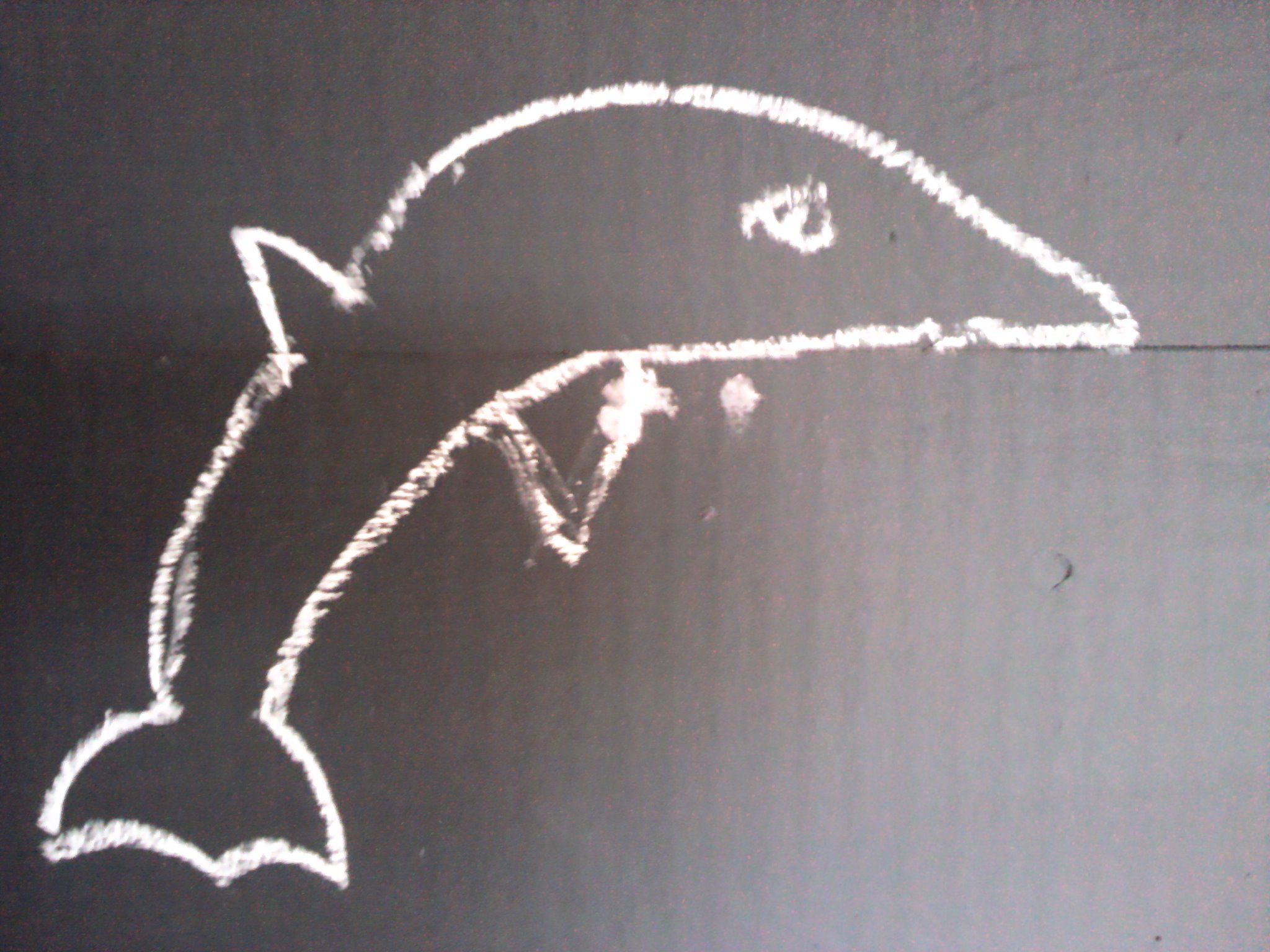
These sea-creatures were drawn last week, and sadly are no more.
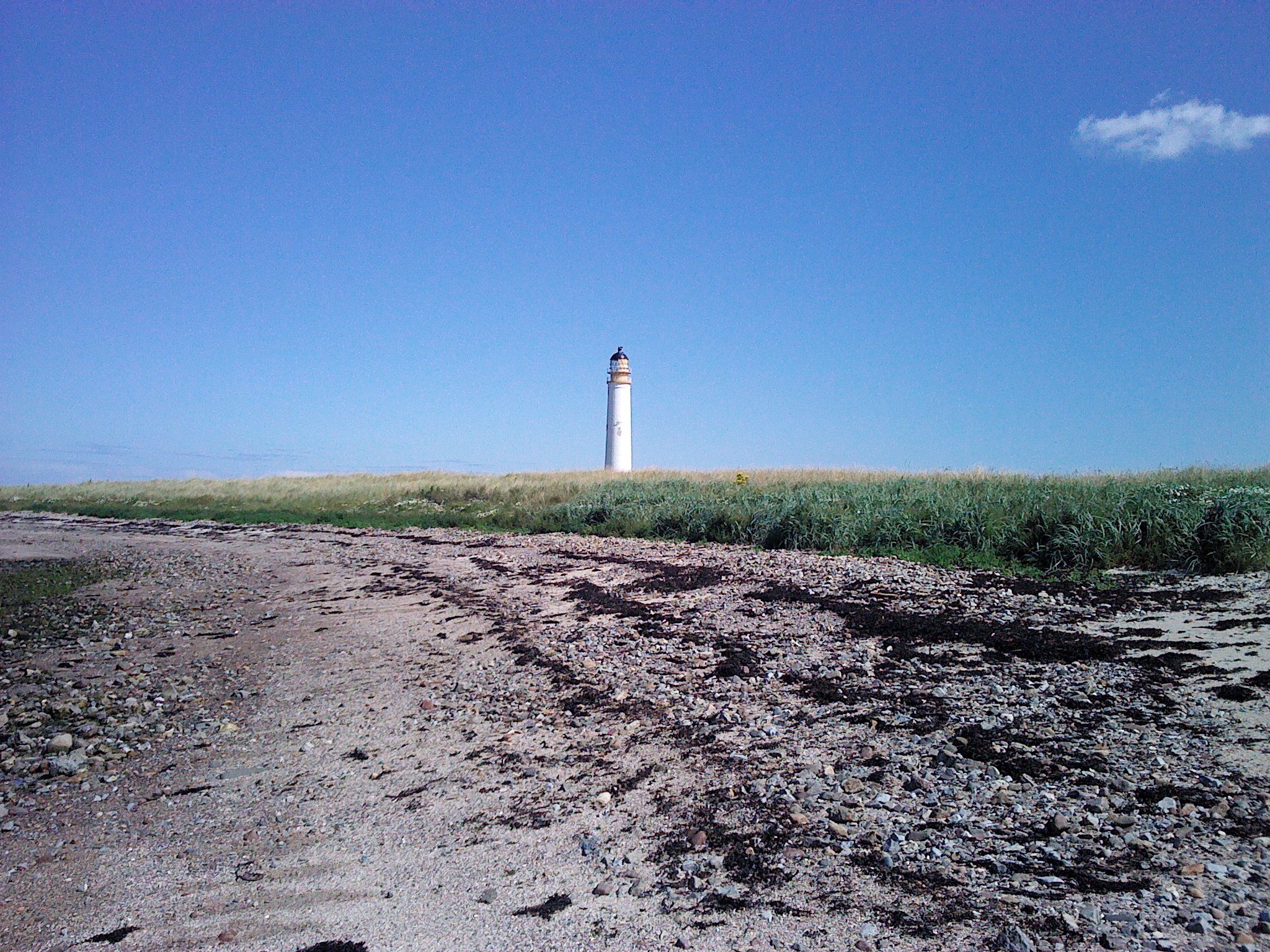
In the hut I’m showing ‘Sixteens’ – more on that tomorrow. Yesterday I walked the John Muir Way east from the harbour towards the lighthouse at Barns Ness, and on towards Torness power station.
There’s a poetry and music event on Friday night (10 August) – details here.
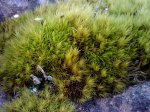
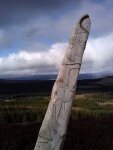
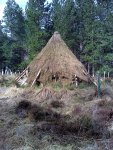
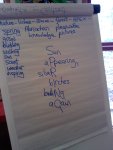
A belated post about a couple of days I spent at Abriachan Forest, just above Loch Ness, back in March, walking and writing in the forest. Day 1 was working with folk from APEX Scotland, and Day 2 was organised by Moniack Mhor Writers’ Centre. On both days we did a range of things – making ‘sixteens’ in the woods, labelling the landscape, looking close-up at the lichens on a glacial erratic, reading Boswell and Johnson, who’d ridden down the other side of Loch Ness on 30 August, 1773, and writing back at the forest ‘classroom’ over cups of tea. My thanks to Suzann, Christine, Cynthia and everyone else who joined us over the two days.
I walked Edinburgh’s Seven Hills as planned at the end of last month, mainly in warm unseasonal sunshine, though the day we walked to the Castle Rock was gothically haar-shrouded. [January 2017 – the various blogs about the walks (on another website) are sadly no longer available.)
The project culminated with an event at Fingerpost (formerly Croy Miners’ Welfare) last Wednesday (18 April), which is World Heritage Day – an exhibition / installation space animated by film, theatre, choral singing, my reading of ‘Seven Questions’.
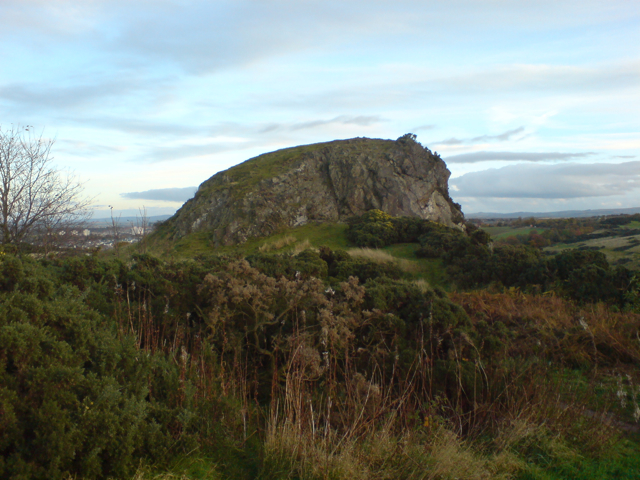
I managed a walk on Croy Hill, where the Antonine Wall ran – the ditch (right) is the most obvious extant feature. The view above (centre) is looking north, barbarianwards.
Edinburgh, like Rome, is a city built on seven hills. I’m running three poetry walks later this month to some of those hills, as part of the preparations for World Heritage Day 2012 on 18 April.
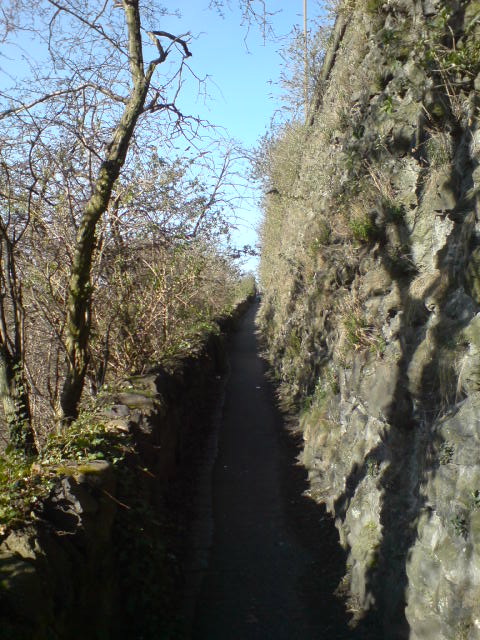
Below Calton Hill
Here are the details: Calton Hill Thursday 22 March, 1.30pm–5.00pm, meet at Scottish Poetry Library, 5 Crichton’s Close, Canongate, Edinburgh EH8 8DT, where we’ll return after the walk
Arthur’s Seat Friday 23 March, 1.30pm–5.00pm, meet at Scottish Poetry Library, where we’ll return after the walk
Castlehill Saturday 24, 1.30pm–5.00pm, meet outside the Scottish Parliament visitors’ entrance (opposite the Queen’s Gallery); the walk will finish at Edinburgh Castle
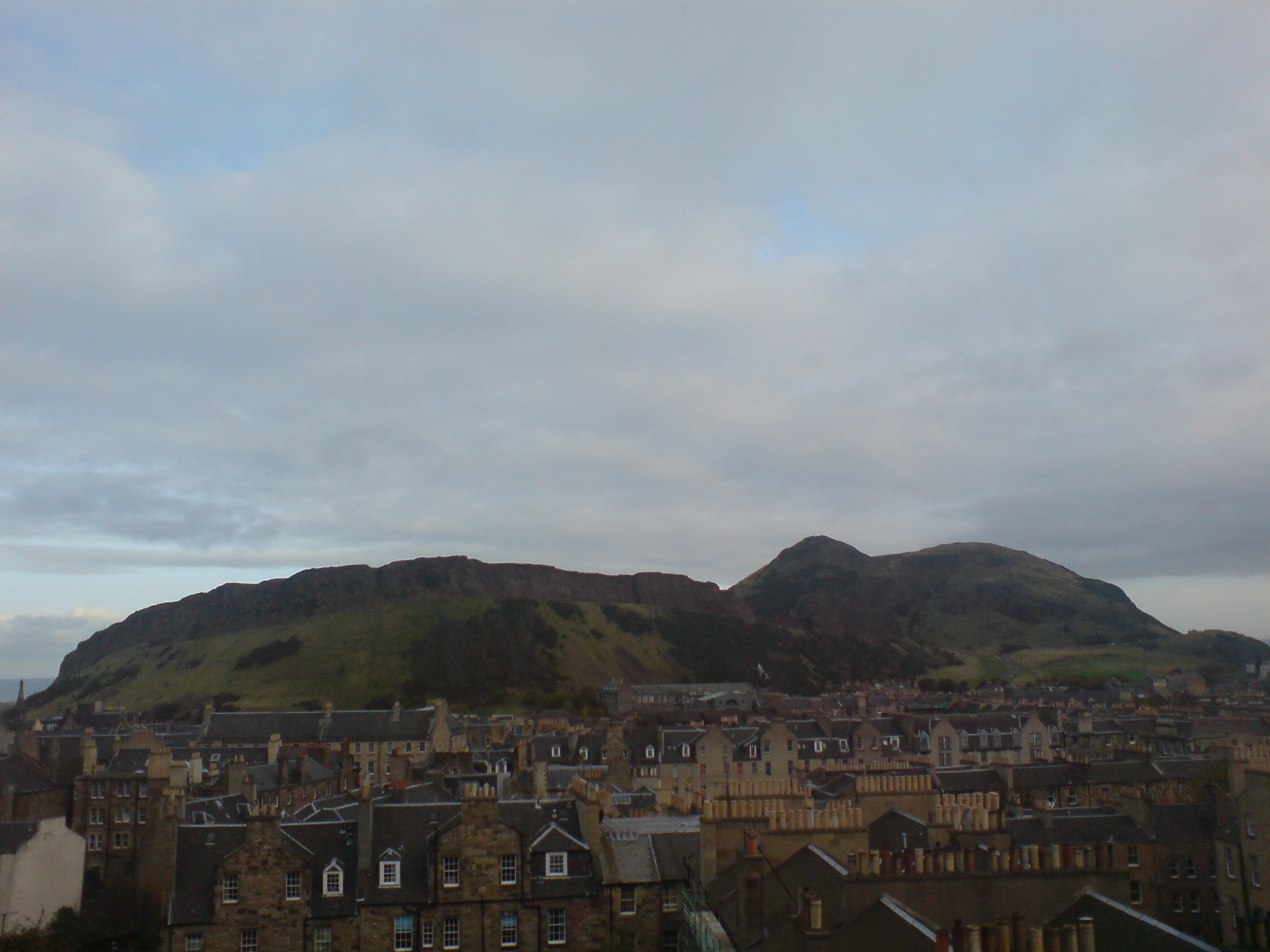
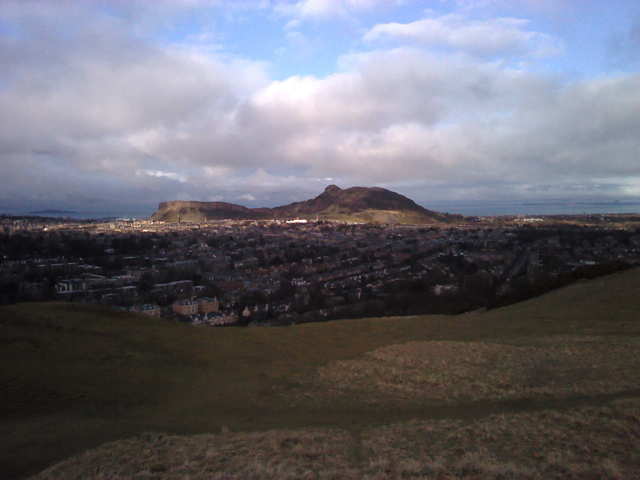
Arthur's Seat seen from the David Hume Tower
All the walks are free, but please book via e-mail as numbers are limited: kencockburn@blueyonder.co.uk
On the day please bring waterproofs and a notebook, and wear footwear suitable for rough underfoot conditions.
At the end of each walk we will spend some time discussing the walk, and reading what we’ve written; on Thursday and Friday at the Scottish Poetry Library, and on Saturday at the Education Room in Edinburgh Castle.
Salisbury Crags and Arthur's Seat, seen from Blackford Hill
A bit of background:
‘Seven Hills’ is part of Shadows of our Ancestors, supported by Historic Scotland and UNESCO, which promotes and celebrates Scotland’s five World Heritage sites – Edinburgh Old and New Towns, New Lanark, the Antonine Wall, St Kilda and The Heart of Neolithic Orkney. A group of five artists – a poet, a sculptor, a performance artist, a photographer and a composer – will each work at one of these sites, developing work for the public celebration of World Heritage Day on Wednesday 18 April, which will take place at Croy Miners’ Welfare, North Lanarkshire, next to the line of the Antonine Wall.
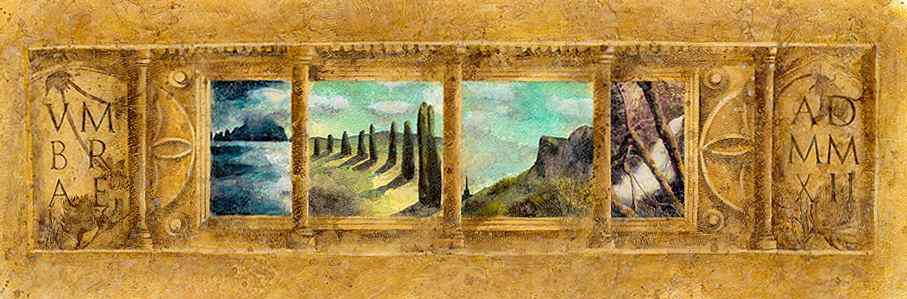
Brigid Collins's artwork for Shadows of our Ancestors 2012
All the artists are working loosely to the theme of ‘AD 142’, the year the Antonine Wall was begun. ‘Seven Hills’ will link to the theme by considering aspects of the land that broadly haven’t changed since Roman times – uplands and lowlands, coast and sea, the Scottish weather – as well as referring to the history of the Roman presence in the area, and considering the changes over time.
I’ll blog the walks to Calton Hill, Arthur’s Seat and Castlehill (as well as further walks I’ll make to Edinburgh’s other hills) and gather texts for the April event. All those coming on the walks will be also invited to contribute work they make up on the hills – poems, photos, recordings – to the project blog, and to the event at Croy.
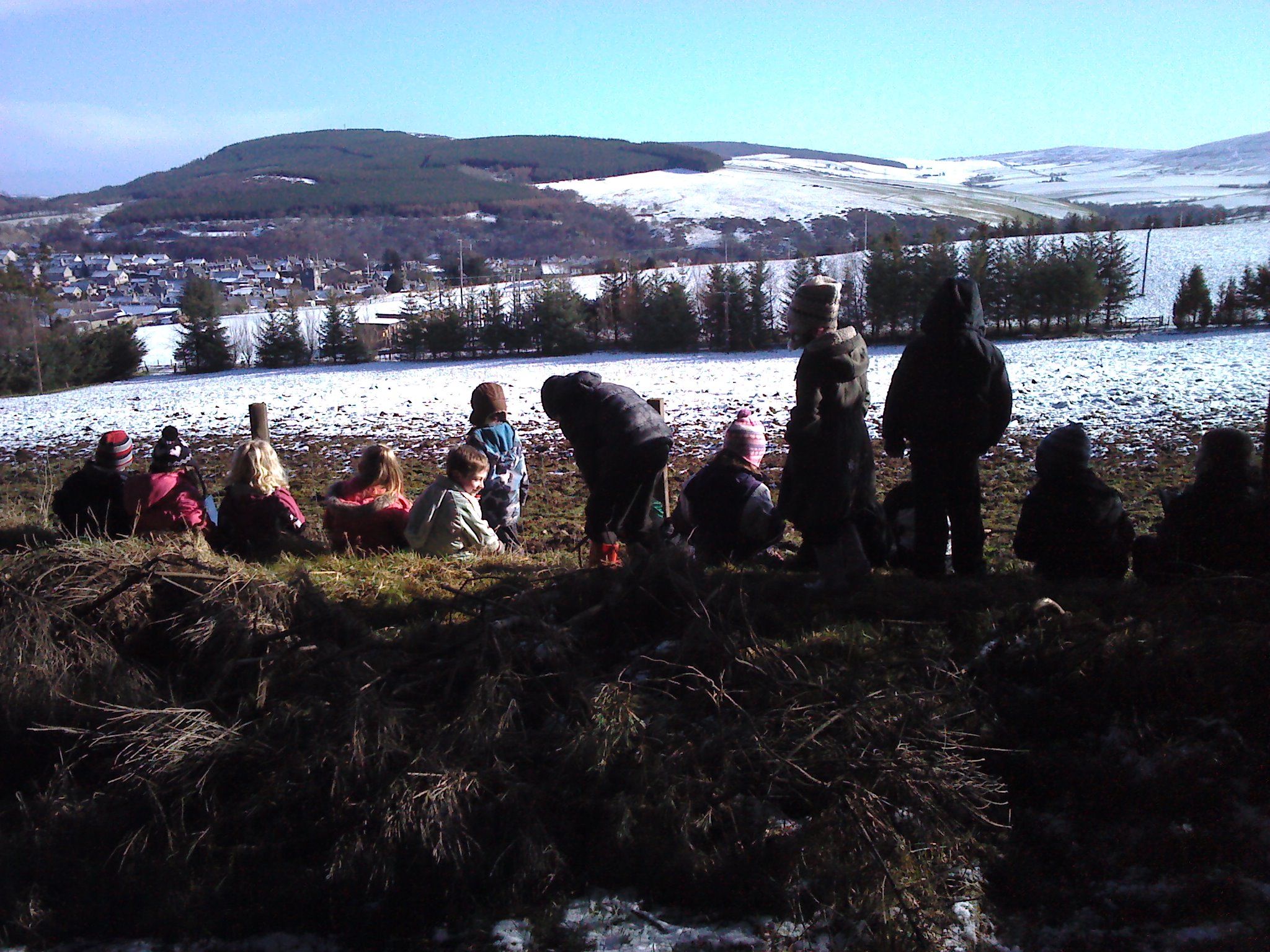
P2 looking towards Dufftown from Meg's Widd P7 returning from The Giant's Chair
Earlier this year I worked at Mortlach Primary School in Dufftown, mainly with the P2, P4 and P7 classes. We walked – in snow and sunshine – some of the paths around the town, which the kids had already explored with Wild things!, and I got them to write about their impressions of the ground we’d covered. I collated, edited and wrote up their material as stories, which have just been published as three leaflets, designed by Glasgow-based artist Janie Nicoll. P2 collectively describe Meg’s Widd, P4 become Jimbo, a local boy showing visitors round The Toon’s Widd, while P7 encounter a shape-shifter who opens up the history and ecology of The Giant’s Chair. The leaflets are available from Dufftown Tourist Information Centre, and other venues in the town.
The project was co-ordinated by Mary Bourne, sculptor, and a member of the School Council. Her carved stones using poems by children from all classes have been placed along the three walks. the river meanders beneath the spider spinning its fragile web while the buzzard drifts overhead as the river… sLender whIte Noisy watErfall, tumbliNg And imPatient, Rushes tOwards dullaN (LINEN APRON) rocks under water shaded by trees the heron nests in and flies down to stand on rocks…
Works made by P1, P3 and P5 with Janie Nicoll have been installed in Dufftown’s Cottage Hospital, Tourist Information Centre and at the local library. Additional works are in the school itself.
The P6 class prepared an orienteering route around Meg’s Widd, making a map and contributing words for the stones which serve as control points.
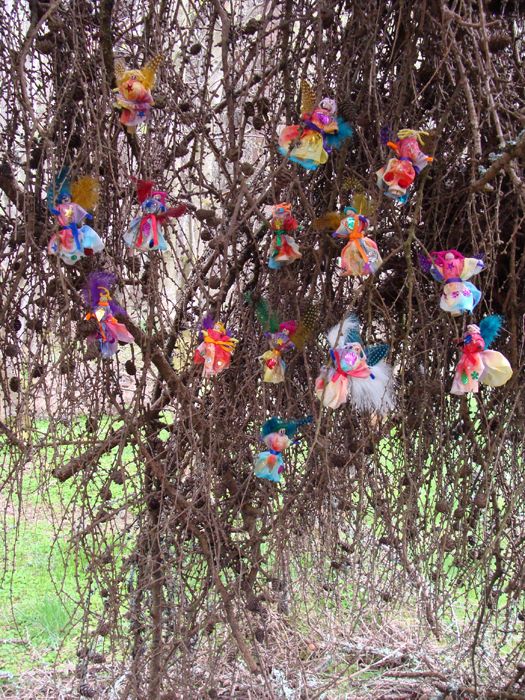
The nursery children worked with Vivien Hendry and Mary Bourne, making peg-fairies which they took to Meg’s Widd. I ‘interviewed’ them about their fairies’ skills and adventures, and Vivien has made a limited-edition book, The Magic of Meg’s Widd. The Magic of Meg's Widd (photo: Mary Bourne)
Mortlach Story Walks is a partnership project between Mortlach Primary School, Dufftown, Moray and the Speyside Paths Network Group to produce arts-based interpretation for the countryside around Dufftown. It is initiated and supported by the school’s Parent Council.
The Wildwood
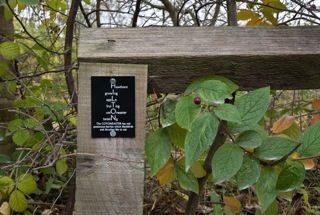
Back in April I ran workshops with Year 5/6 pupils at Hilton Primary School in Newcastle-upon-Tyne, as part of a project by Alec Finlay about habitat and outdoor learning. The focus was on exploring and redeveloping an overgrown garden known as ‘the wildwood’. cHerry rIpening, pLum bursTing, Oak flamiNg hawtHorn growIng, appLe fruiTing, cOtoneaster twistiNg
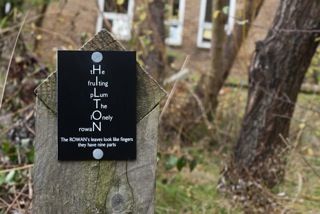
Poet-botanist Colin Will spoke to the children about what was growing there. The visit with Colin gave them a lot of stimuli, and they made notes as they went round. What helped them differentiate the plants was a memorable detail – the ash’s ‘black fingernails’, making it a ‘goth tree’, for example. tHe fruIting pLum, The lOnely rowaN sHaking wIllow, fLowering blackThorn, smOoth rowaN
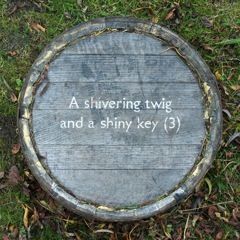
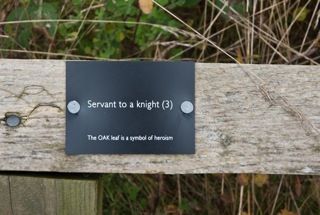
I showed the kids different ways to write about the plants they’d discovered and observed. The mesostic poems have a central stem-word, while embedded poems have a word hidden within it, like a cryptic crossword clue. The two below include tree names. A shivering twig and a shiny key (3) Servant to a king (3)
The poems have now been installed in the garden, as labels, bird-boxes and on barrel-seats.
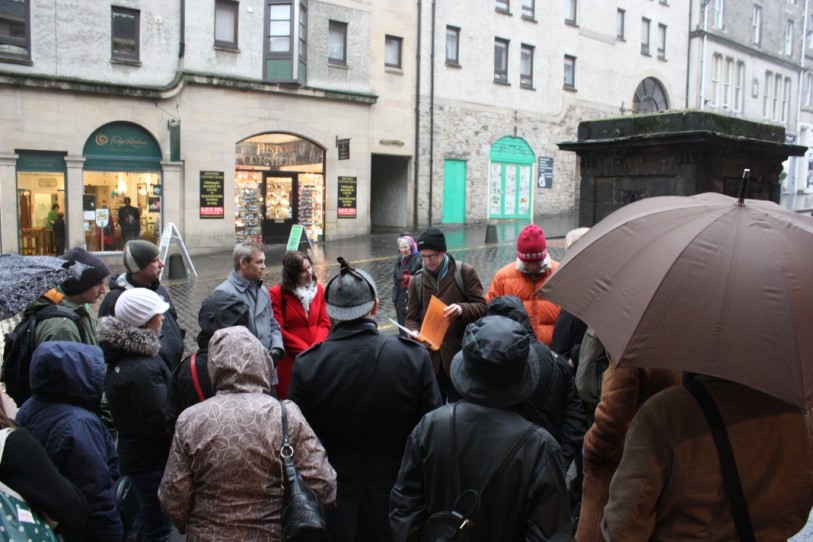
After a morning of drizzle, it was fair at lunchtime, but the weather closed in atmospherically as we walked, all the shades of grey you could ever wish for.
Tweeddale Court, with its publishing connections past and present (Oliver & Boyd, Canongate, The List), and the former home of the Scottish Poetry Library, was very still, bolted doors and no sign of life. As I read my poem ‘Courtyard Reading’, about the open festival events the SPL used to run there, I felt like I was raising a few ghosts. From Jeffrey St the Old Royal High School, mentioned in Robert Garioch’s ‘Embro to the Ploy’, was invisible through the fog.
After a children’s rhyme in the spacious Chessel’s Court, and a tragic ballad in the vennel at John Street, we paid homage to Robert Fergusson at the Canongate Kirk. His sculpted image strides energetically downhill, while his gravestone bears a verse written by his great admirer Robert Burns.
Ken reading by the statue of Robert Fergusson on the Canongate
Sadly Dunbar’s Close was locked, but we were able to glimpse the ornamental hedges through the gate.
We were lucky to have on the tour the poet Angus Reid, who read his sonnet about the Scottish parliament building, and the shapes that pattern its exterior. Inexplicable to many, they are to Reid a clear emblem of democracy:
not the fingers not even the palm but
the power of the right hand the hammer
the sign of assent the vote the demos
(That last word means in Greek ‘the people’, and is where the word ‘democracy’ comes from, government by the people.)
We concluded in Crichton’s Close at the new home of the Scottish Poetry Library, with another sonnet, by Iain Crichton Smith, part of which is inscribed in the fabric of the building: ‘this house, this poem… this fresh hypothesis’.
Outside the Scottish Poetry Library
I’ll be running another poetry tour on 27th February – email events@cityofliterature.com to book.
These events are part of the Carry a Poem programme.


















 Poems on the page and in the world